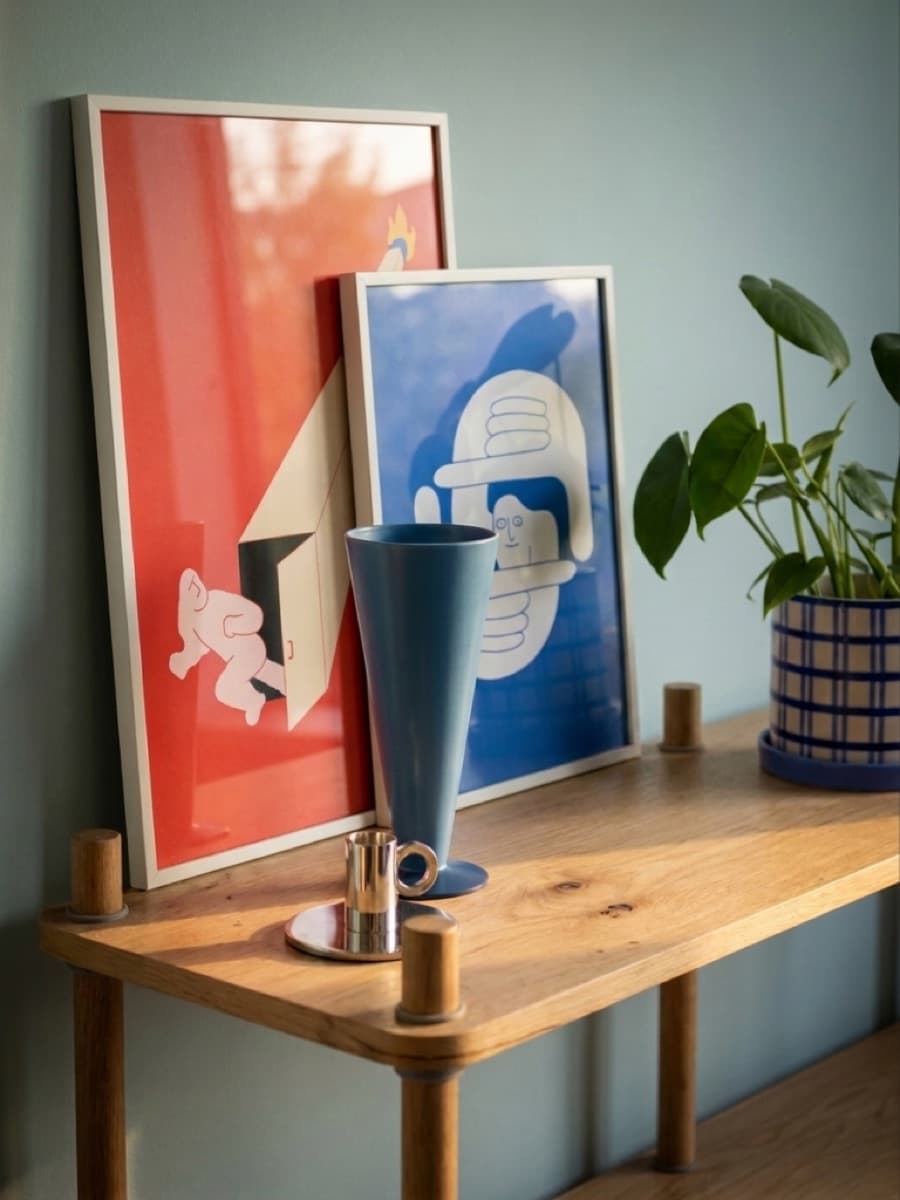
What is Scandinavian art?
Less a single movement than a sensibility: northern light, the landscape as main character, restraint, and beauty built into everyday life. A short history of Scandinavian art, from Dahl to design.
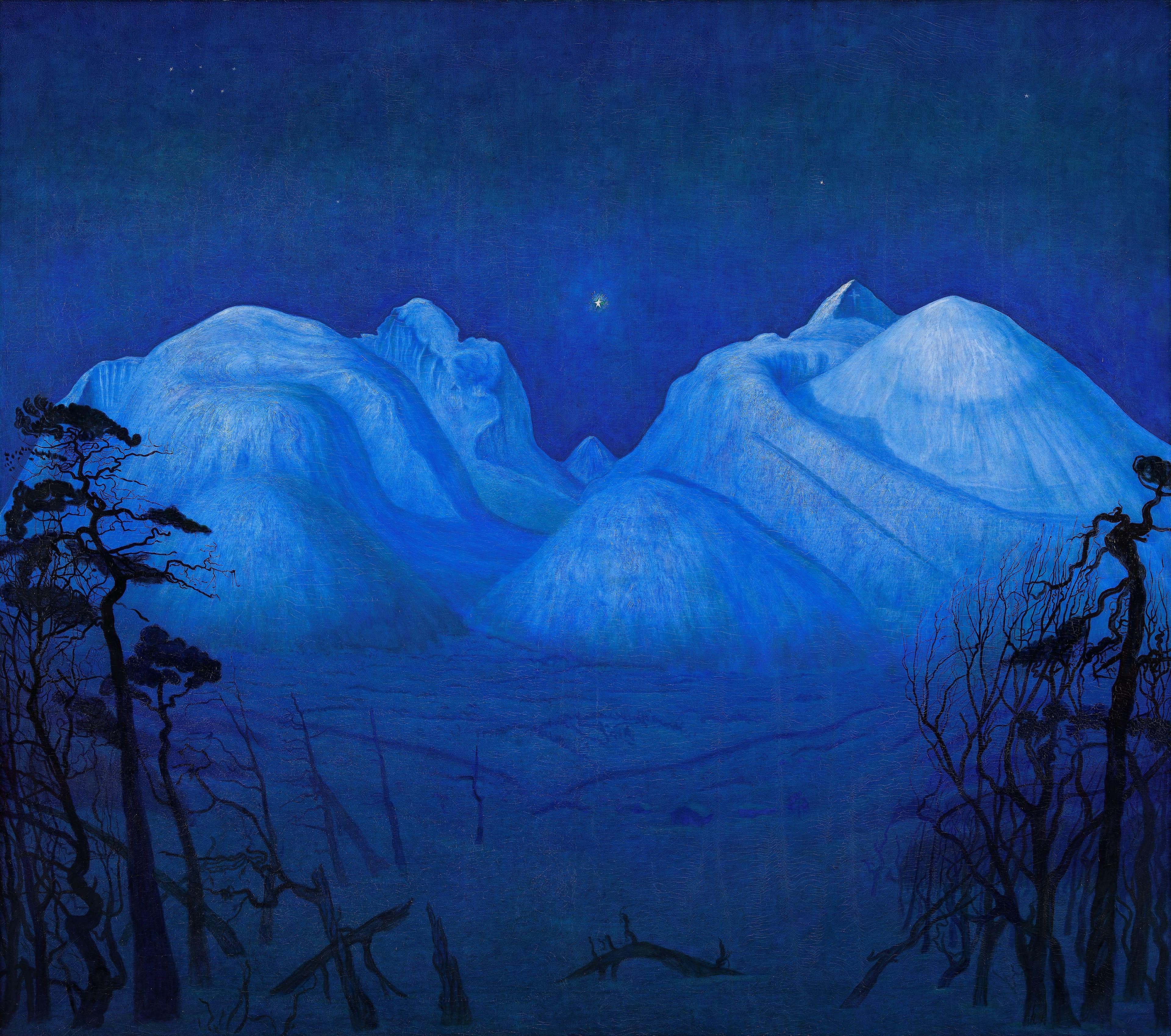
In 1995, Norway's public broadcaster asked the nation to vote for its national painting. The winner was Harald Sohlberg's Winter Night in the Mountains (1914): snow-covered peaks under a blue-black sky, a single bright star between two summits, and not a person in sight. If you want to understand Scandinavian art, that vote is a good place to start. Not a movement or a manifesto, but a landscape, a very particular light, and the nerve to leave everything else out.
Strictly, Scandinavian art means the art of Denmark, Norway and Sweden, though the term usually stretches to the Nordic neighbours, Finland and Iceland. It's never been one style with one name. It's closer to a sensibility, formed by living somewhere the sun barely sets in June and barely rises in January, and it runs from nineteenth-century landscape painting to the chair you might be sitting on now.
Where did Scandinavian art come from?
For centuries the region imported its art from the south. That changed in the early 1800s, when Johan Christian Dahl, often called the father of Norwegian landscape painting, began treating his homeland's mountains and fjords with the seriousness other painters reserved for Italian ruins. Landscape became identity, and Scandinavian art has never fully let go of it.
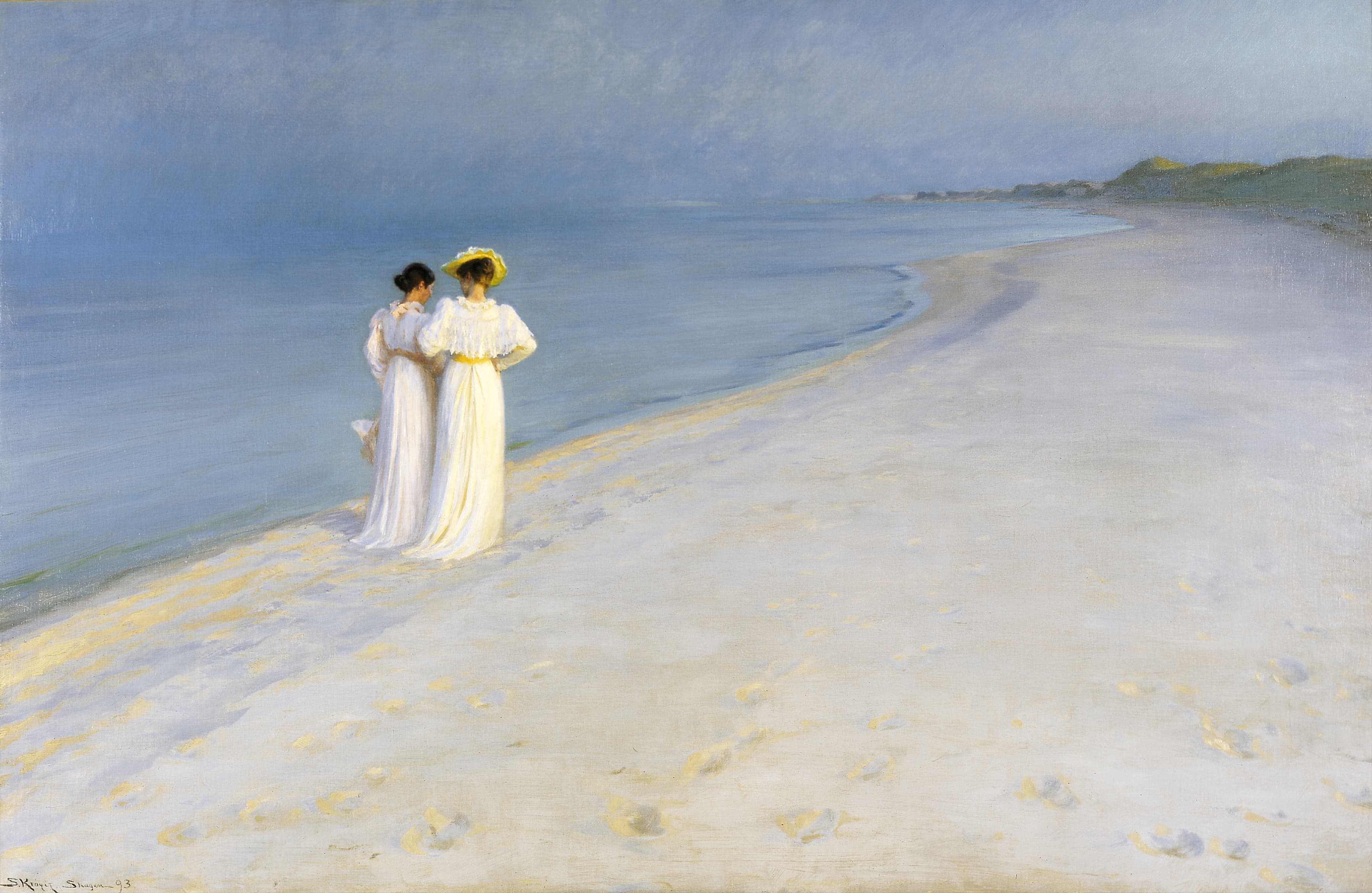
From the late 1870s a group of Danish, Norwegian and Swedish painters gathered each summer in Skagen, the fishing village at Denmark's northernmost tip, to paint outdoors in its strange silvery evening light. The Skagen painters, P.S. Krøyer and Anna Ancher chief among them, gave the region its first famous school. Krøyer's beach scene at the top of this page is its best-loved image, and its real subject is the light itself.
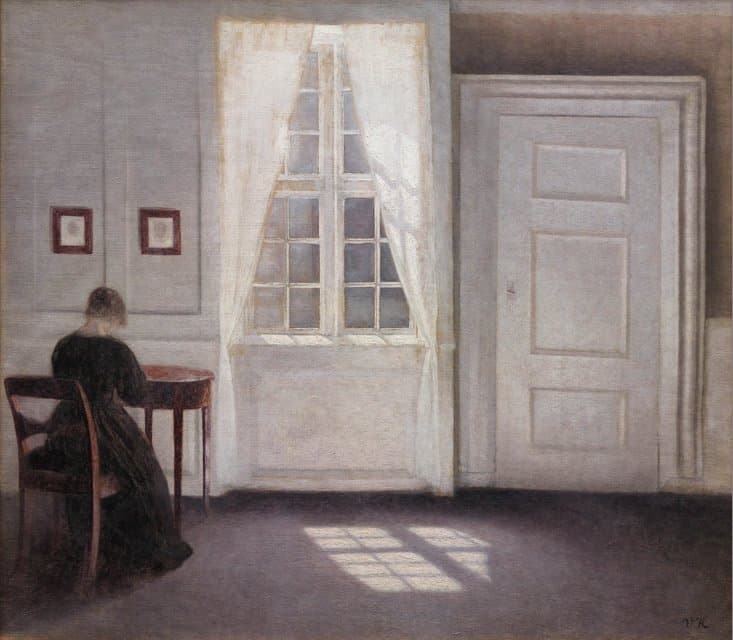
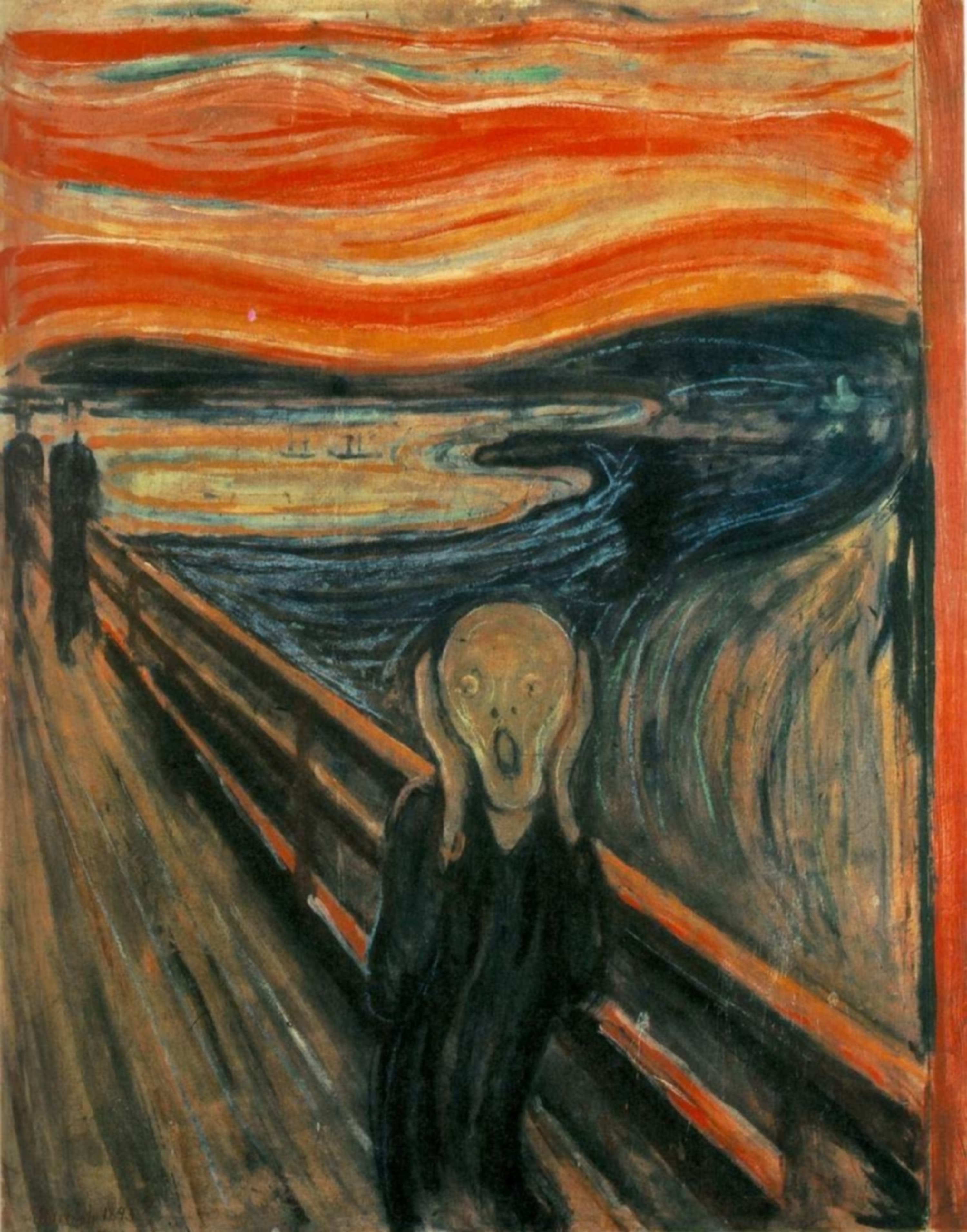
Around the turn of the century came the individualists. Edvard Munch turned inward and painted feeling itself; The Scream (1893) made him the North's most famous artist and a forerunner of Expressionism. Vilhelm Hammershøi spent a decade painting the quiet grey rooms of his Copenhagen flat, often with a single figure turned away. And Sohlberg painted that winter night.
What does Scandinavian art look like?
Ask what marks Scandinavian art out and four things keep surfacing.
Light. Not sunshine, light: the low sun, the long dusk, the blue of a winter afternoon. The Skagen painters chased it along the beach; Hammershøi let it fall across a bare wall and called that the picture.
Nature. The landscape is never just a backdrop. Mountains, forest, sea and sky carry the emotional weight that other traditions hand to gods and kings.
Restraint. Muted palettes, empty space, and the confidence not to fill it. The silence in a Hammershøi room isn't a lack of content; it's the content.
Usefulness. A standing belief that beauty belongs in ordinary life. Which is where the story leaves the canvas.
The functional tradition
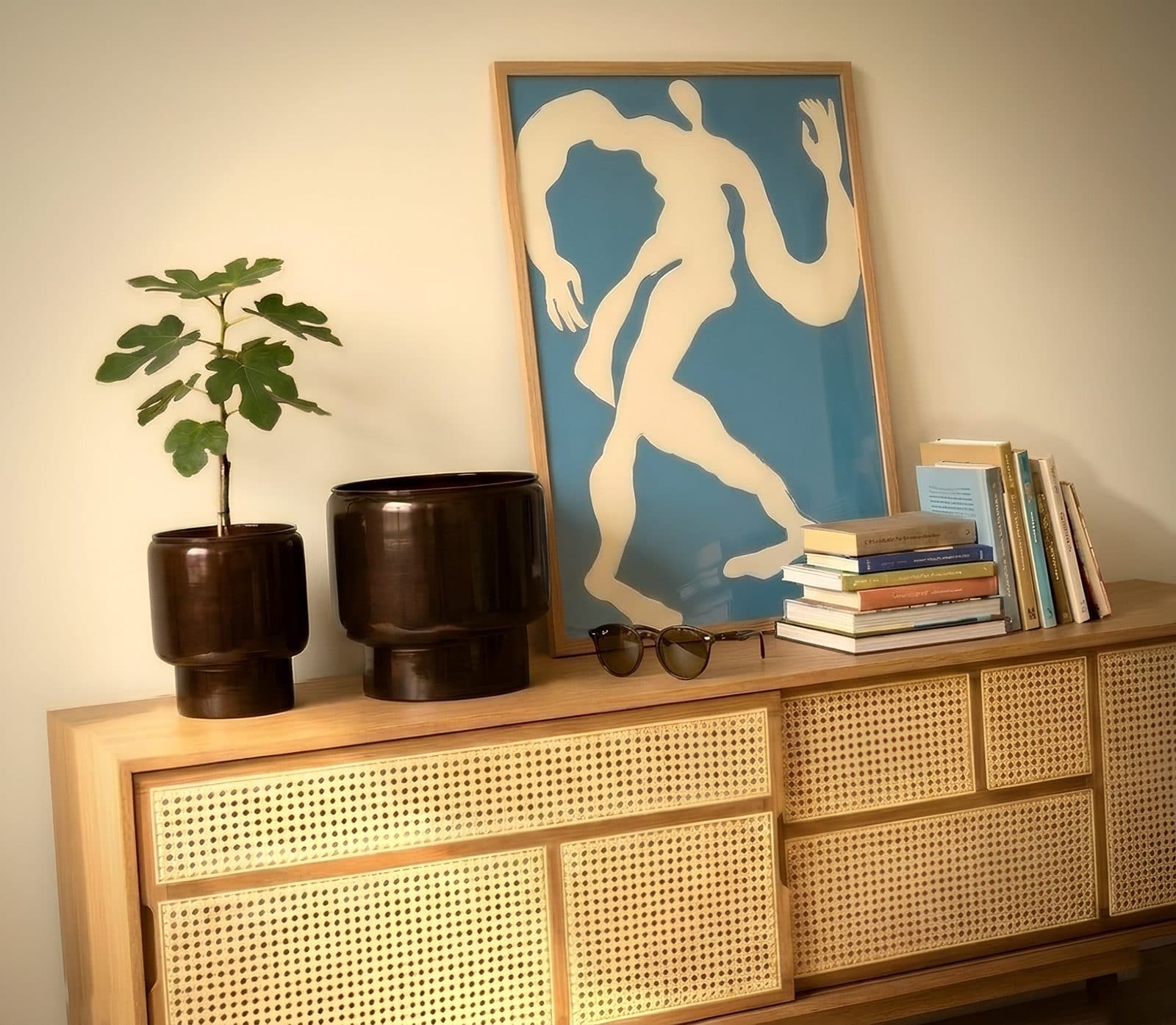
In the twentieth century the same sensibility moved into the home. When the exhibition Design in Scandinavia began touring the United States and Canada in 1954, it fixed "Scandinavian design" in the world's vocabulary: simple forms, natural materials, everyday objects made carefully and made for everyone. If you've ever admired a pale wooden chair with clean lines, you've met the tradition. Painting and design are usually told as separate stories; in Scandinavia they're the same instinct in different clothes. If the chair sends you to the bookshelf, we've picked out five Nordic design and architecture books that tell that story properly.
And Scandinavian folk art?
Older than all of it. From the 1700s, rural Norwegian painters covered walls, bowls and chests in rosemaling, a flowing, flowery decorative style that spread valley by valley. In Sweden's Dalarna, farmers carved small wooden horses through the winter and painted them in the swirling kurbits style; the red Dala horse is still Sweden's favourite souvenir. Folk art is the tradition's root system: make the everyday beautiful, whoever you are.
Where it lives now
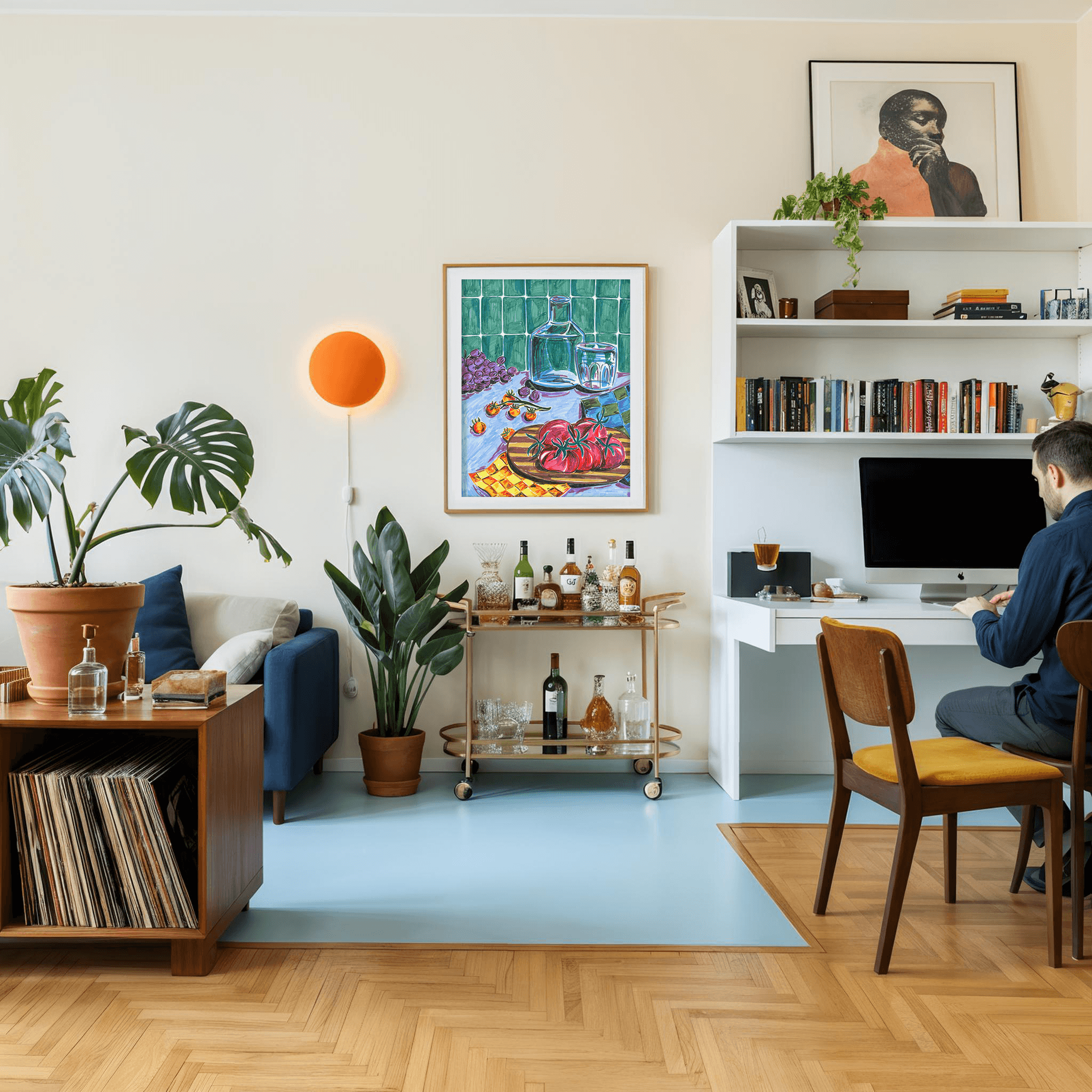
The sensibility never stopped. The independent Norwegian artists behind our prints work in the same northern light, still turning nature, quiet and carefully rationed colour into pictures for real walls. If this has you wanting to look longer, we've picked out the Nordic art and design books worth owning and the artist monographs worth sitting with. And if it has you looking at your own walls, the living room collection is a good place to start.