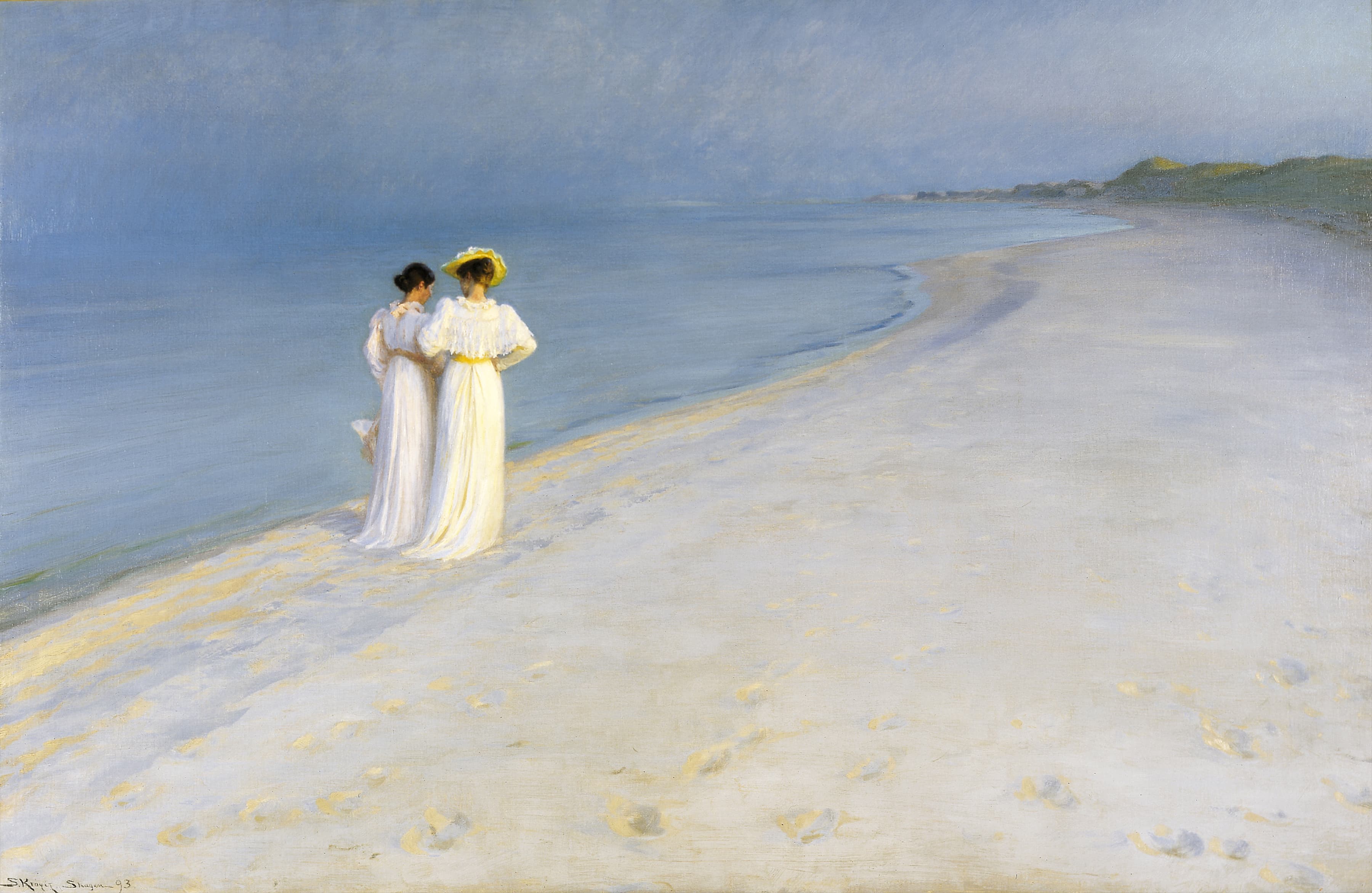
Modern Scandinavian art: the movement, the painters and what it means now
The term was coined on an American tour in 1954. What modern Scandinavian art actually is, from af Klint to the museums that keep it, and what it looks like on a wall.
Scandinavian modern was made in America. In 1954 a travelling exhibition called Design in Scandinavia set off around the United States and Canada carrying more than 700 objects for the home from Denmark, Finland, Norway and Sweden, and by the time it came back three years later the phrase had stuck to an entire region's way of making things.
The chairs got famous first
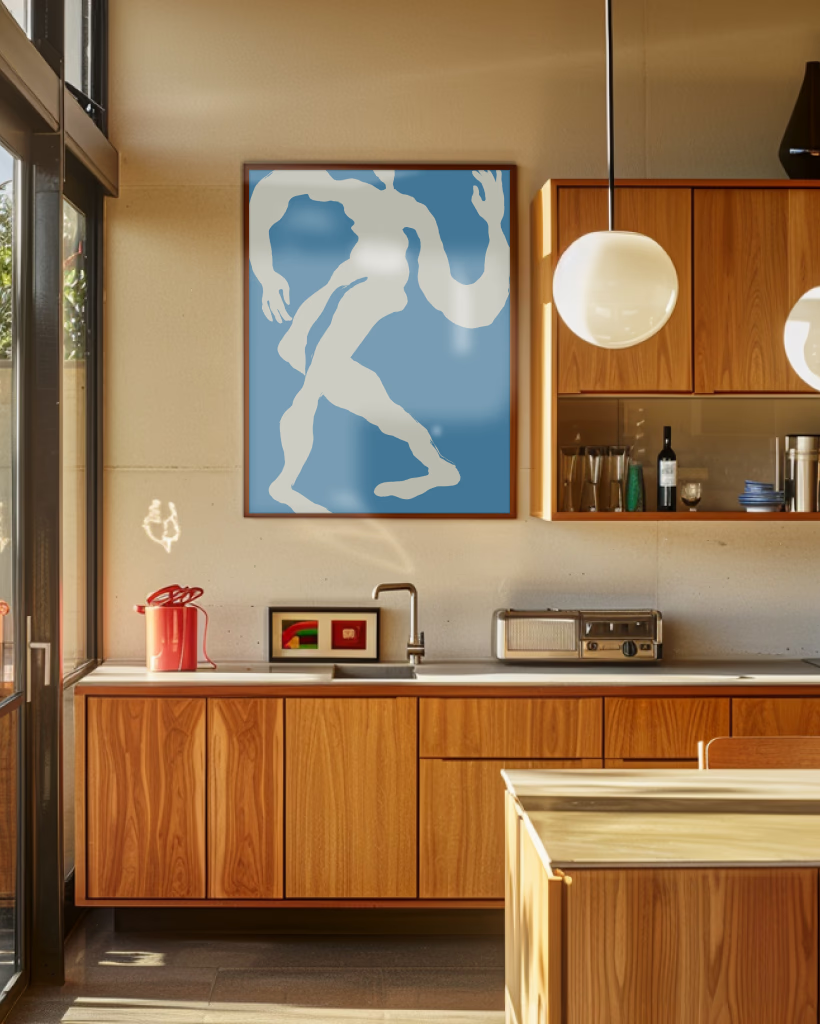
What the term glued itself to was furniture and homeware: teak, pale wood, glass, the things a house could order. That's still what most people mean by Scandinavian modern, and it's why searching the phrase gets you auction lots. But the movement's habits, honest materials, clean line, nothing decorative that isn't doing work, didn't start with the chairs and didn't end there. The painters had been working the same seam all along.
The painters were already there
Hilma af Klint was painting large abstract canvases in Stockholm by 1906, before abstraction officially existed, and the world took most of a century to notice. By the 1950s and 60s Norway had its own modern school: Jakob Weidemann turned the Norwegian forest floor into abstraction, and Gunnar S. Gundersen built pictures from flat, hard-edged fields of colour that look like they could have been made yesterday. The through-line from them to now is the thing to notice: Nordic modernism rarely abandoned the subject. It pared the subject back, a forest floor, a bird, a table, until the shape could carry it alone.
Modern or contemporary?
The words blur, and the museums are the cleanest way to split them. Modern is the twentieth-century story, and the North built great houses for it in a single remarkable year: Louisiana opened on the coast north of Copenhagen in 1958, and Stockholm's Moderna Museet opened the same year. Contemporary is the story still being written, which in Oslo lives at the Astrup Fearnley Museet. If a trip is in the offing, any of the three justifies it alone; we've written before about the books that cover the scene now if the shelf comes first.
What it looks like on a wall now
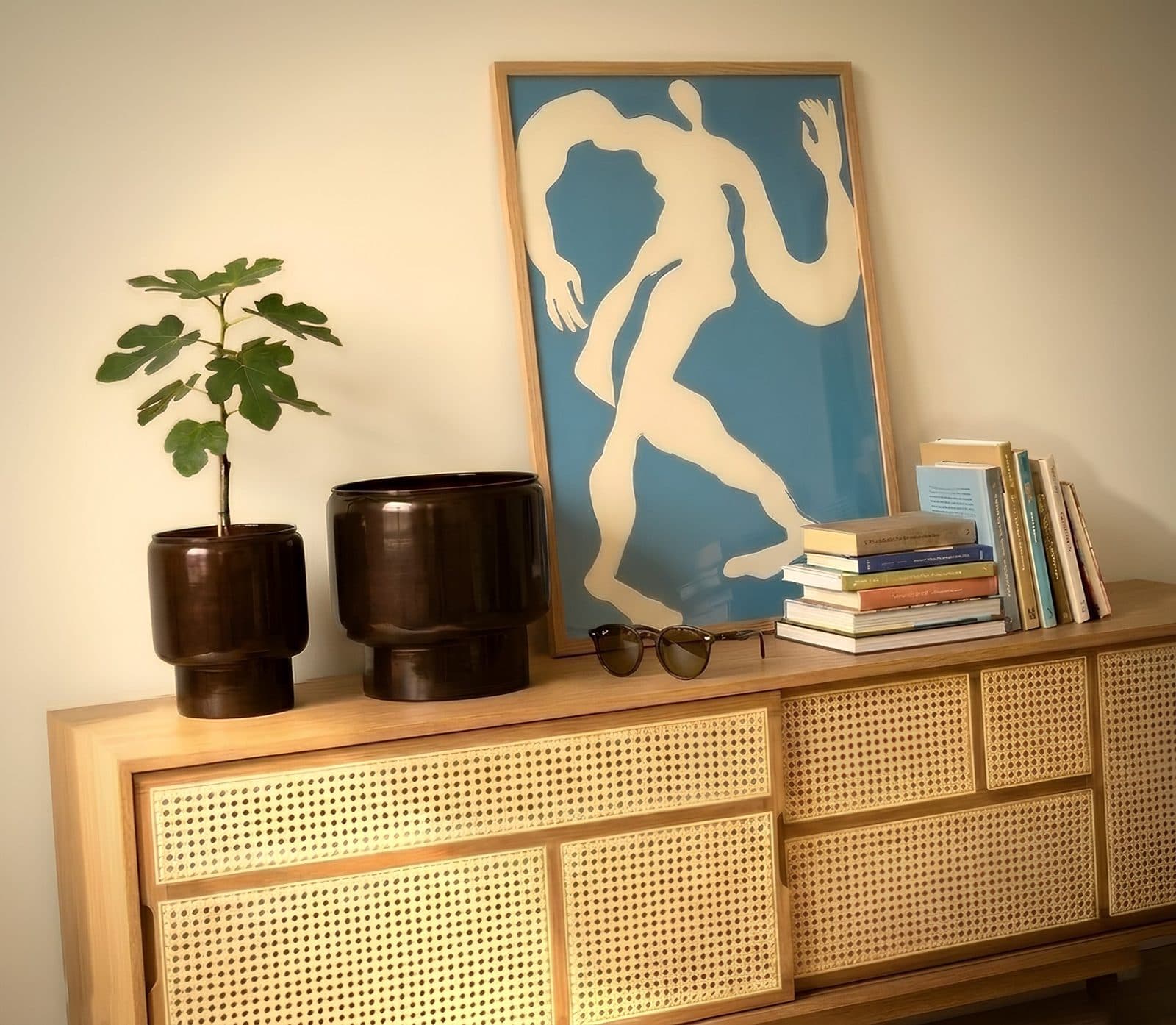
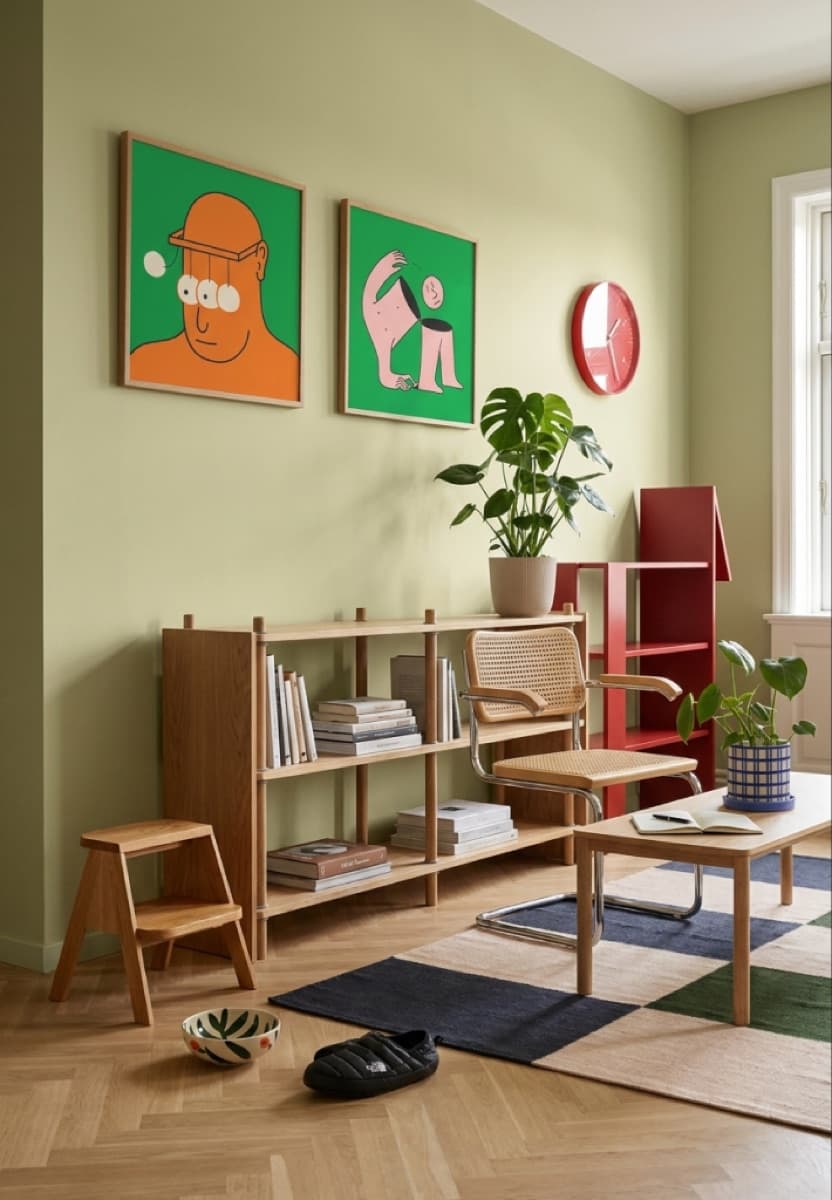
The modern inheritance is easiest to see in the work being made today: flat colour, cut shapes, the subject reduced until it's almost a sign but never quite. That's the register our abstract category works in, from Helene Brox's packed silhouettes to prints that sit exactly on the line between picture and pattern. It hangs well in modern rooms for the unglamorous reason the whole movement would approve of: it was made by the same logic as the furniture.
For the longer version of the whole story, what is Scandinavian art takes it from the beginning. For the short version, go and stand in front of the prints; the movement explains itself faster than any paragraph.