Scandinavian painting: four painters who made the northern landscape
Harald Sohlberg took fifteen years to finish one picture of a mountain. He saw the view on an Easter ski trip in 1899 and made his first sketch on the train home. The finished painting, Winter Night in the Mountains, is dated 1914, and it hangs in the National Museum in Oslo.
That patience tells you something about Scandinavian painting. Our piece on the famous Scandinavian artists follows the people: the Skagen circle, Munch and Hammershøi, the Swedes at home. This one follows the ground they stood on. For a lot of the painters who mattered in the North, the landscape wasn't a backdrop. It was the subject, and the thing a young country wanted to see itself in.
Where does Scandinavian landscape painting start?
With a Norwegian in Germany. Johan Christian Dahl was born in Bergen in 1788, trained in Copenhagen and moved to Dresden in 1818. He stayed, and became a close friend of the German Romantic Caspar David Friedrich. Dahl is usually called the father of Norwegian landscape painting, and his Shipwreck on the Coast of Norway, painted in 1832, shows the approach: a ship in trouble off the Norwegian coast, painted as a real place in real weather. It's 111.3 by 71.2 cm, oil on canvas, and also in the National Museum.
The useful thing to take from Dahl is the habit. He painted the real country, and he let the weather carry the mood.
What did Sohlberg add?
Quiet. Winter Night in the Mountains is 160.4 by 180 cm, and it's close to empty: snow, a single bright star between two peaks, a small cross on a far hillside. It was first shown at the 1914 Jubilee Exhibition, marking a hundred years of the Norwegian constitution, and J.B. Stang bought it and gave it to the National Gallery in 1918. The museum notes that Norwegians later voted it their national painting.
Sohlberg wasn't trying to flatter the mountains. The picture is usually counted among the finest Norwegian symbolist landscapes, and it works because so little is in it. That's a Nordic instinct we come back to, and it's why a picture that spare can hold a big wall.
Why does Lake Keitele matter to a British reader?
Because you can go and see it. Akseli Gallen-Kallela, a Finn born in Pori in 1865, painted Lake Keitele in 1905, and the National Gallery in London bought it in 1999. It's 53 by 66 cm, a small, calm picture of a lake with a zigzag of silver across the water. The gallery explains that the zigzag is wind meeting current. Gallen-Kallela called it Väinämöinen's wake, after the hero of the Kalevala, Finland's national epic.
In 2017 the National Gallery described it as the only painting by him in a British public collection. Check before you travel, since what's on the wall changes. It's still one of the clearest cases of a painter using a particular lake to say something about a whole country.
And the snow painters?
Gustaf Fjaestad is the Swedish answer. He was born in 1868, moved to Taserud near Arvika in Värmland in 1897, and became best known for pictures of its snow-covered forests and running streams. Winter was his subject, and he stayed with it.
What do the four have in common?
Not a style. A Norwegian Romantic, a Norwegian symbolist, a Finnish national romantic and a Swedish winter painter don't look alike. What they share is a decision to take the nearby, unglamorous landscape seriously, and to paint what it feels like to stand in it rather than how it looks from a postcard.
Where does that leave a wall now?
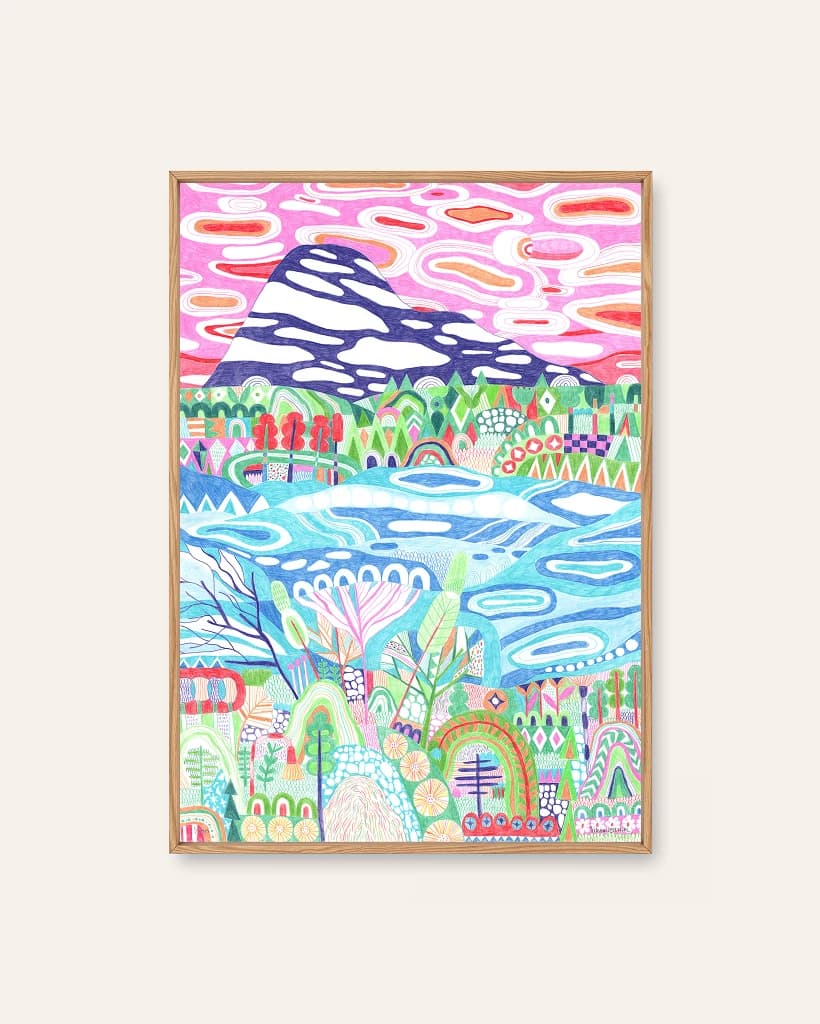
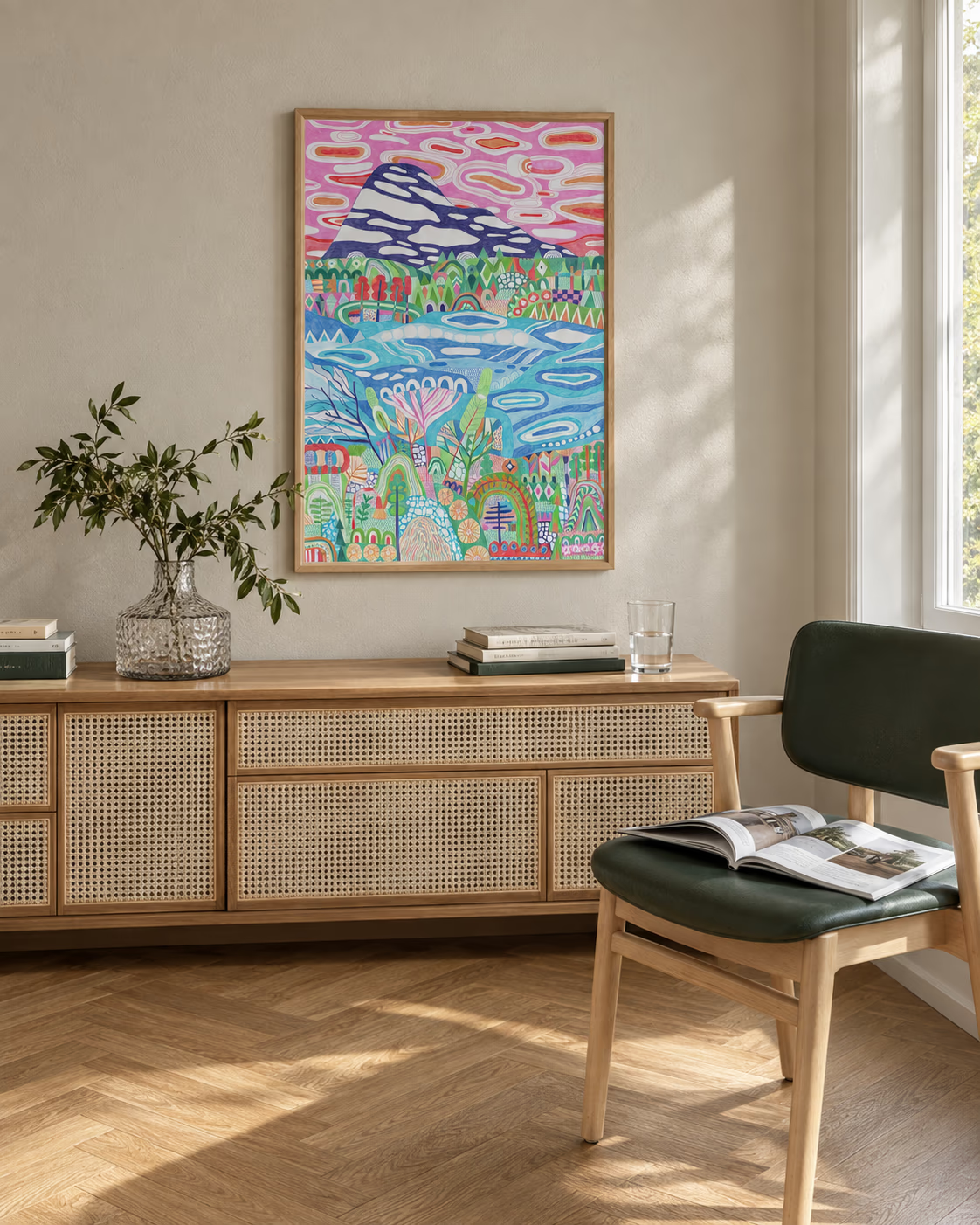
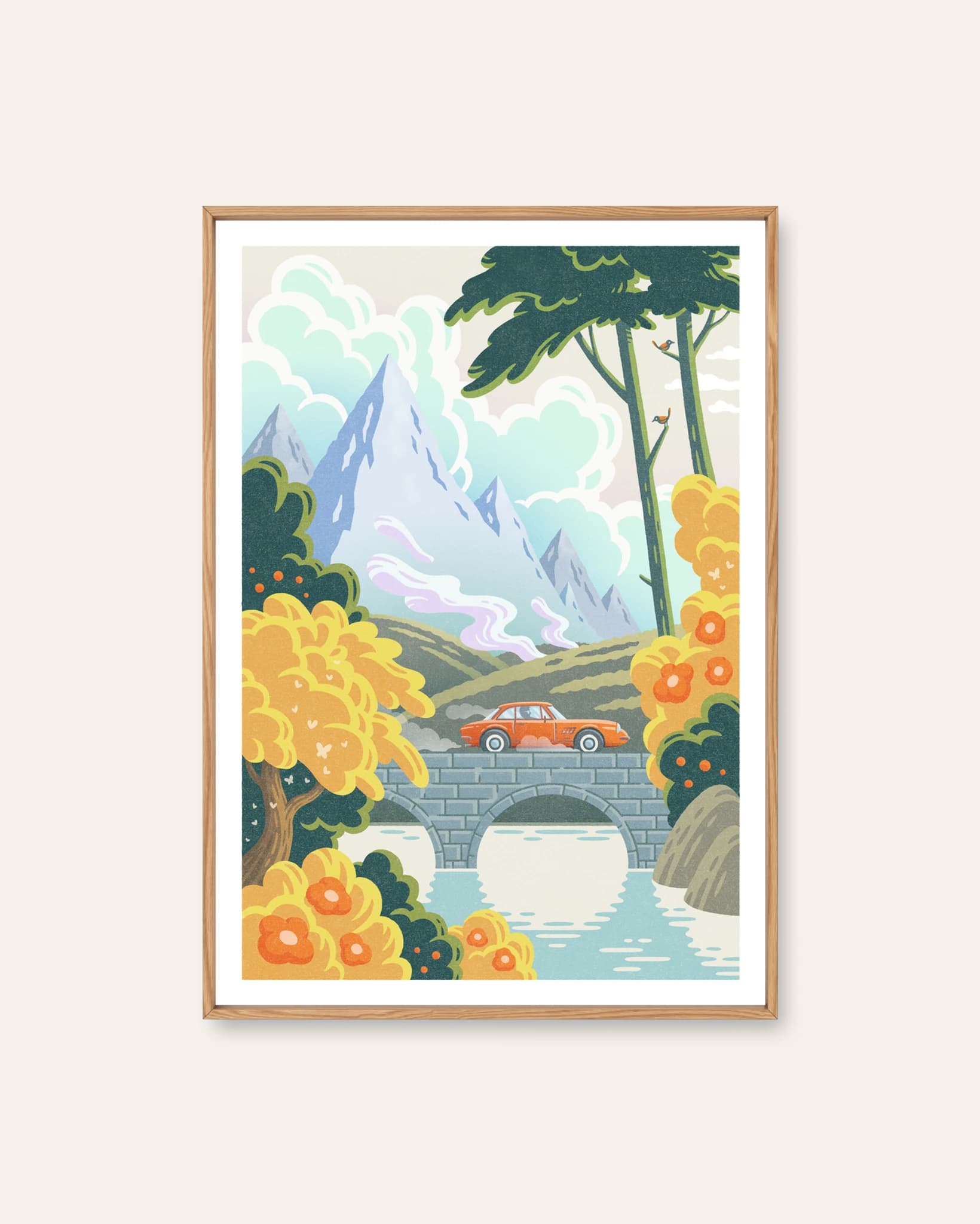
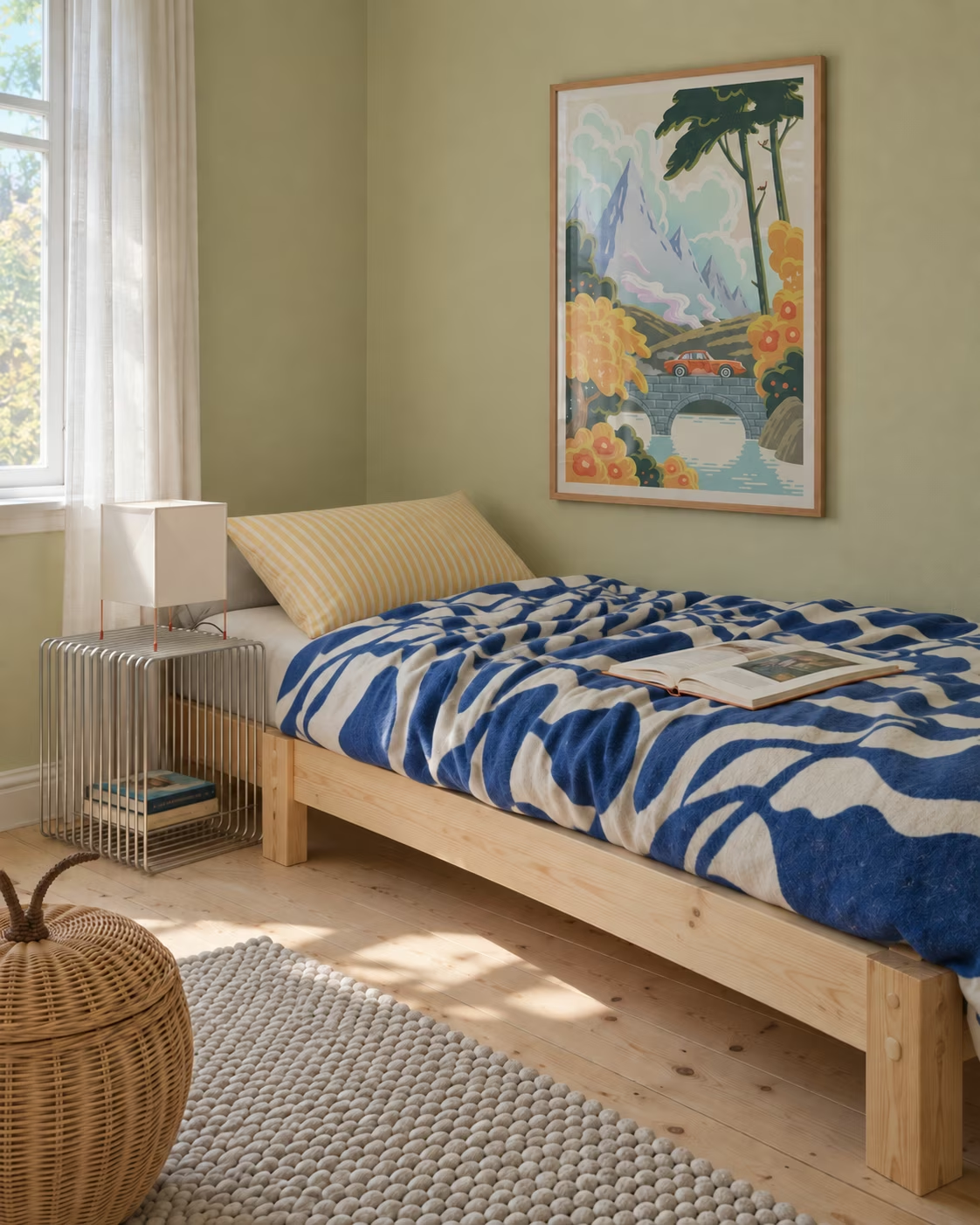
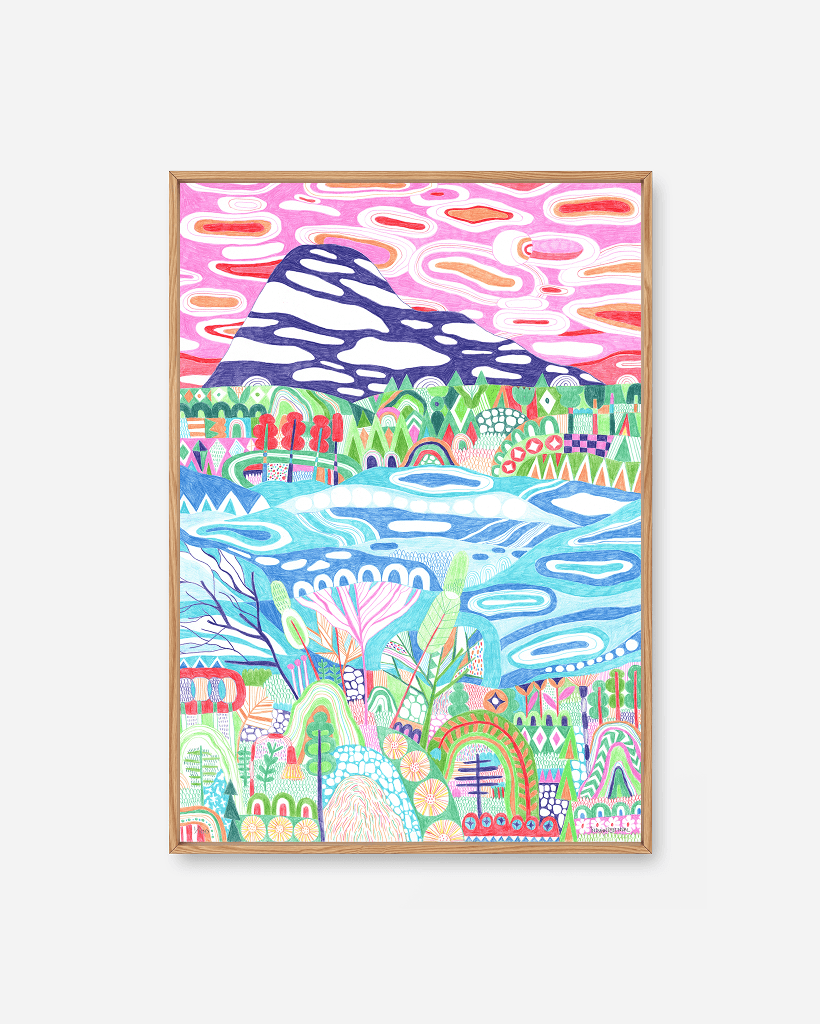
Nobody's selling you a Sohlberg, but the habit carries on in current work. Ingunn Dybendal's Eltsjoen turns a lake, a mountain and a forest into coloured-pencil pattern, with the water pooling in pale rings around a bridge. Mikko Saarainen's Journey puts a red car on a stone bridge below snow-capped mountains, in flat shapes the catalogue compares to old railway travel posters.
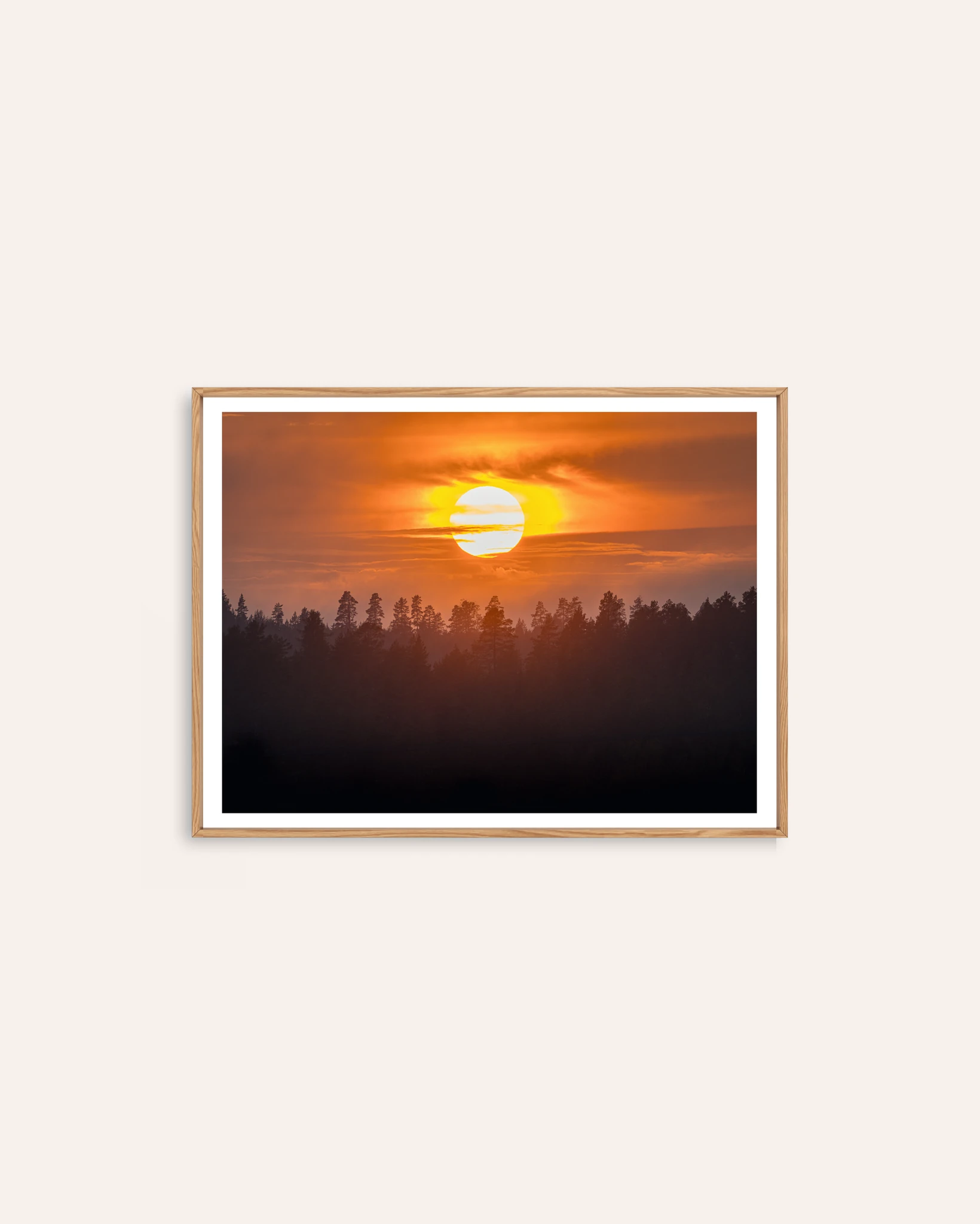
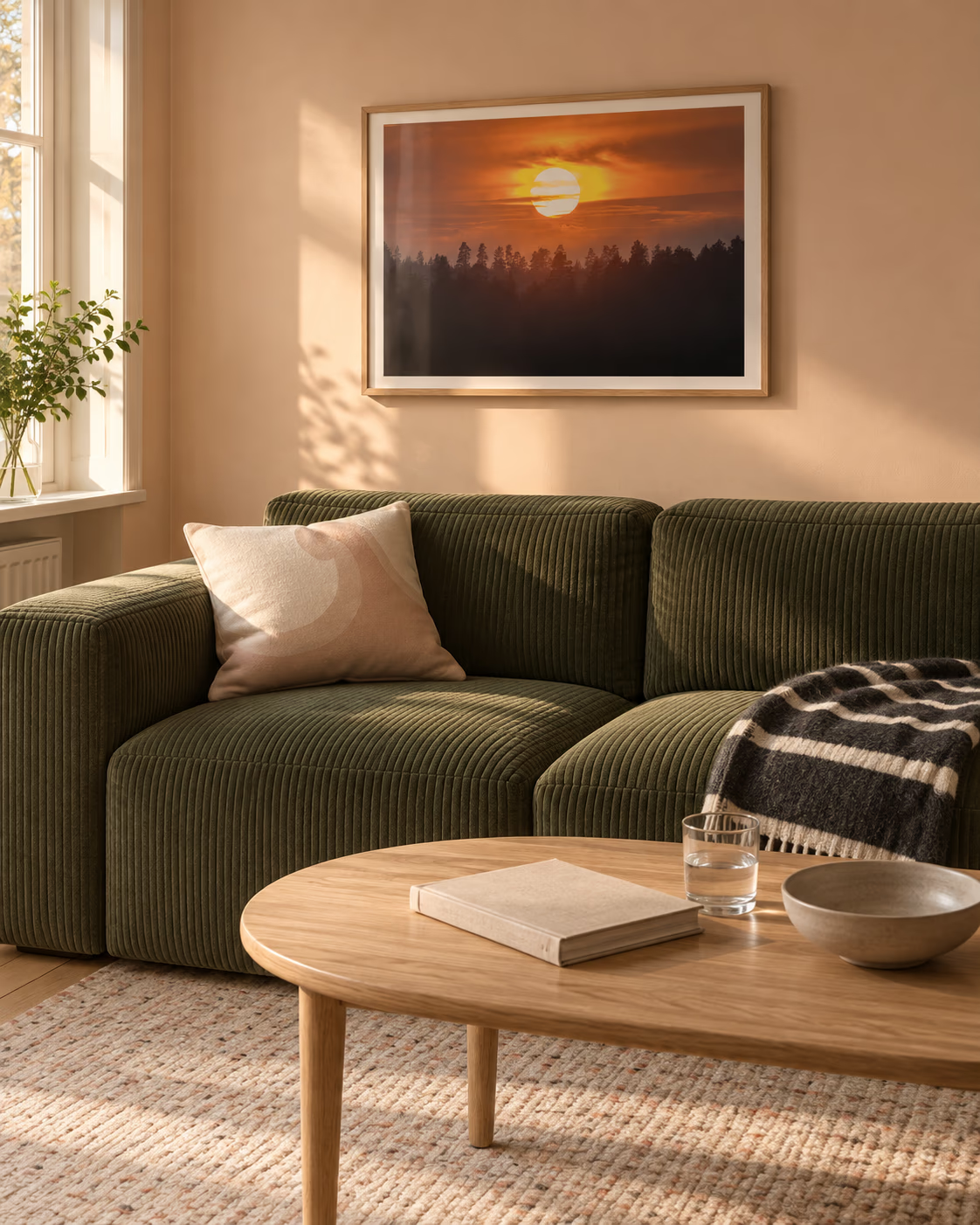
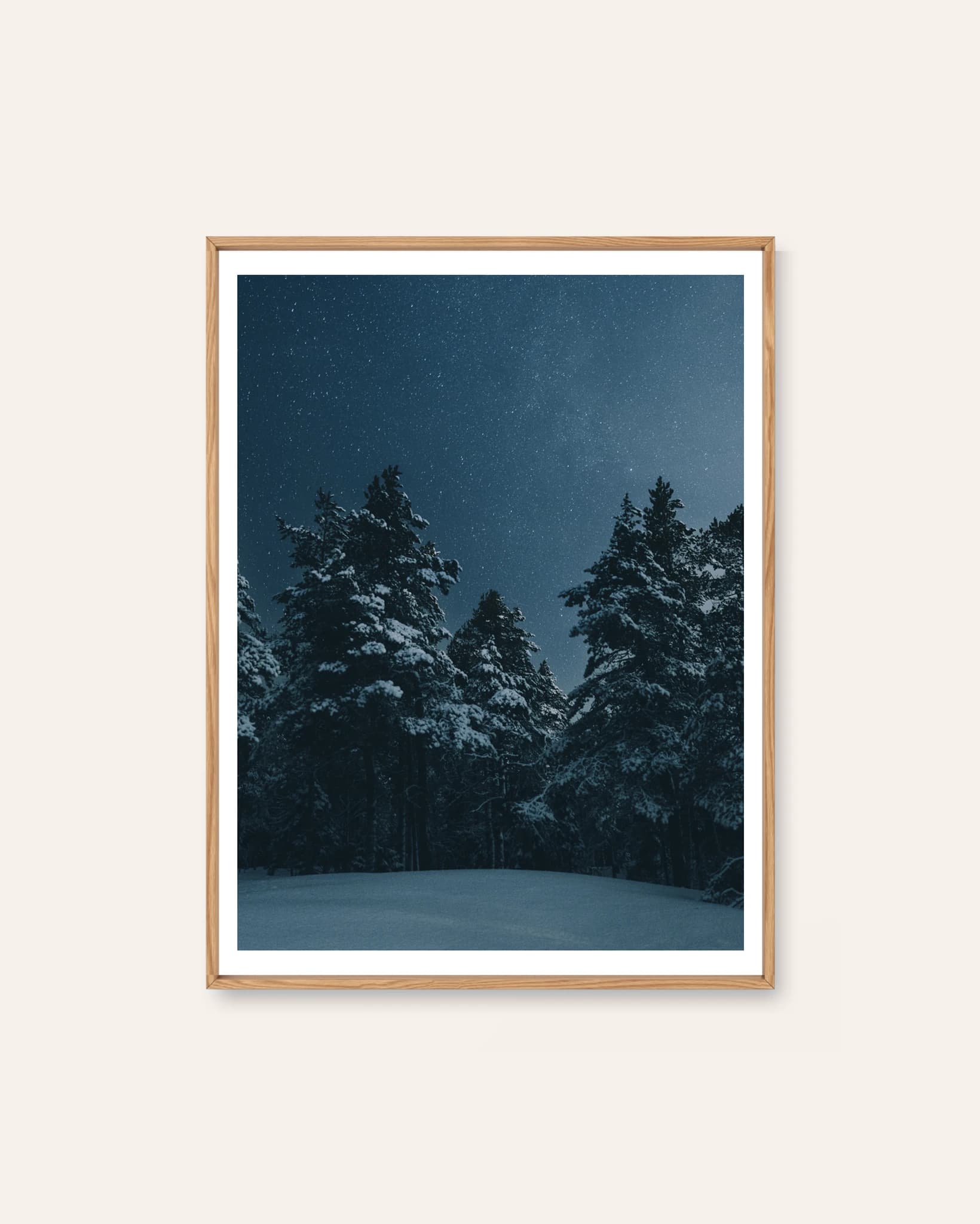
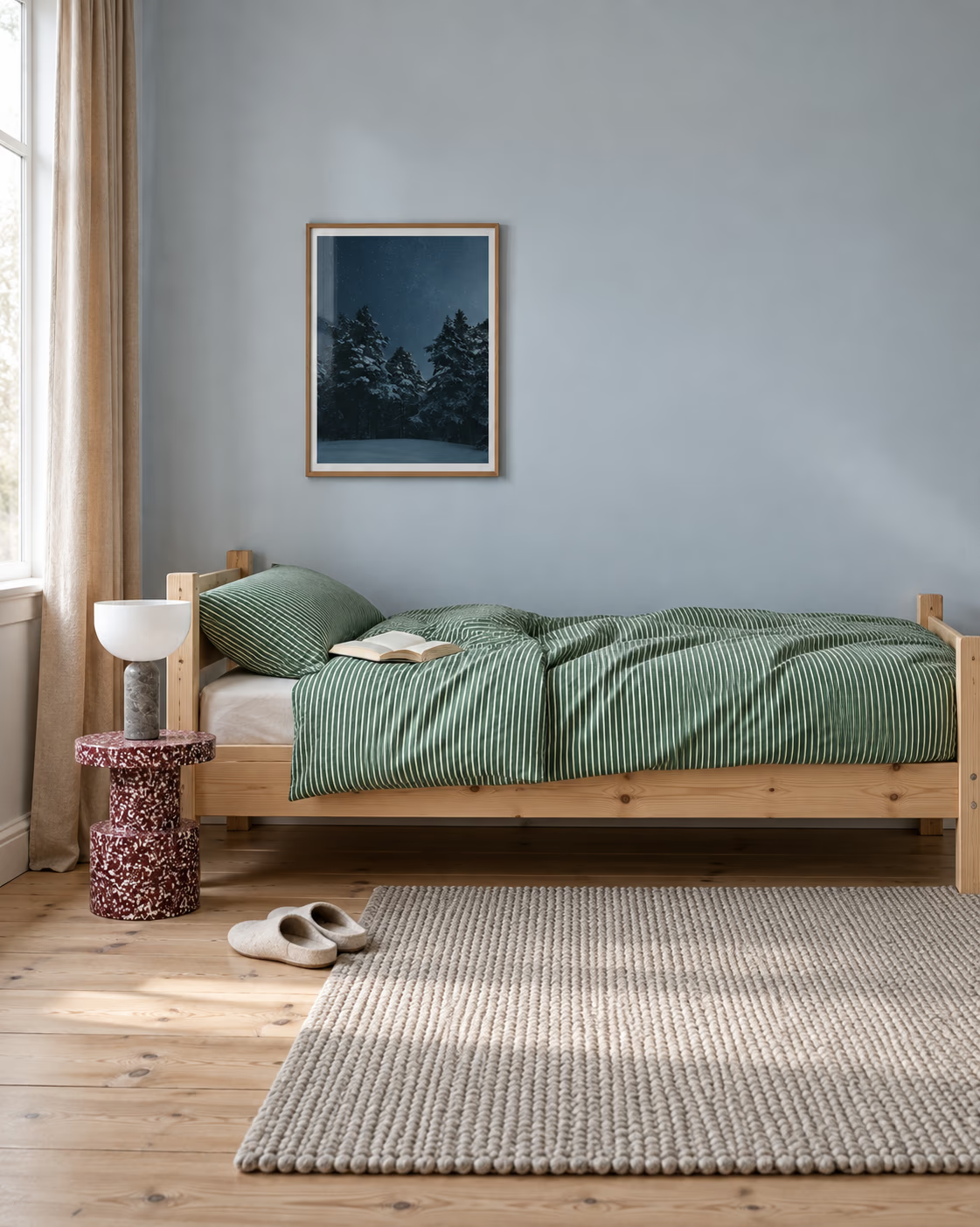
The photographers do it too. Markus Naarttijärvi's Sun Over the Forest is a huge hazy sun over a dark line of trees, and Pines Under Starlight is a snowbound night under the stars, in the same register as Sohlberg's, made with a camera. Neither is a painting, but both take the landscape as the subject and let it carry the whole picture. The photography category has the other eight.
For the movement that followed these painters, modern Scandinavian art picks up the story. And if you'd like the bigger frame first, what Scandinavian art actually is is the place to start.