How to frame an art print (and the size trap to avoid)
A frame can make a print look like a proper piece of art, or like a poster someone shoved behind glass. The difference is rarely money. It is usually four small decisions, made in the wrong order.
Start with the print, not the room. What is it doing, how much colour is it carrying, and does it need any help? Then work outwards.
Wood, black or white
The frame should be the least interesting thing on the wall.
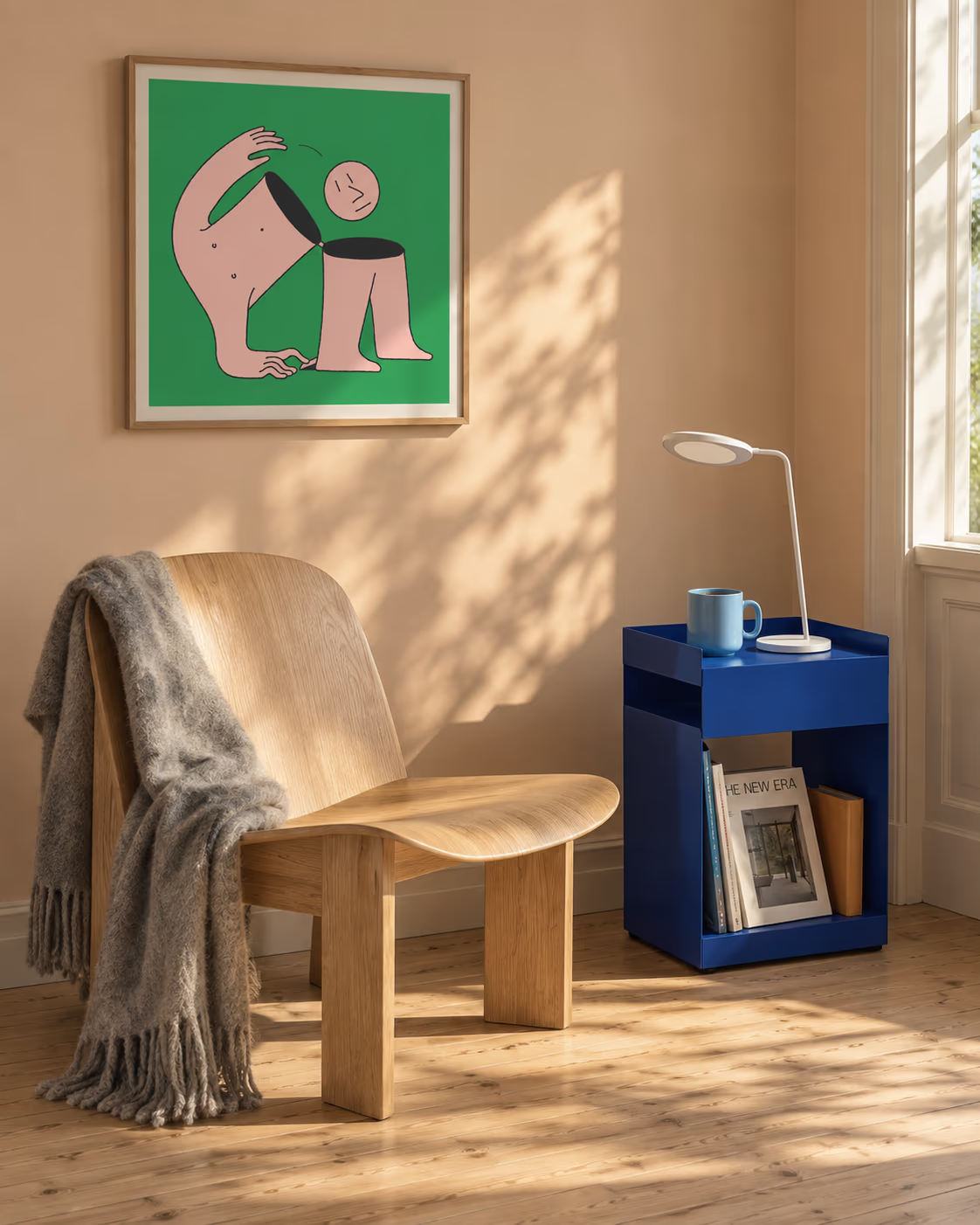
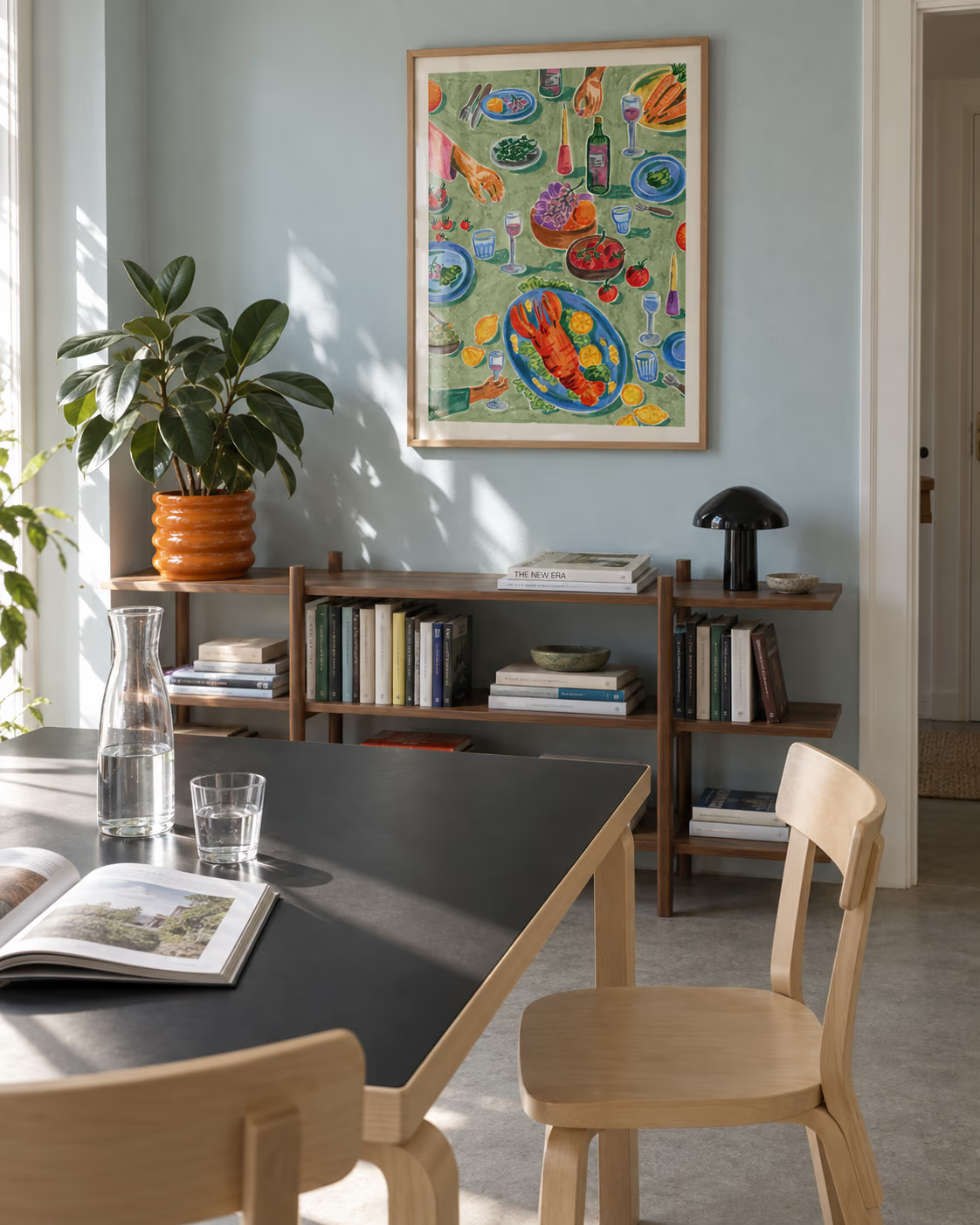
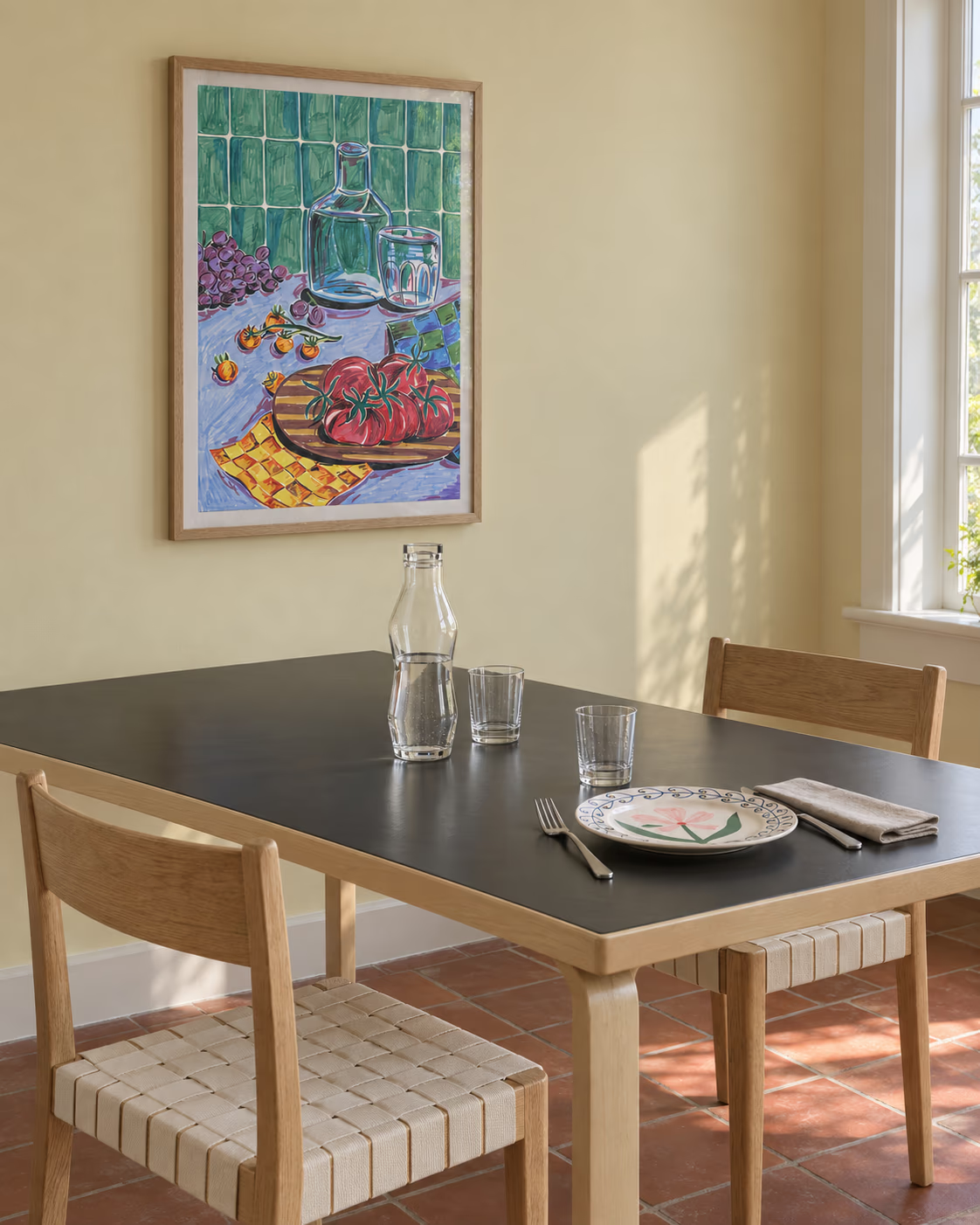
- Light wood is the safe Scandinavian answer. It warms up a cool print and stays quiet next to a pale wall. It suits anything with wood, wool or linen already in the room.
- Black gives graphic work an edge and a hard border. It works on prints that are already high contrast, like Eye Nose Eye on its near-black ground, or the square illustrations in the illustrations collection.
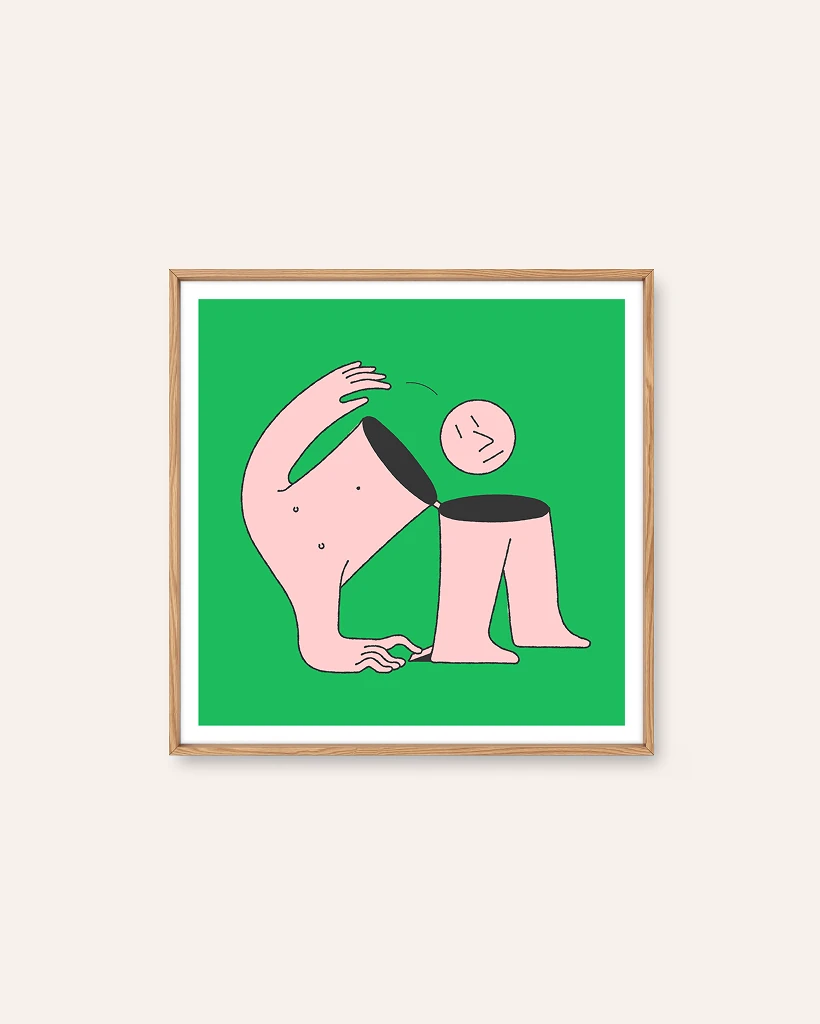
- White more or less vanishes against a white wall, which leaves the colour to do everything. Good for saturated pieces such as Half Man, where the bright green ground is half the picture.
If you already own frames, match them rather than introducing a third type. A wall of mismatched frames reads as clutter, not curation.
Mount or no mount
A mount is the card border between print and frame. It buys the image some air, makes a smaller print feel more considered, and keeps the paper off the glass, which matters over years.
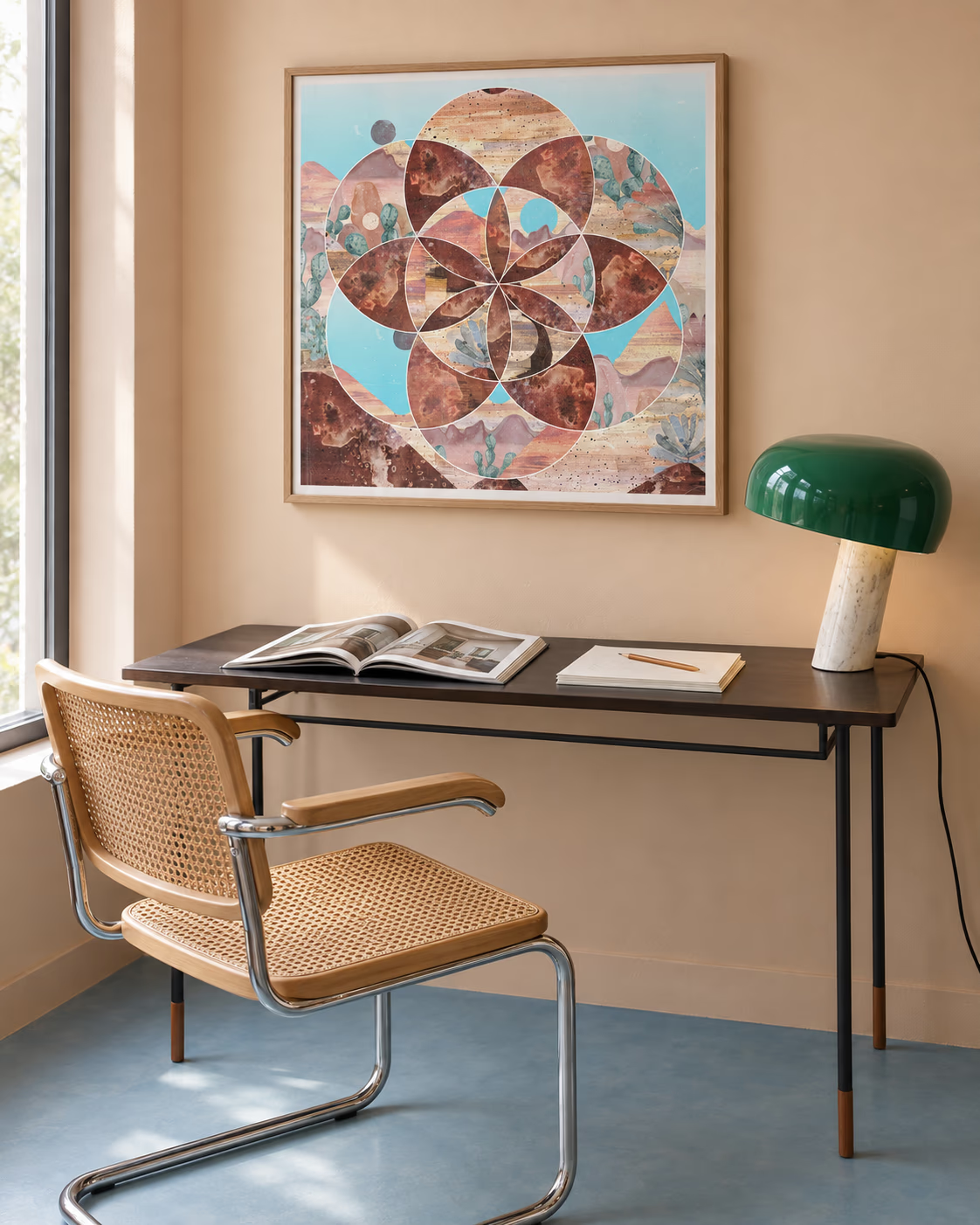
It is not compulsory. Prints that fill the sheet edge to edge, like Eltsjoen, gain the most from that pause between image and wall. Sparse prints supply their own margin already: Morgenstrekk has acres of quiet peach around the figure, and adding a mount to that is belt and braces.
One thing to budget for: a mount needs a bigger frame, and therefore a bigger patch of wall.
The size trap
This is where most orders go wrong. 50 x 70 cm is a standard European poster size, and it is not the same as A2 (42 x 59.4 cm). Buy an A2 frame for a 50 x 70 print and you will be trimming something you paid good money for. It cuts the other way too: a few prints here really are A2 or A3, and a 50 x 70 frame would swallow them.
Worth knowing before you shop:
- Each print comes in one size, shown on its product page, so check it before you buy a frame.
- Most prints in the gallery are 50 x 70 cm.
- Simen Wahlqvist's illustrations are square, 50 x 50 cm, with one exception: Morgenstrekk is 50 x 70.
- A few artists work to other formats: 45 x 60 cm and 40 x 50 cm for the photography, and A2 or A3 for some paintings.
If you are still deciding how big to go in the first place, the guide to choosing print sizes covers that properly, including the tape test.
Glass or acrylic
Glass looks better and stays flat. Acrylic is lighter, does not shatter, and is the sensible choice above a bed, in a child's room, or anywhere a door slams. If the wall faces a window, anti-reflective glazing costs more and is the only upgrade you will notice every single day.
Whatever you glaze it with, keep the print out of direct sunlight. Paper and ink last a long time on a wall out of the sun. They do not last forever pointed at a south-facing window.
Or just let it arrive framed
The unglamorous option is often the right one. Every print here can be ordered unframed, or with a wood, black or white frame, chosen on the product page before it goes in the basket. The three colours cost the same, and the price follows the size of the print: currently it adds anywhere from £18 for an A3 to £39 for a 50 x 70, and the exact figure shows on the page before you commit. It turns up ready to hang, which is worth something when the alternative is a Saturday at the framers with a cardboard tube under your arm.
Go unframed when you are matching frames you already own, or when you want a mount cut to your own taste. Otherwise the ready-framed route is quicker and perfectly good.
Once you know which frame you are after, the choosing gets easier. Have a look at the full collection and see which print the frame is for.