Scandinavian art as a gift: how to choose a print for someone else
Giving someone art means choosing something they'll look at every day, on a wall you probably only see now and then. That's why it's a better gift than most, and why it goes wrong more often than most. The fix isn't taste. It's a few questions you can answer before you spend anything.
What's a good gift for someone who has everything?
Something they wouldn't buy themselves, which is usually something with a point of view. What they rarely have is a picture that makes them smile when they walk past it.
That's the case for an illustration or a photograph over a safe, neutral print. A neutral print is easy to like and easy to forget. A print with a joke, a story or a bit of colour in it is the one a guest asks about.
How do you choose art for someone whose home you know?
Start with the room it's going into, then work backwards. Three things tell you most of what you need:
- The walls and the big colours. A pale room can take a loud print. A room already full of pattern wants something quieter.
- What's already hanging. If there's a gallery wall, a square print or a small print slots in. If there's one blank wall everyone comments on, that's where a single bigger print goes.
- How they live in the room. A print in a hallway gets seen close up and quickly. One above a dining table gets looked at for an hour at a time.
If you can't see the room, ask a partner or a flatmate for a photo of the wall you have in mind, or pick a print that doesn't depend on a colour scheme at all. Our guide to choosing wall art for a Scandinavian interior goes through the same questions in more detail.
Which print for which person?
Think about the person rather than the room and the shortlist gets short quickly. These are suggestions, and each one is a real print in the gallery.
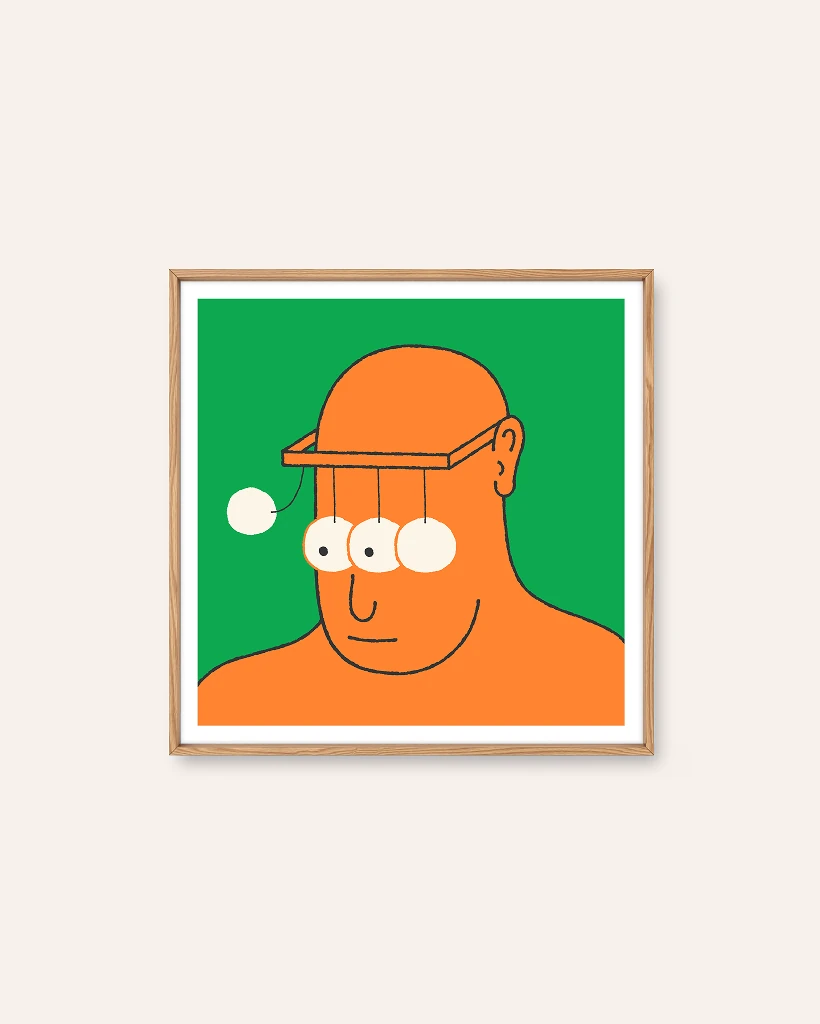
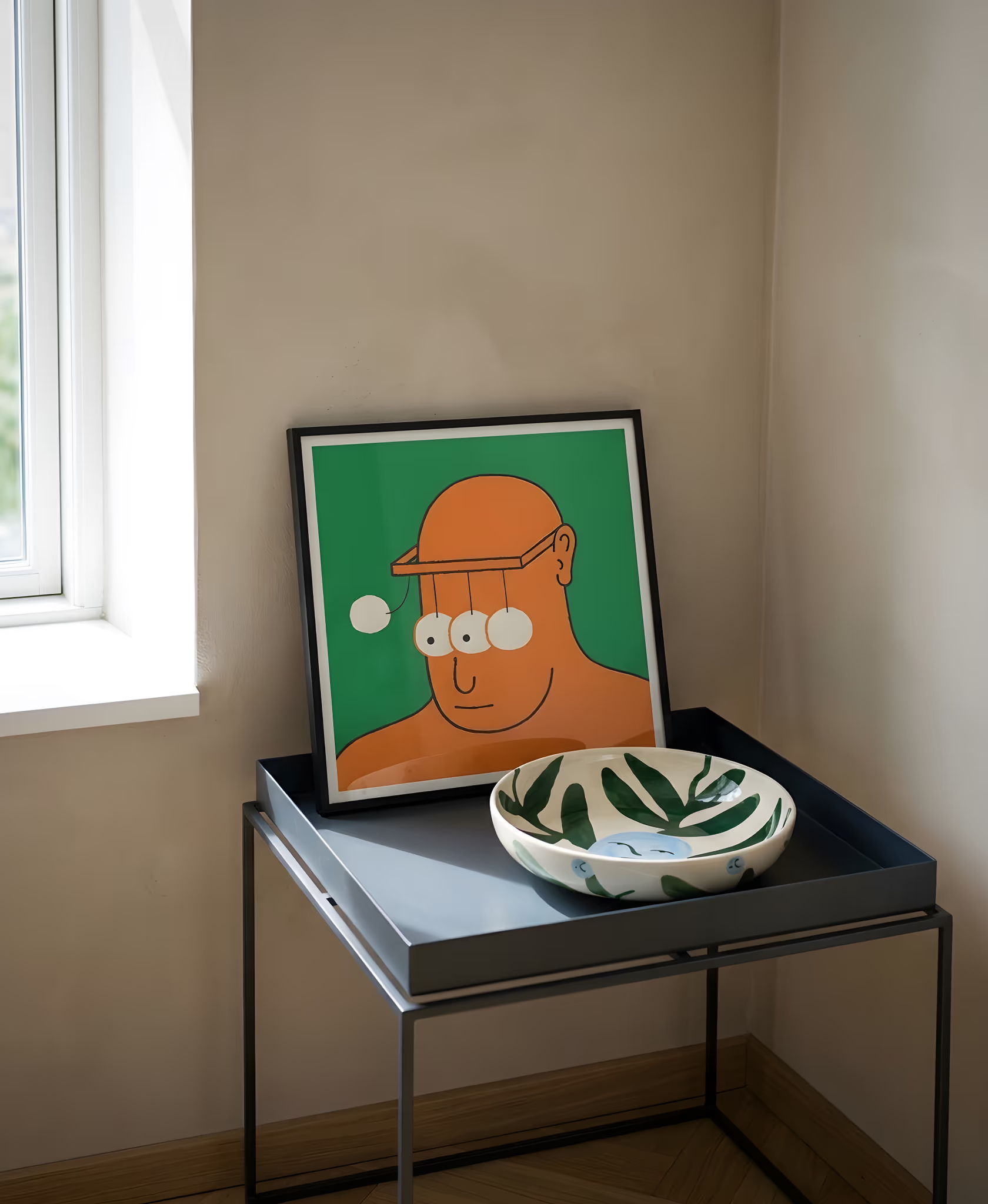
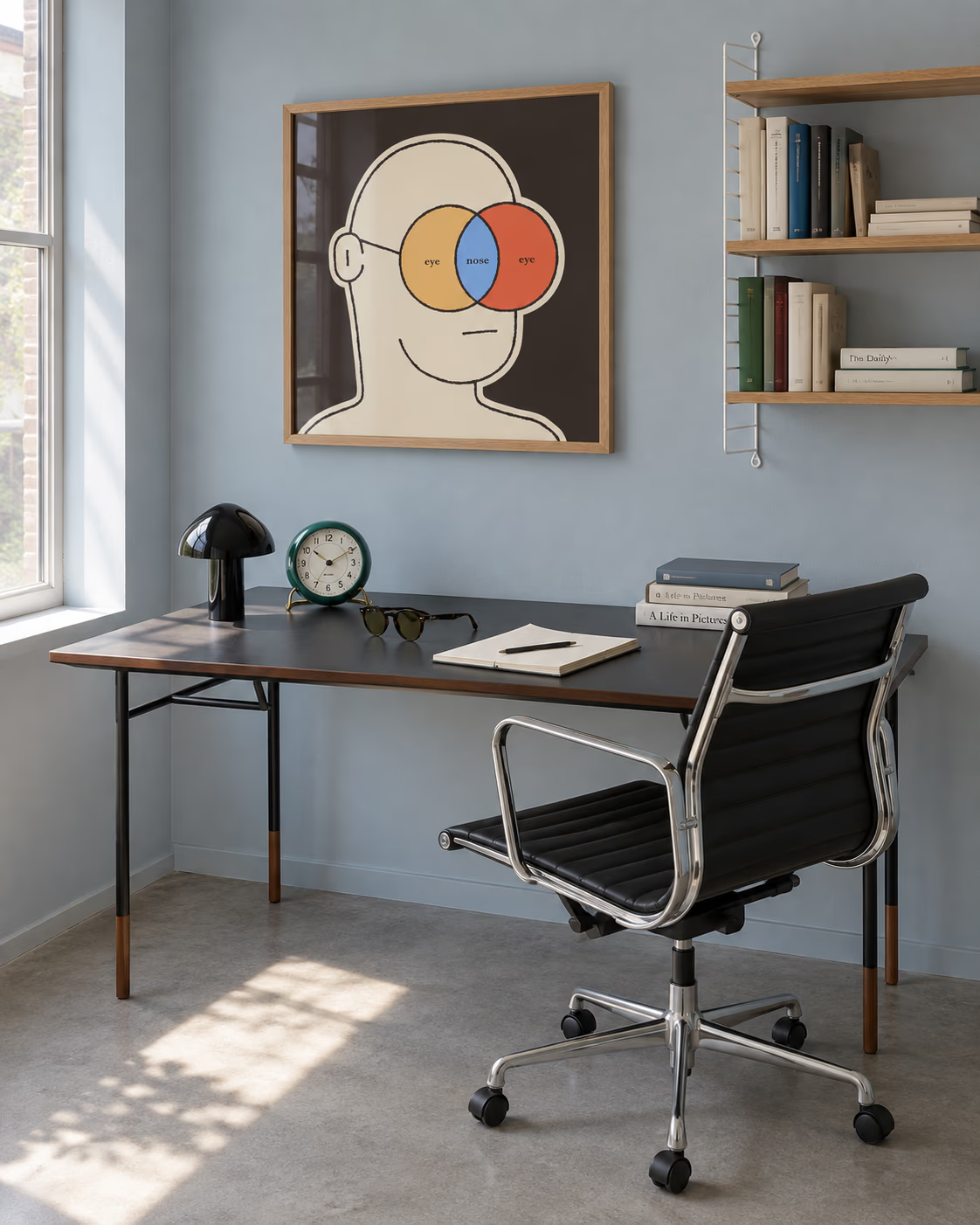
The dry one, who laughs without much noise. Simen Wahlqvist draws with as few lines as possible, and his bio says an illustration is done when it makes him laugh. Mean Snothing puts a Newton's cradle where a man's eyes should be, and keeps his face perfectly deadpan. Eye Nose Eye turns a face into a Venn diagram.
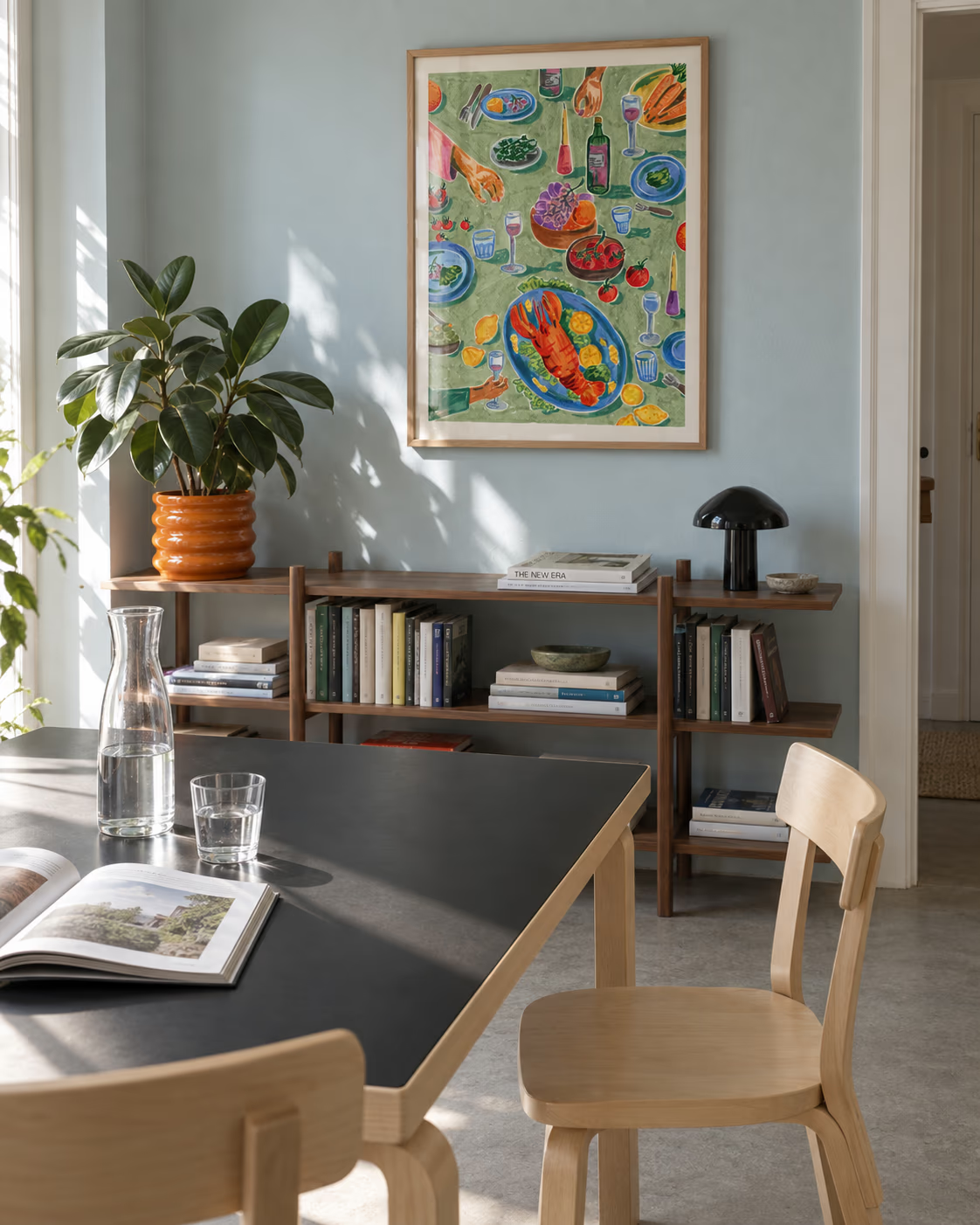
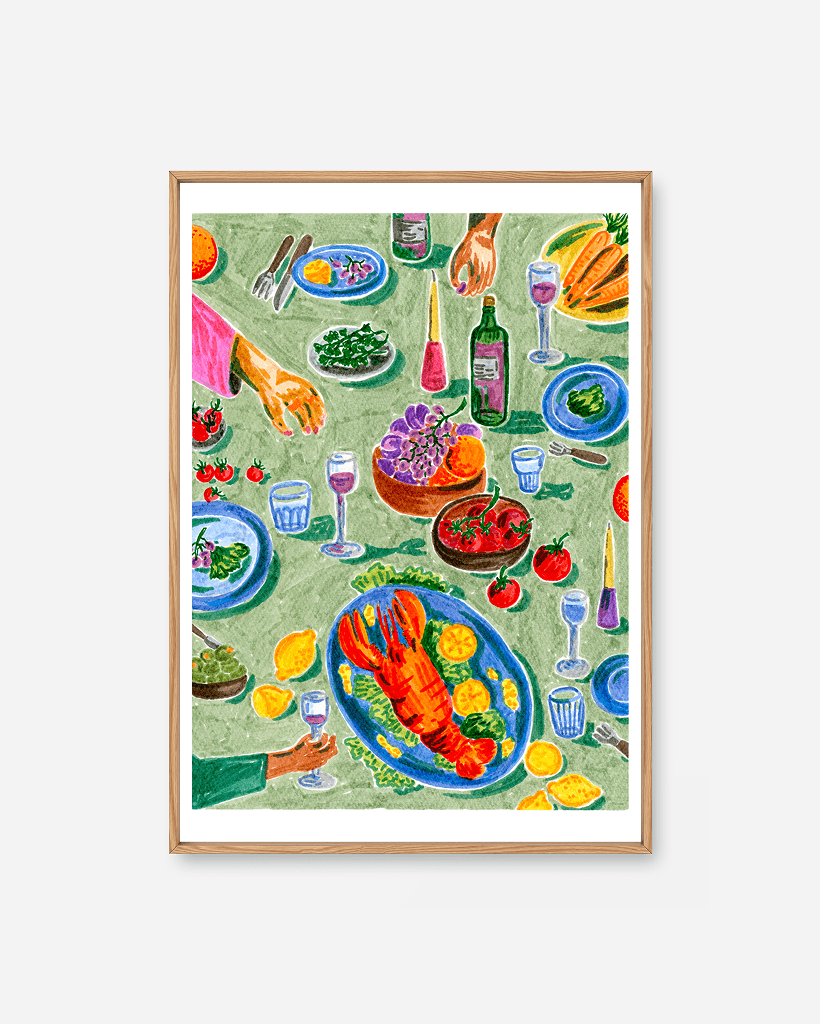
The cook, the host, the person whose kitchen is the party. Sia Siamos paints still life, food and everyday moments. Hummer og Vin is a lobster, lemons and glasses of red wine, "held mid-toast". Morgenlevering is a breakfast table in morning light. For something softer, Hedvig Wallin's Sunday Brunch is a pastel table in ink and watercolour.
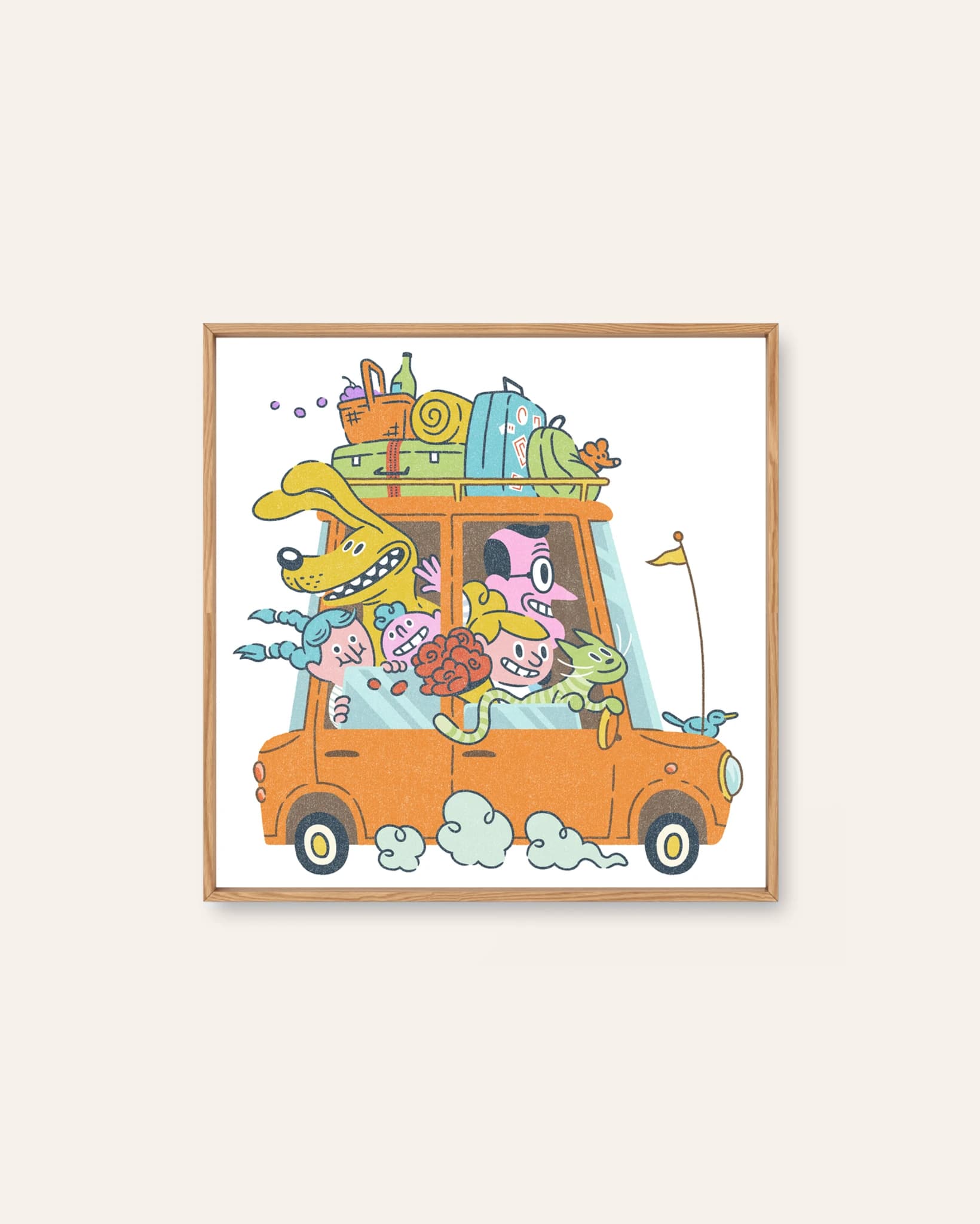
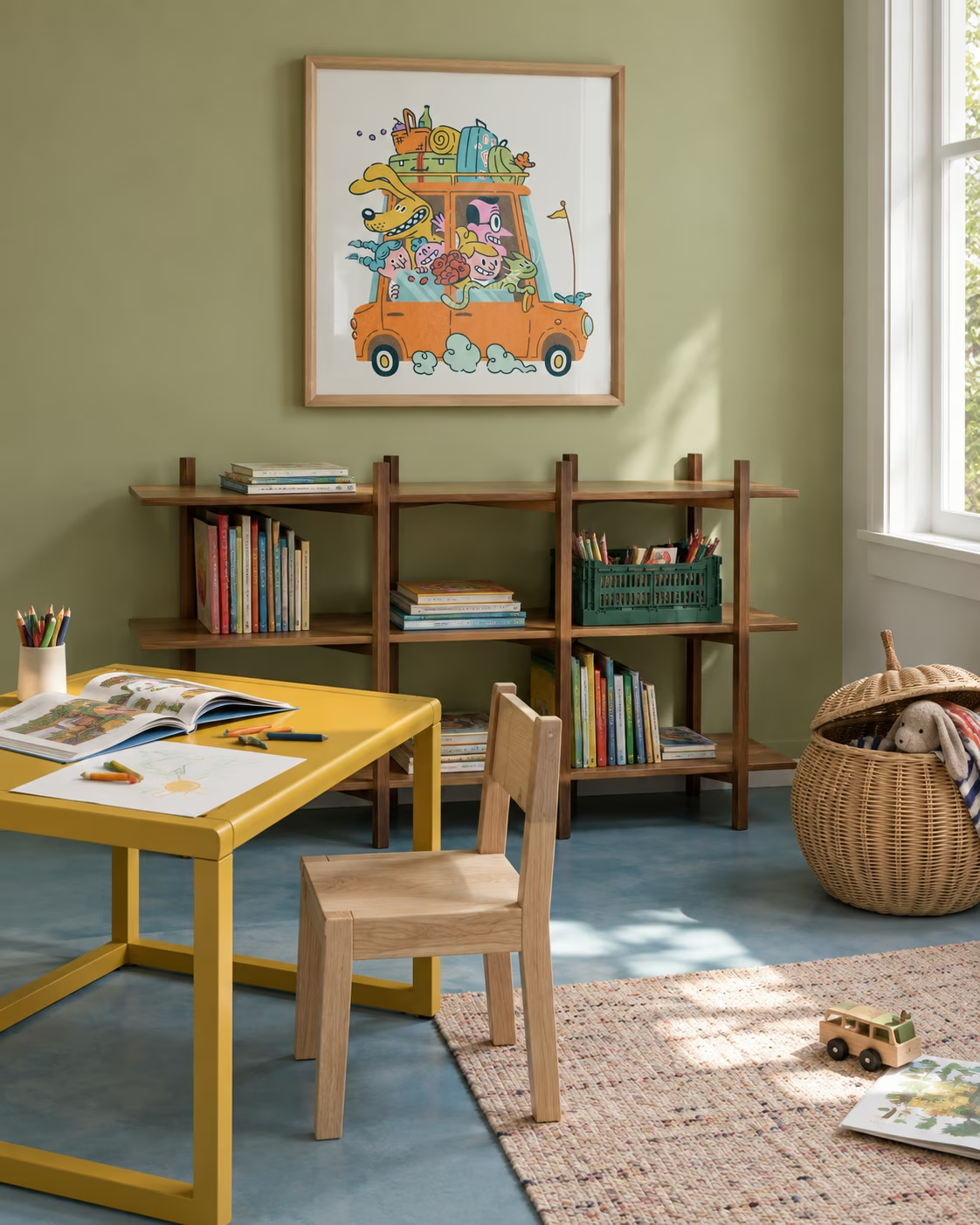
The family who are always on the move. Mikko Saarainen's Family Trip loads an orange car past the roofline with suitcases, a picnic basket, a dog and a cat. If you know a house with children and a packed boot, this one is for them.
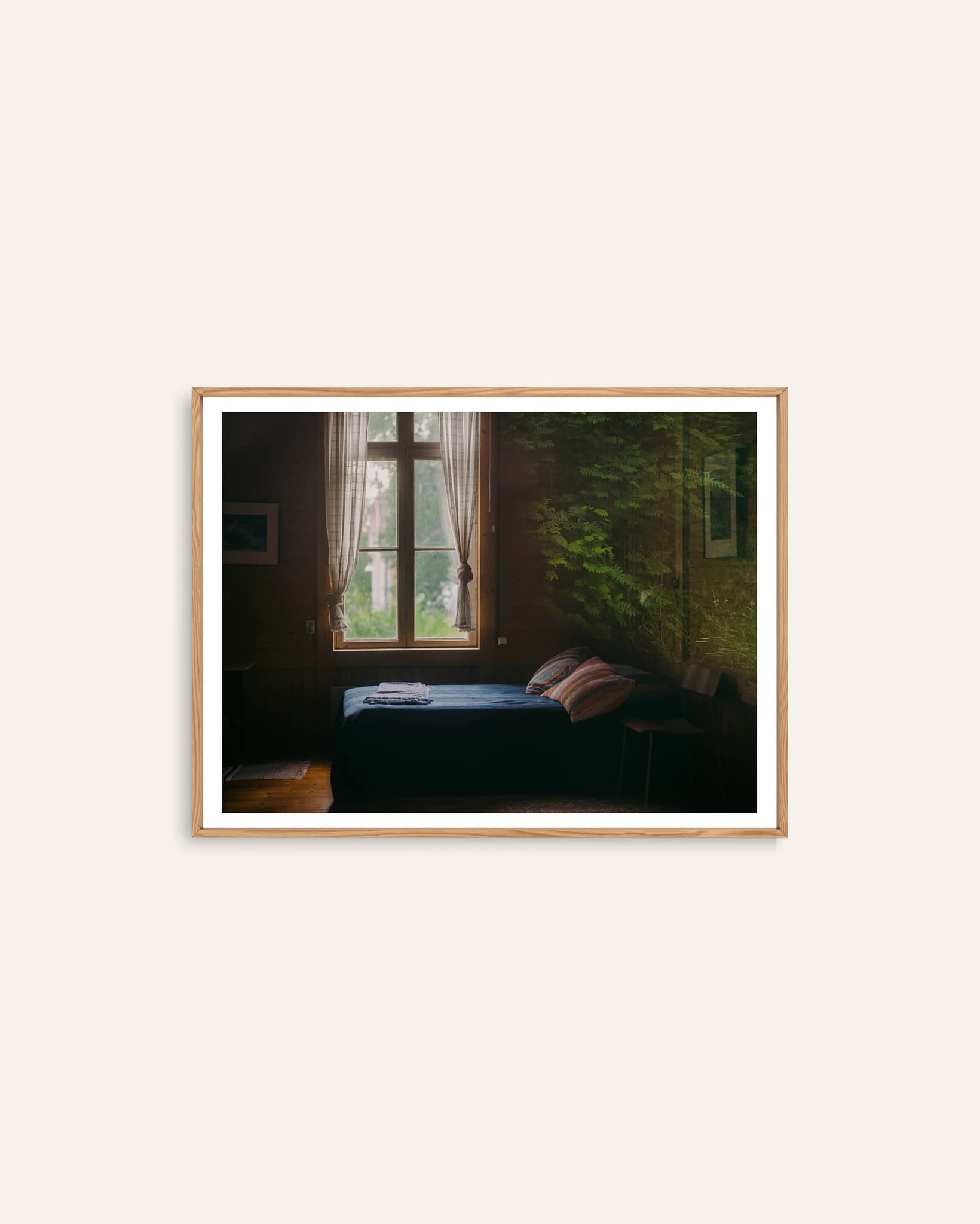
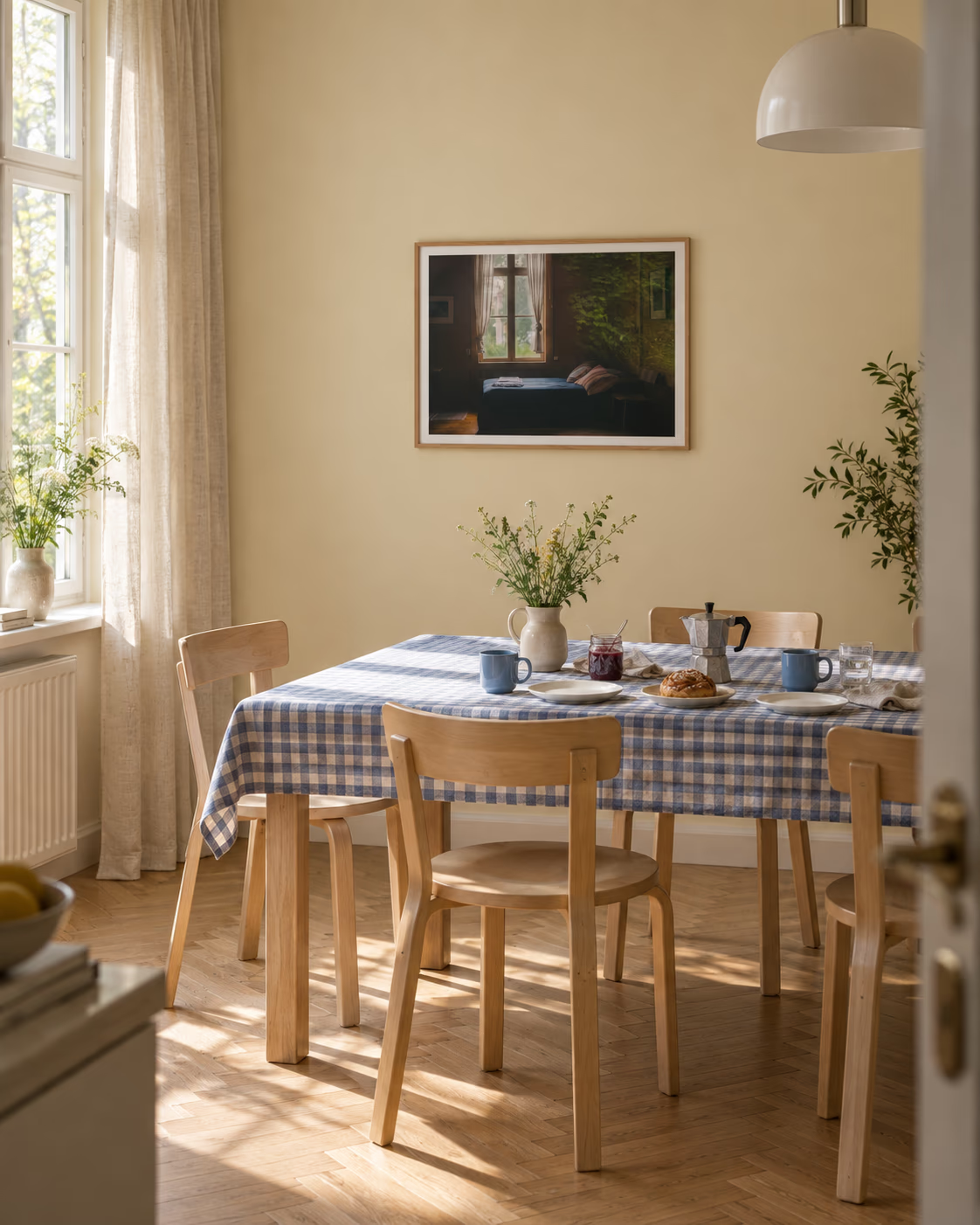
The quiet one, who loves a cabin and a long walk. Markus Naarttijärvi's photograph Morning, Cabin Room is soft light through lace curtains onto a simple bed. Swan on Still Water is a lone swan on a misty lake at first light.
The one who notices detail. Ingunn Dybendal's Eltsjoen is a Nordic lake drawn in dense coloured pencil, and her bio's motto is "more is more is more is more". It rewards close looking.
What about a housewarming, a wedding or a new baby?
For a housewarming, pick something for the wall where guests land, usually the living room or the hall, and go for confidence over subtlety. Simen Wahlqvist's Slingshot is white on a bright tomato red ground, drawn with the fewest lines the joke will allow. It won't fight furniture they haven't bought yet.
For a wedding, a table scene says more than a landscape does. Hummer og Vin is a long evening, which is a fair description of the day.
For a new baby, look at the prints that sit well in a child's room and will still hang well when the child has moved out of it. Hedvig Wallin's Small House Big Ocean is a little house on a rock in a sea of black ink waves, and the description says it suits a child's room as well as a living room. Ishtar Bäcklund Dakhil's Flight Over the Valley is a spread from her children's book, in A3.
What size should you buy?
Prints in the gallery come in different sizes, and each print comes in the size listed on its page. Among the ones above, Mean Snothing, Family Trip and Slingshot are 50 x 50 cm squares, Hummer og Vin is 50 x 70 cm, and Morning, Cabin Room is 45 x 60 cm. The print size guide has the rules of thumb for how big a print looks on a wall.
When you don't know the wall, the square is the forgiving shape. It sits on a shelf, above a desk or in a run along a hallway. The taller rectangles want a clear stretch of wall, so be surer of the room before you buy one.
Should you frame it?
Frames are optional. Each print can be ordered with a wood, black or white frame, and the price depends on the print's size and shows on the product page. Without one, it's the print alone.
If you know their taste in frames, an unframed print lets them match what they own. If you don't, ordering a frame with it saves them a job, and a plain wood or white one is hard to get wrong.
What should you check before you order?
Every print is made to order and shipped worldwide, with delivery charged at checkout. Read the delivery and returns page before you buy, not after: it covers how production works, what the estimate at checkout means and how cancellation works. If you're ordering for someone else, keep the order confirmation, because the order number is what you'll need if anything goes wrong.
Then choose the one you'd be pleased to see on a friend's wall. Start with the illustrations if you want a smile, or browse everything on the Scandinavian wall art page.