How to choose a Nordic art print for your room
A print can look right on a screen and feel wrong once it's above the sofa. Before choosing, look at the room from the place where you'll actually see the work: the chair, the doorway, the end of the bed.
Three decisions will narrow the choice. How much colour can the room take? Do you want a recognisable subject or something closer to pattern? And how far away will you be when you look at it?
If you'd rather start with a shortlist, our seven Scandinavian art prints to buy gives a reason for each pick. This guide helps you decide which kind of print belongs on your wall, using work from our own gallery as examples.
Start with the room's colour
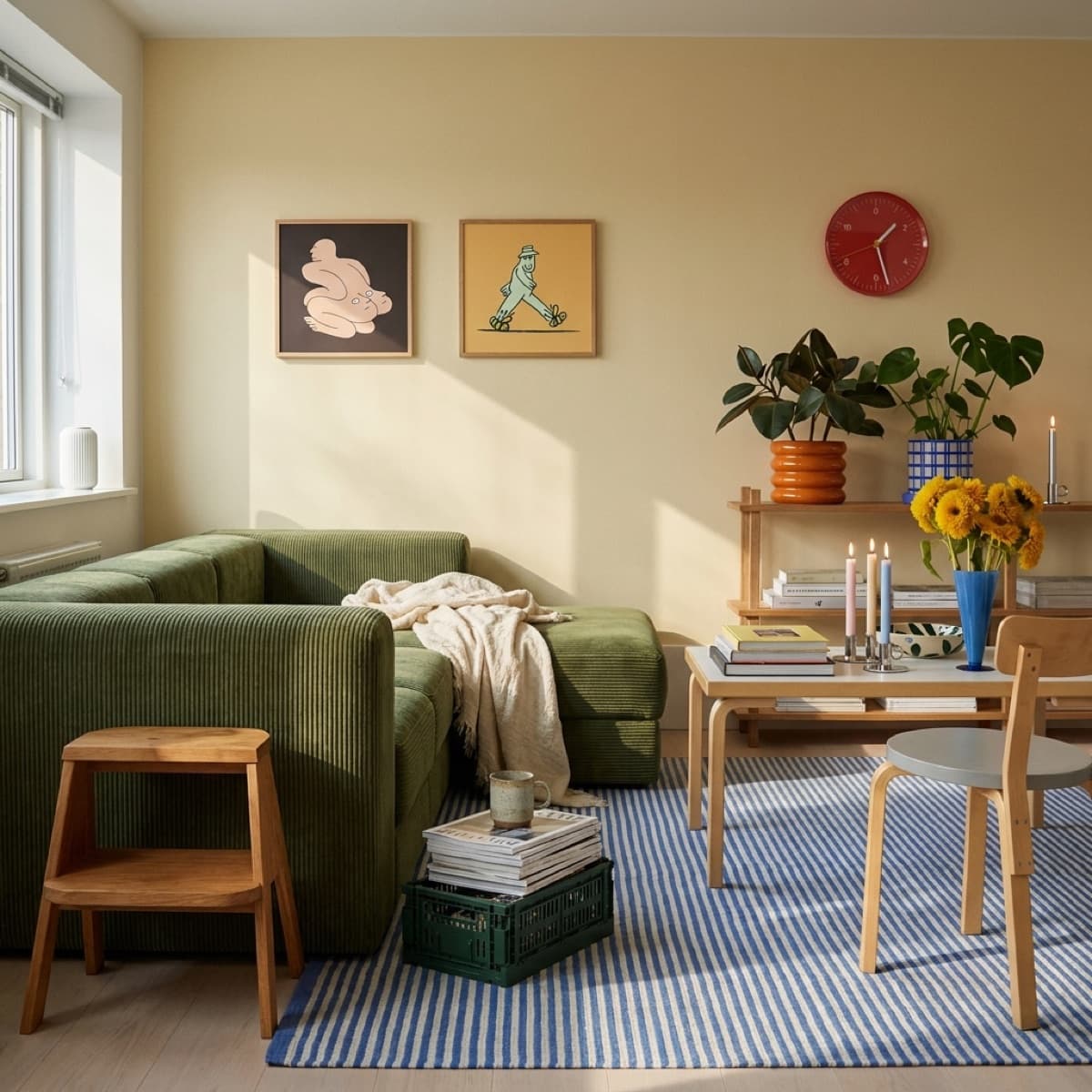
Choose one thing you want the print to do. It might repeat a colour that's already in the room, or bring in the colour the room is missing. You don't have to match every cushion.
In a pale living room, Simen Wahlqvist's Half Man makes a clear focal point, a pink figure on a bright green ground. Eye Nose Eye is darker, a cream head on a near-black ground, so try it against the whole room rather than judging the colours in isolation. Both are assertive choices; give them room to be seen.
If the furniture and textiles already carry plenty of pattern, try a more limited palette. Morgenstrekk is ochre on warm peach. Small House Big Ocean is drawn entirely in black ink line. Quiet colour doesn't have to mean an empty picture.
Decide what you want to look at
Some people want a subject they recognise. Others prefer a shape or a rhythm they don't have to name. Neither choice is more Scandinavian than the other.
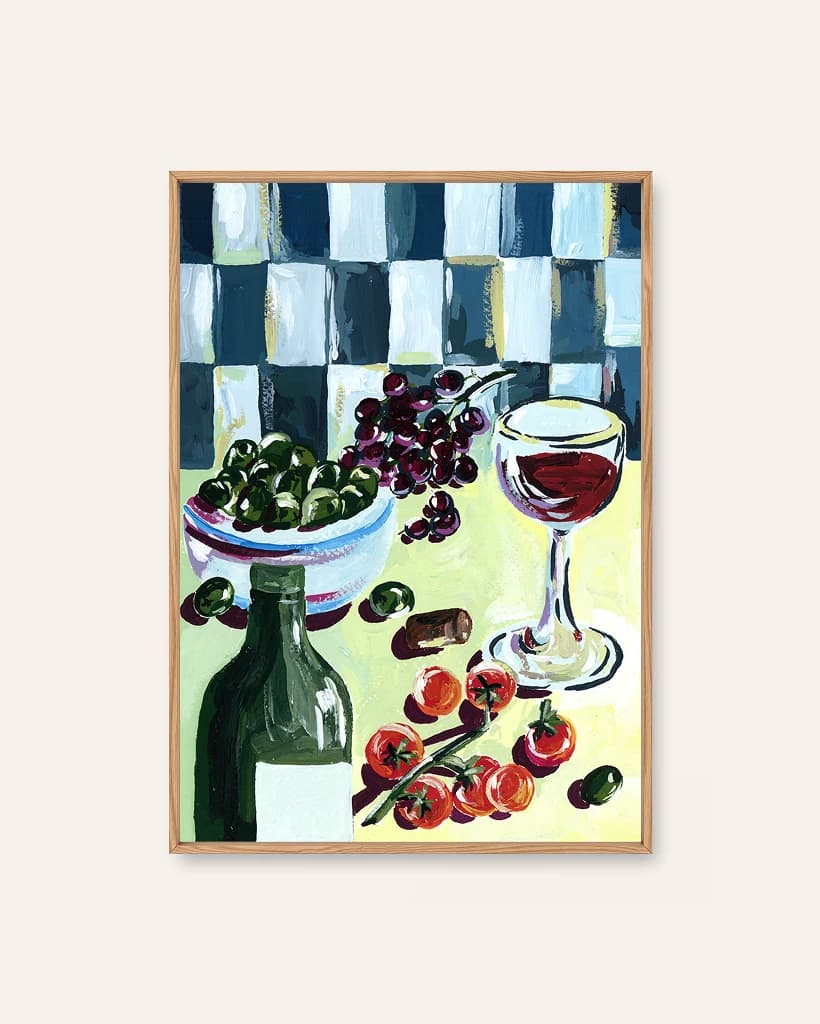
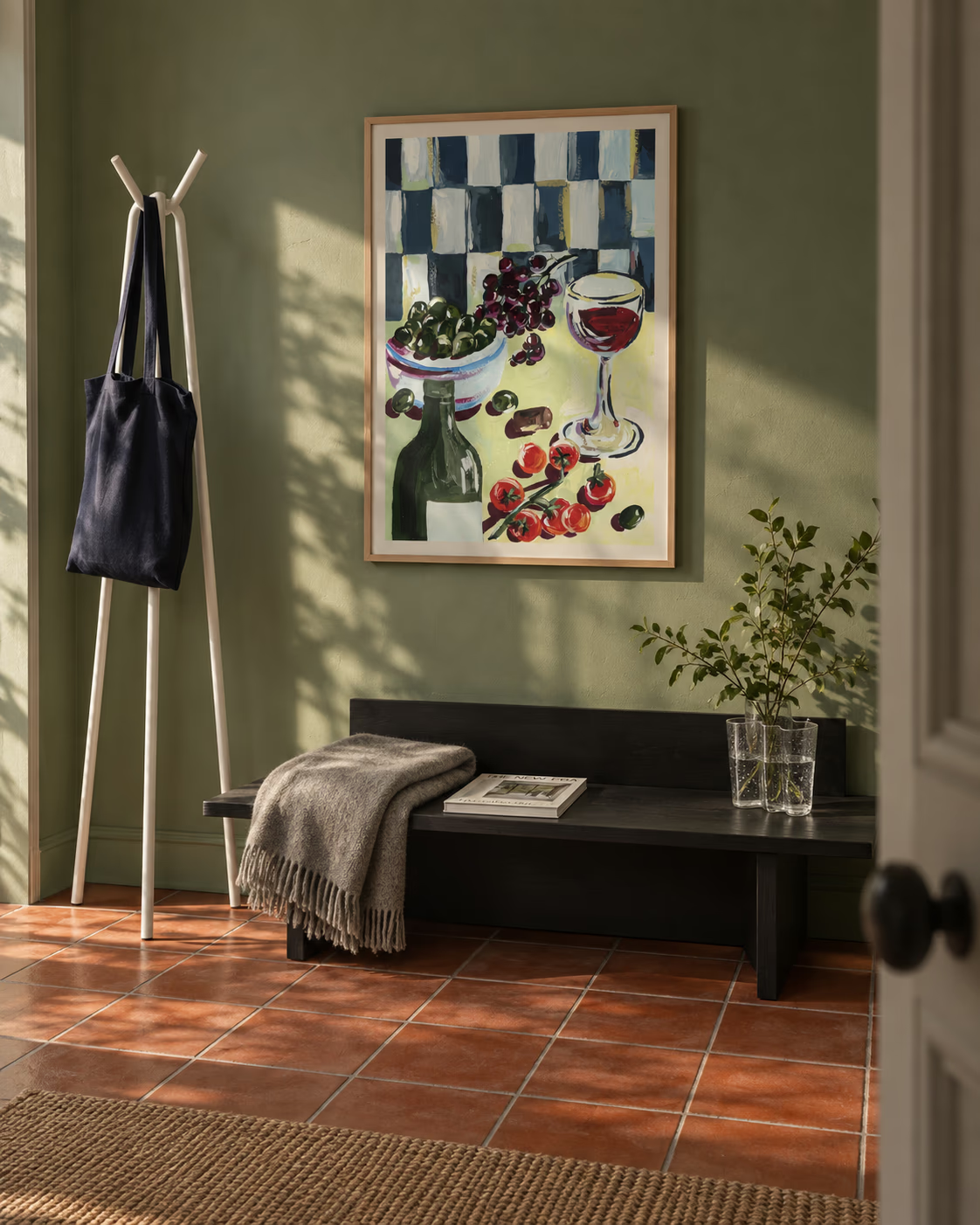
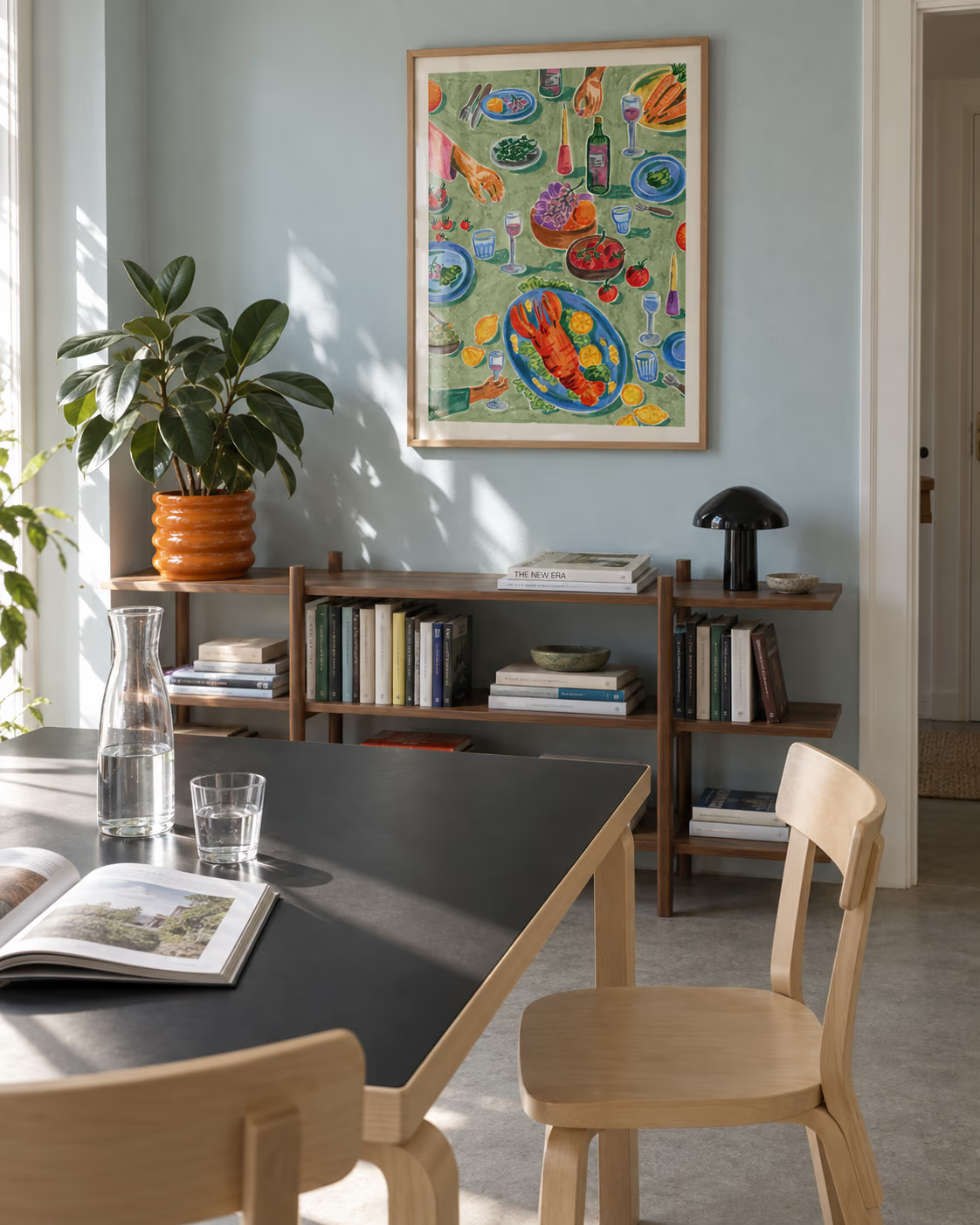
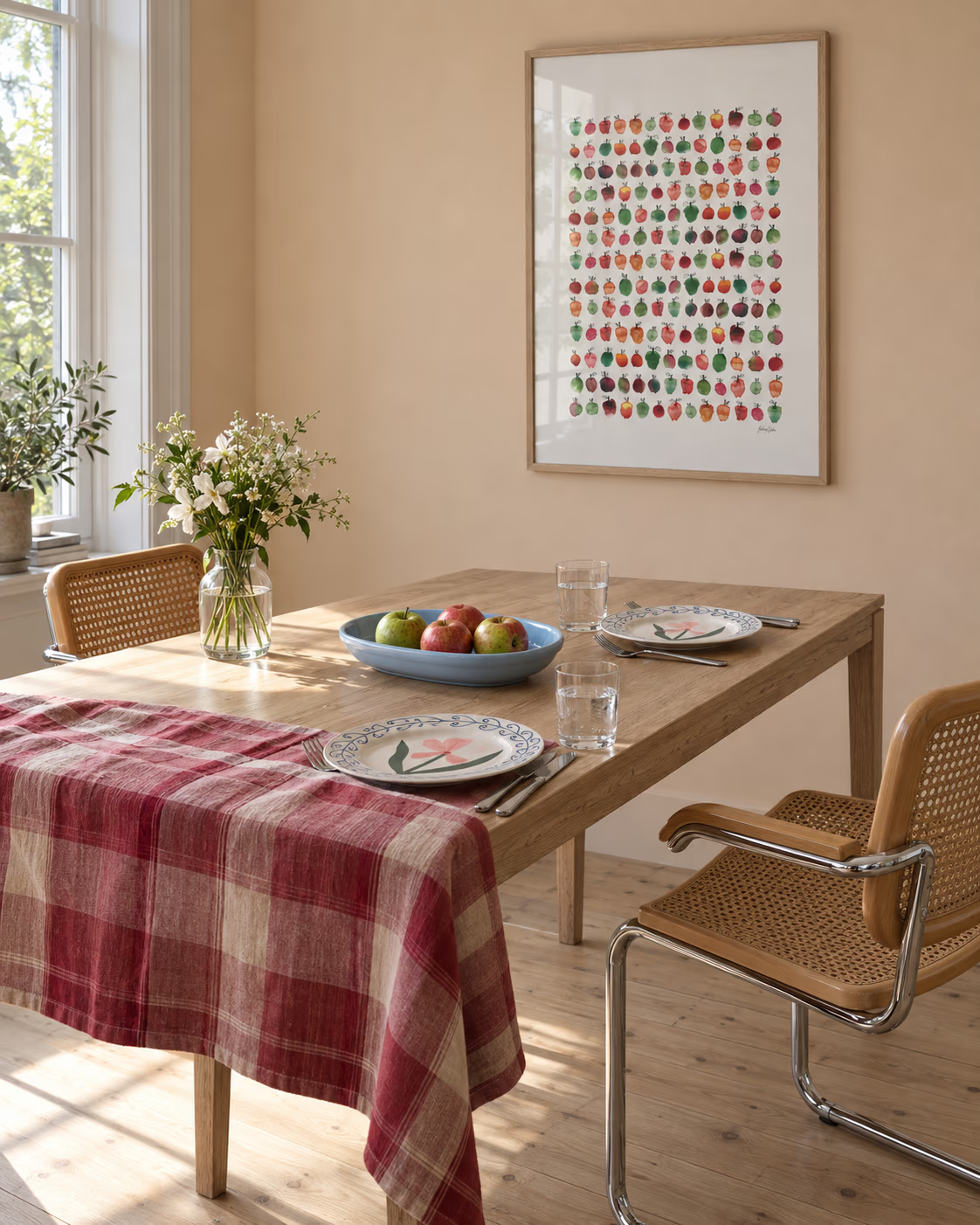
For a kitchen or dining wall, Sia Siamos's Vinkveld puts wine and food at the centre of the picture. Sunday Brunch, by Swedish artist Hedvig Wallin, is a lighter, playful table scene. Start with the kind of atmosphere you enjoy, then browse the kitchen prints.
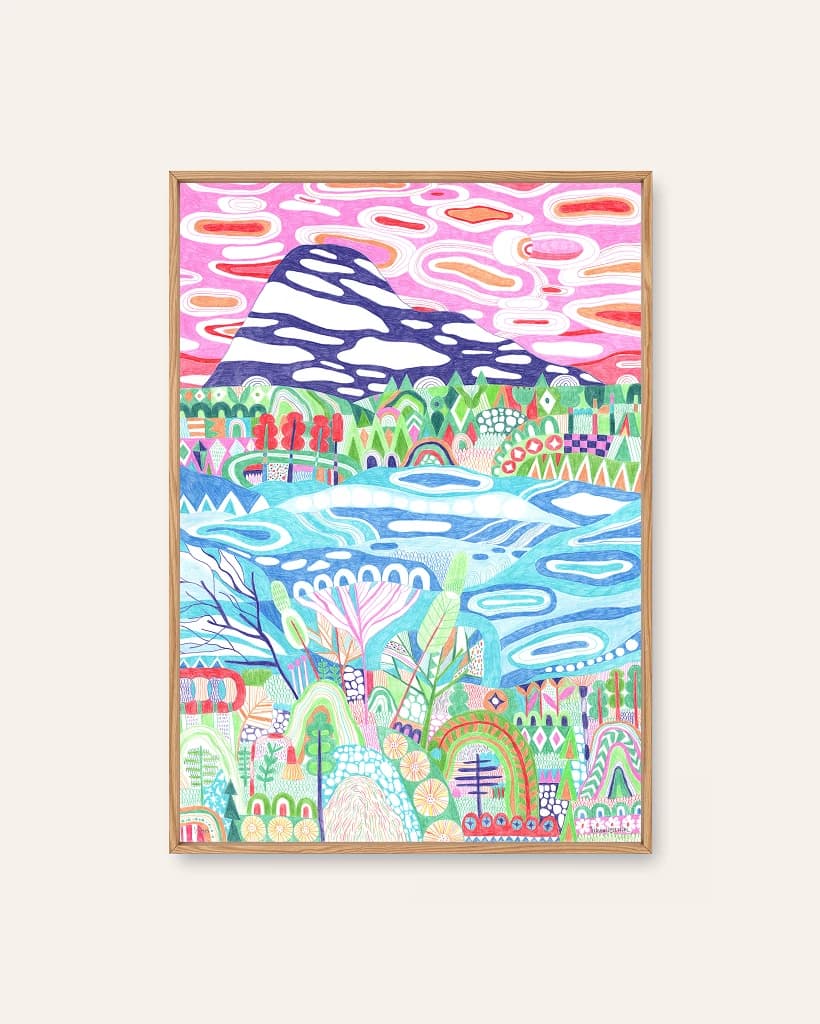
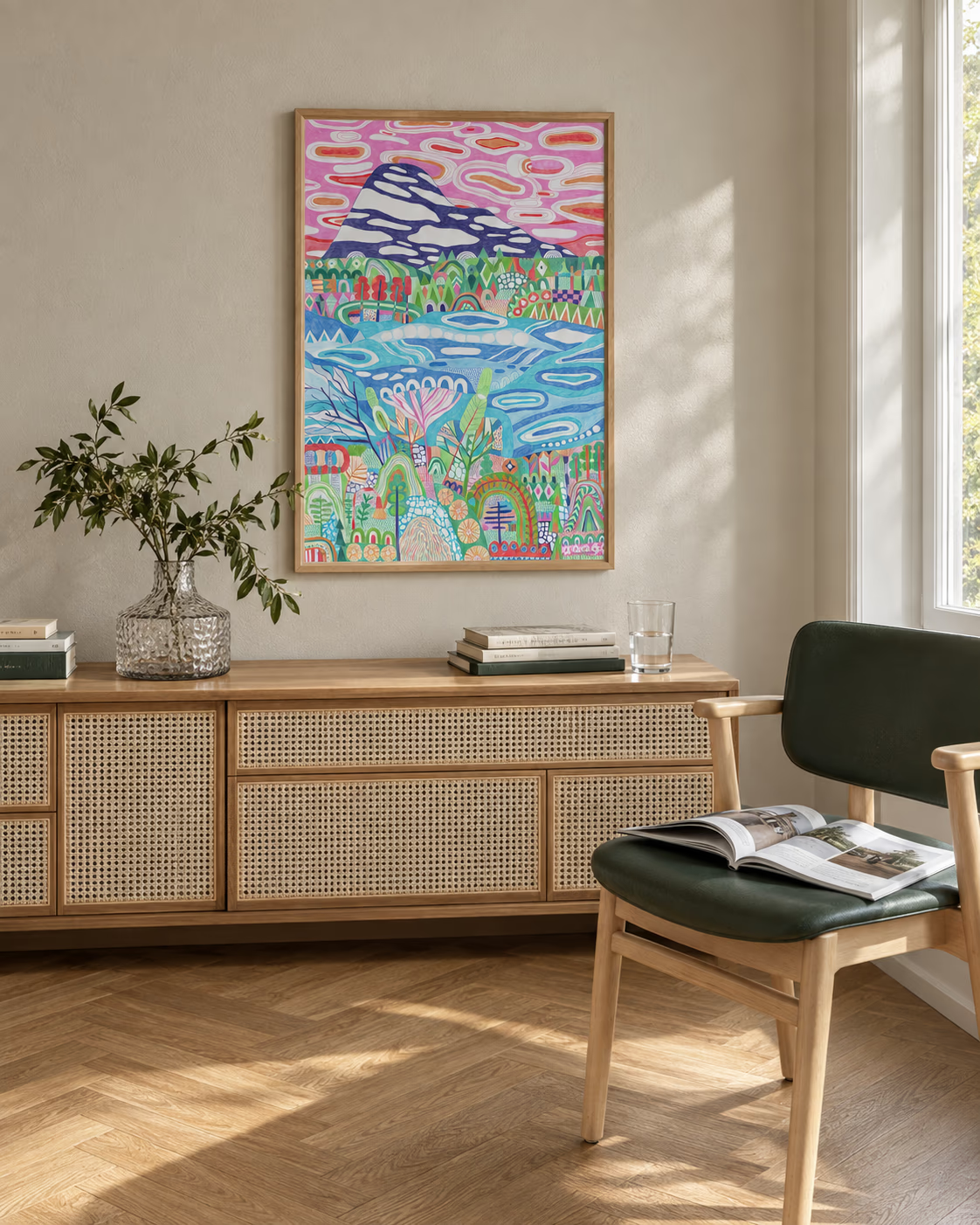
For work that sits between a picture and a pattern, look at Ishtar Bäcklund Dakhil's Desert Circles. It's a desert landscape, but the overlapping white circles that divide it carry the image. Ingunn Dybendal's Eltsjoen takes the opposite route: a recognisable lake landscape builds into dense coloured-pencil detail. Trysilkaffe applies that decorative richness to flowers on a table.
Check the viewing distance
A print beside your desk gets a different kind of attention from one across the living room. Detail such as Eltsjoen's gives you something to keep looking into at close range. A broad shape or a limited palette is easier to take in from a doorway.
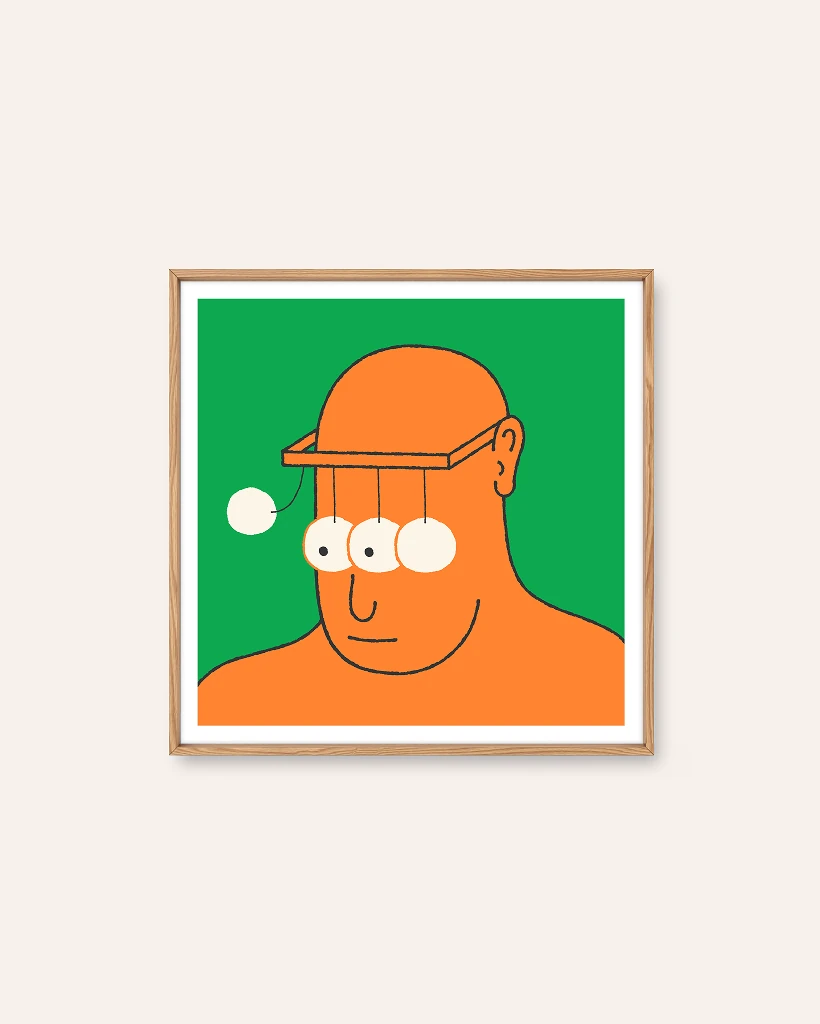
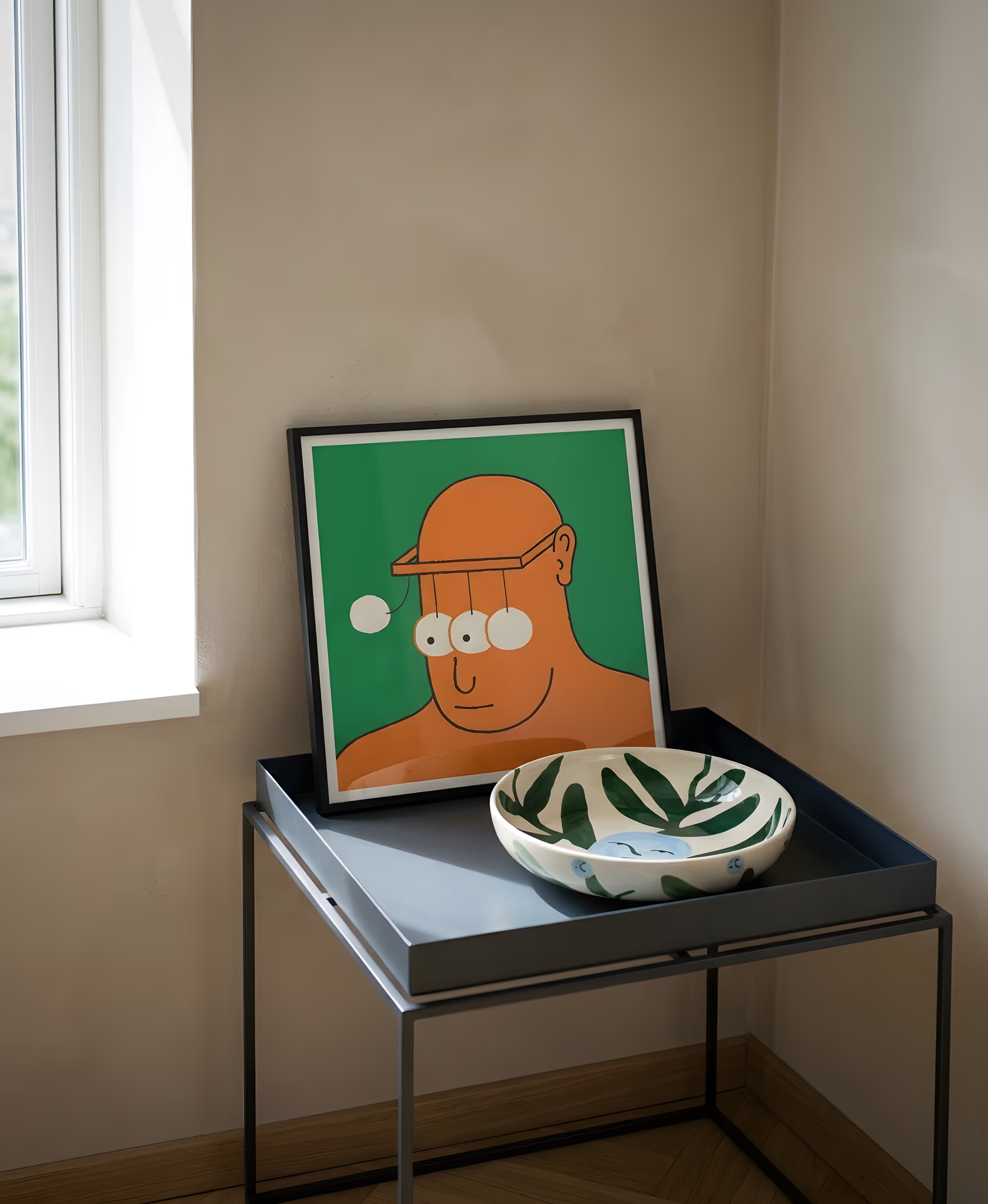
Simen Wahlqvist's Mean Snothing works as a small visual joke near a desk: a Newton's cradle where a man's eyes should be. Before deciding, hold a sheet of paper on the wall at the intended size and return to your usual seat. Check whether the position feels natural without leaning back or turning round.
Measure the work and the space around it
The prints featured here are 50 x 70 cm, apart from Mean Snothing at 50 x 50 cm. Those measurements describe the print, so allow extra space for a frame. The print-size guide helps you test placement before ordering.
For more than one print, use the gallery wall planner to try the arrangement and spacing. It helps with the layout; you still need to measure the real wall and the frames you choose.
Every product page lists the available size, current price and framing choices. Prints are made to order, with wood, black or white frames available, or unframed if you prefer. Delivery costs appear at checkout.
You don't have to settle the whole room at once. Choose the wall, find two or three prints that could work there, and look at them from the place where you'll live with them. Then return to the seven-print shortlist or browse the full gallery with a clearer idea of what you're looking for.