Nordic abstract wall art: four prints, warm or cool, and where each one hangs
There are four abstract prints in the gallery, and they don't behave the same way on a wall. Two run warm, two run cool, and between them they come in three shapes. Knowing which is which saves you from hanging the right print in the wrong room.
If it's the history you're after, our piece on what abstraction looks like in the North covers it. This one is practical: how to choose Nordic abstract wall art, where it goes, and what to hang it with.
What counts as Nordic abstract wall art?
Here, it's work that starts from something real and pares it back until shape and colour do most of the talking. Two Swedish artists make the four. Ishtar Bäcklund Dakhil paints by hand in Stockholm and lays geometry over what she sees. Markus Naarttijärvi photographs northern Sweden from Umeå and frames nature so tightly, or so simply, that it reads as pattern. Every one of the four has a desert, a garden, ice or a low sun underneath.
Which ones are warm?
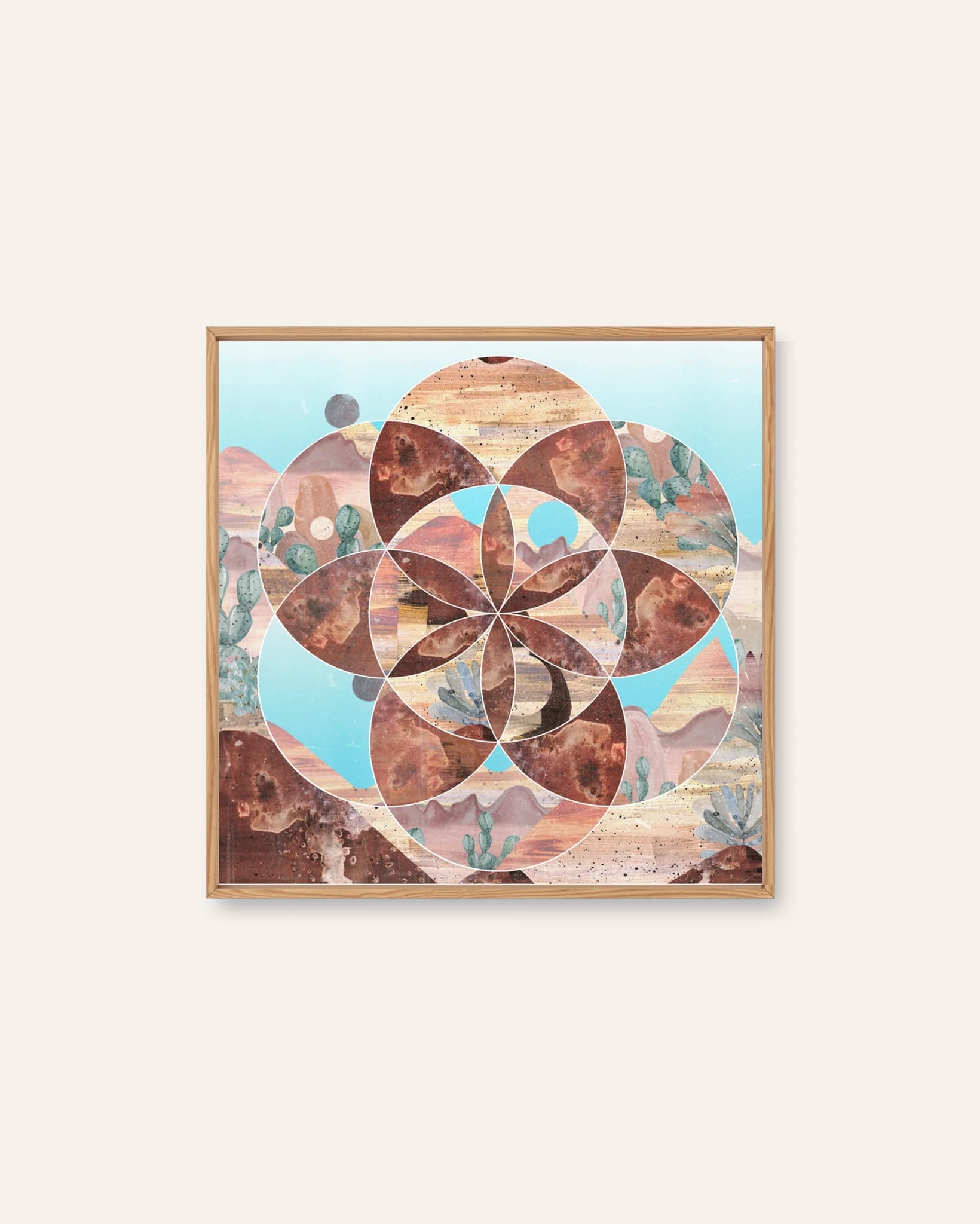
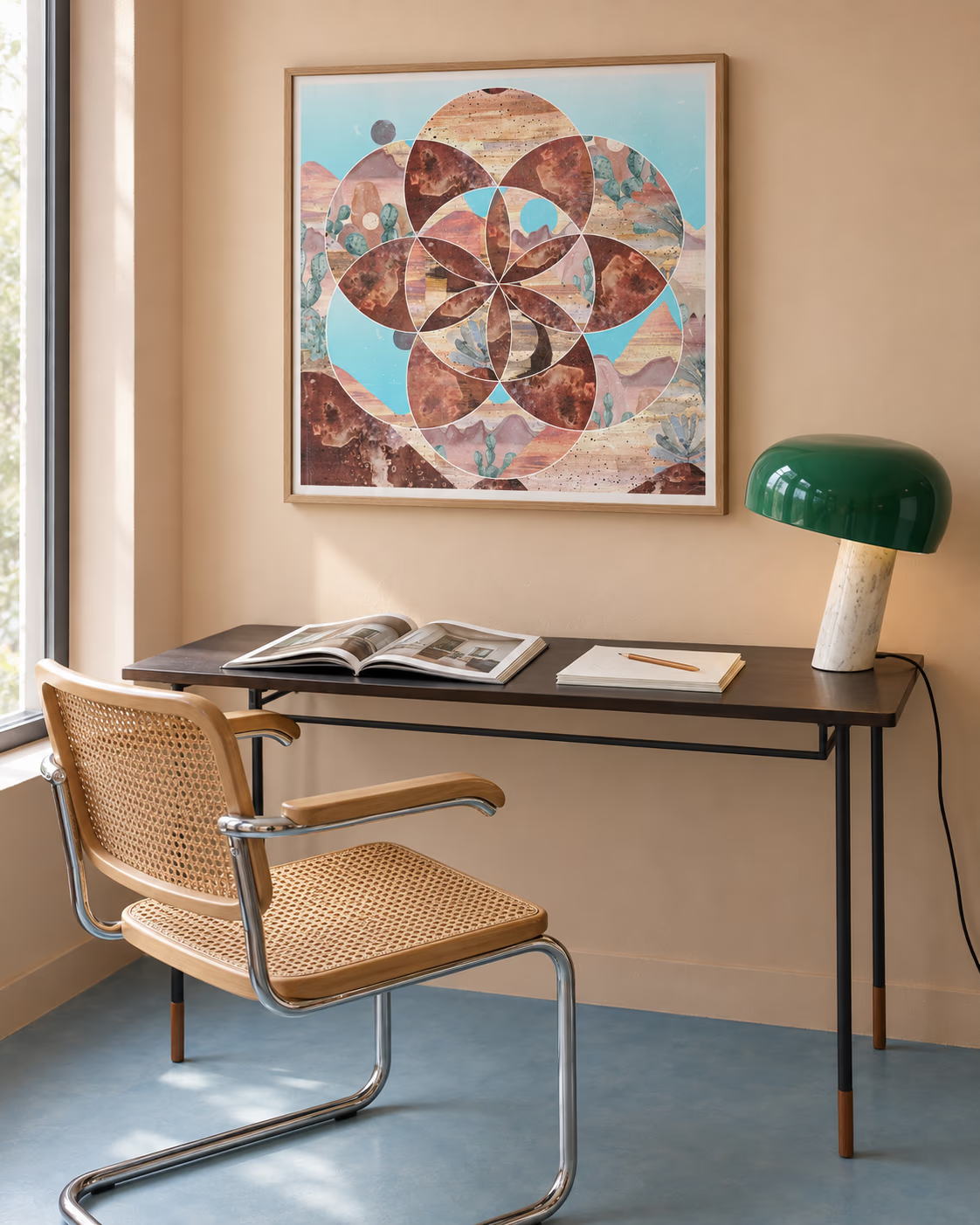
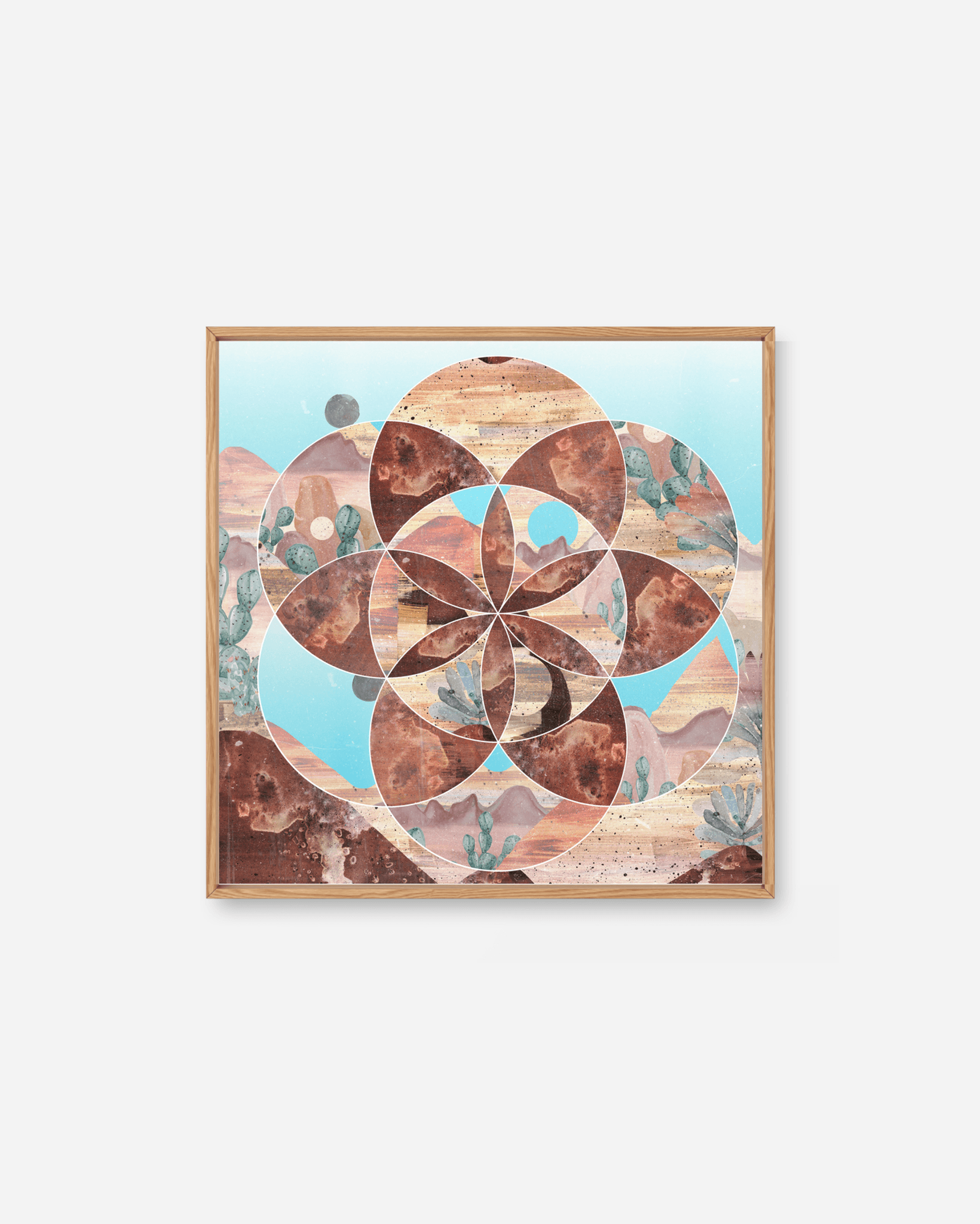
Desert Circles is the obvious one. Rust-coloured rocks, cacti and dusty pink hills, cut into curved pieces by overlapping white circles, with bright turquoise breaking through where the sky shows. Give it a pale wall so the turquoise can do its job.
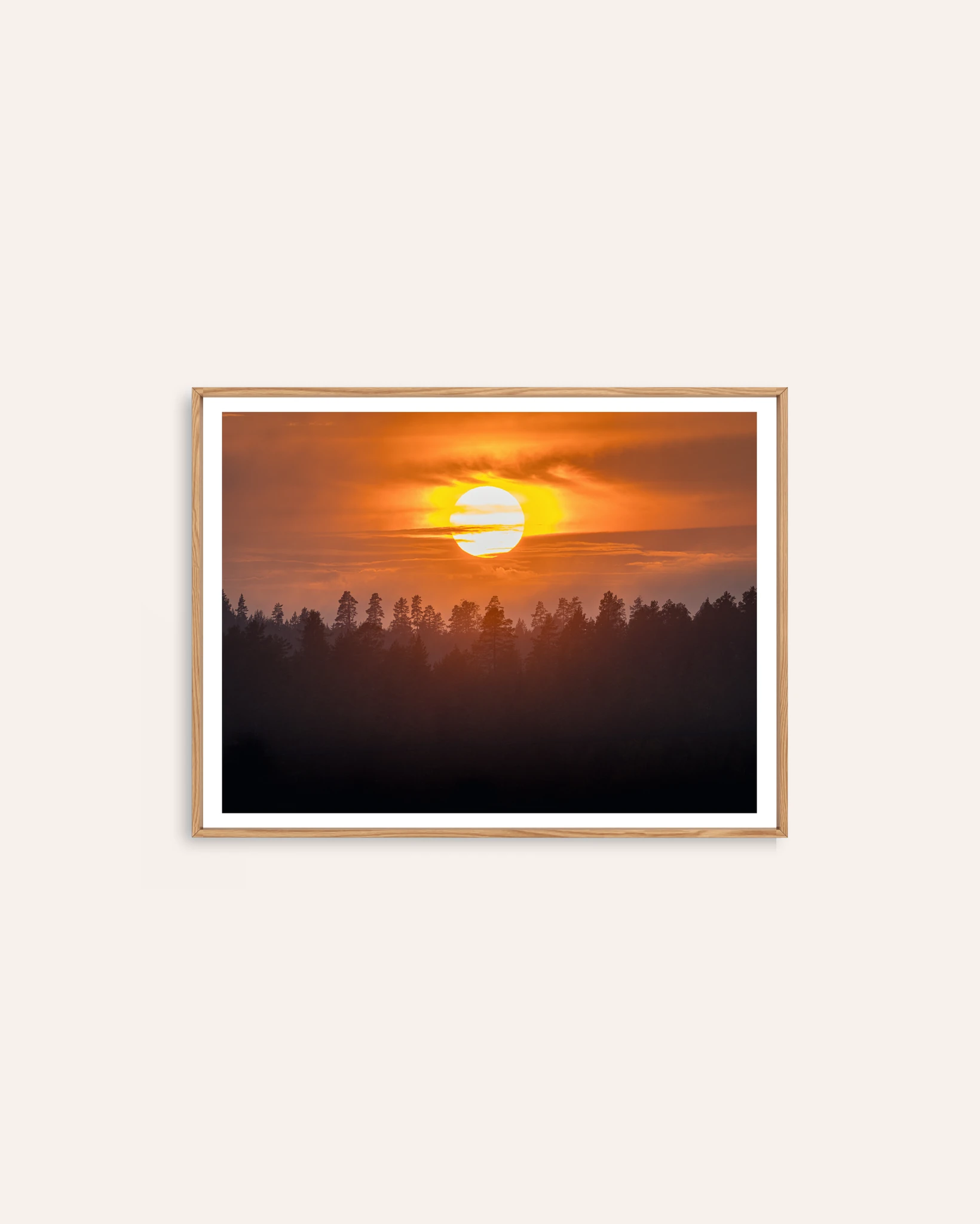
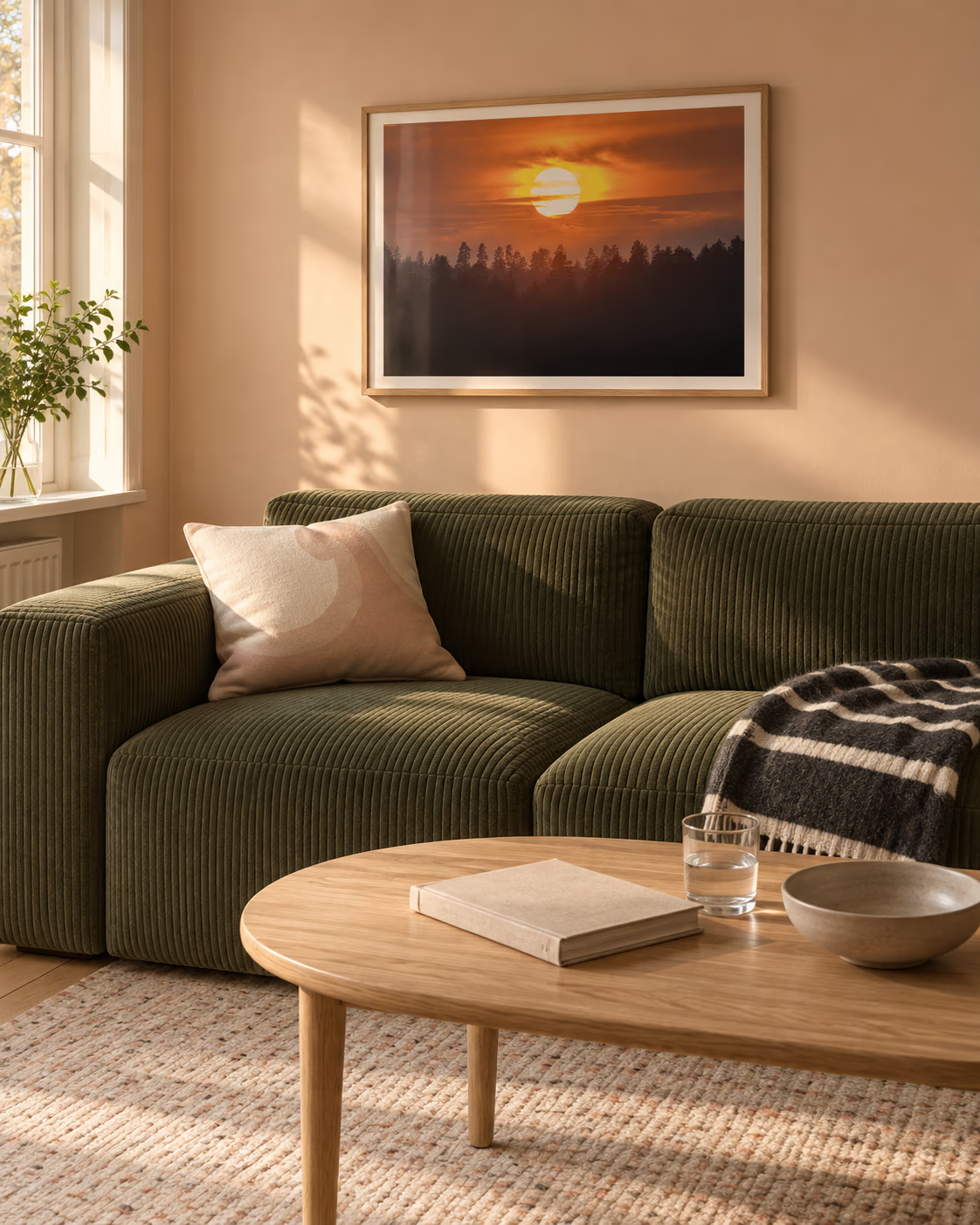
Sun Over the Forest is warmer still, but it keeps its heat in one place. The top half is an orange sky with the sun low in it, the bottom half a band of black forest. That suits a neutral, slightly cold room: one warm spot, and the rest of the wall left alone.
Which ones are cool?
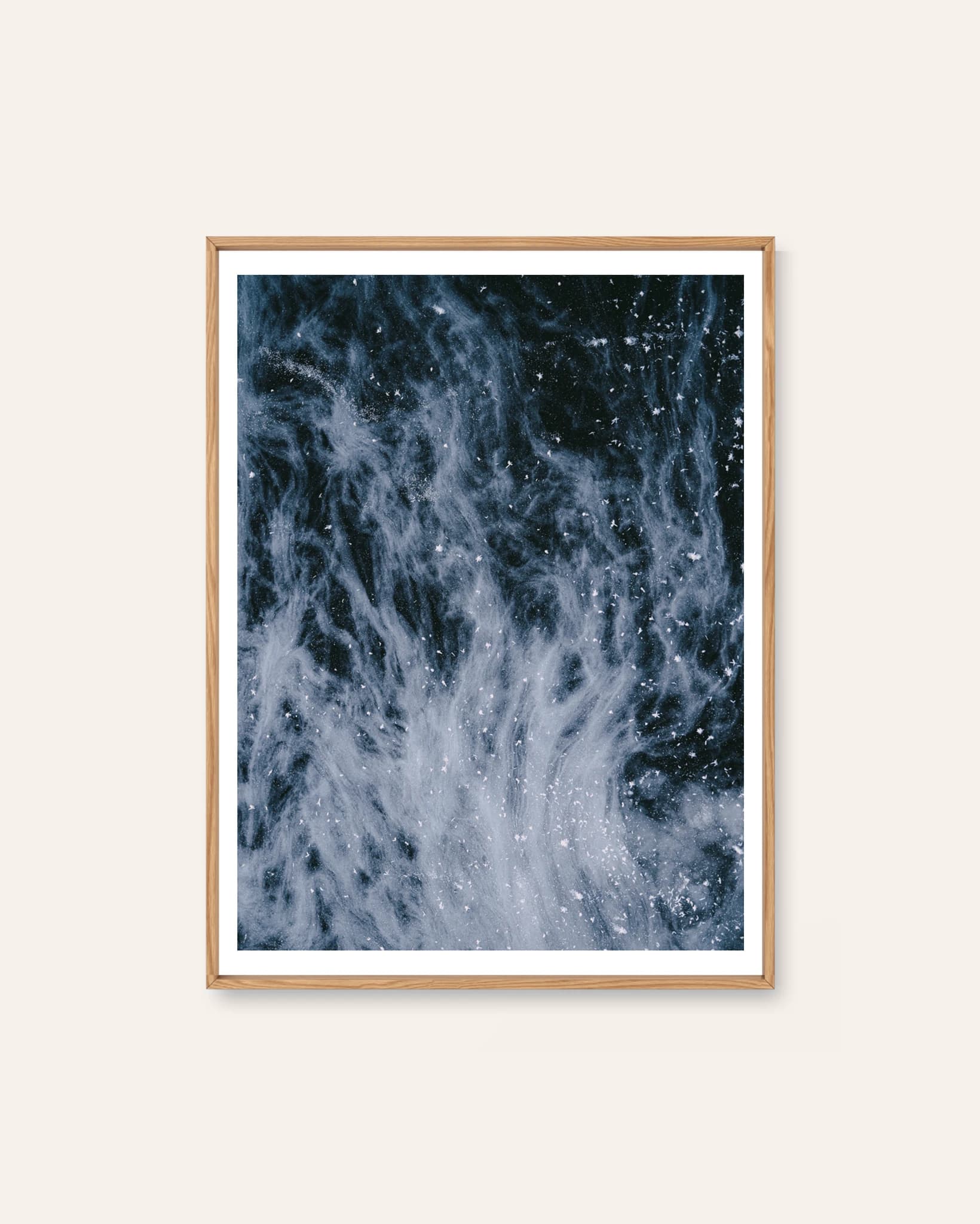
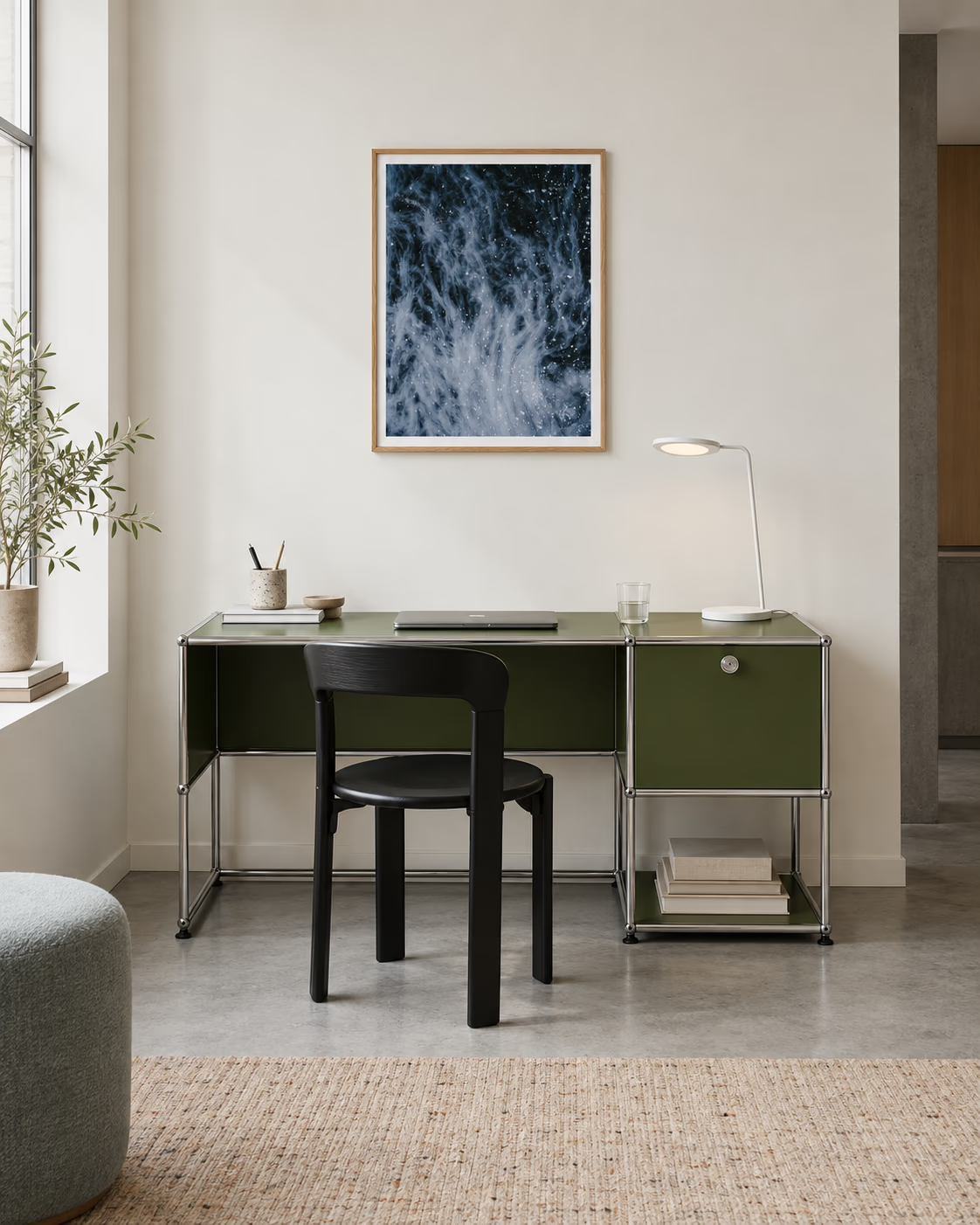
Frozen Currents is the coolest of the four: pale ridges of ice moving across dark water, blue-grey and white on near-black. It's dark overall, so it looks best on white or very light grey.
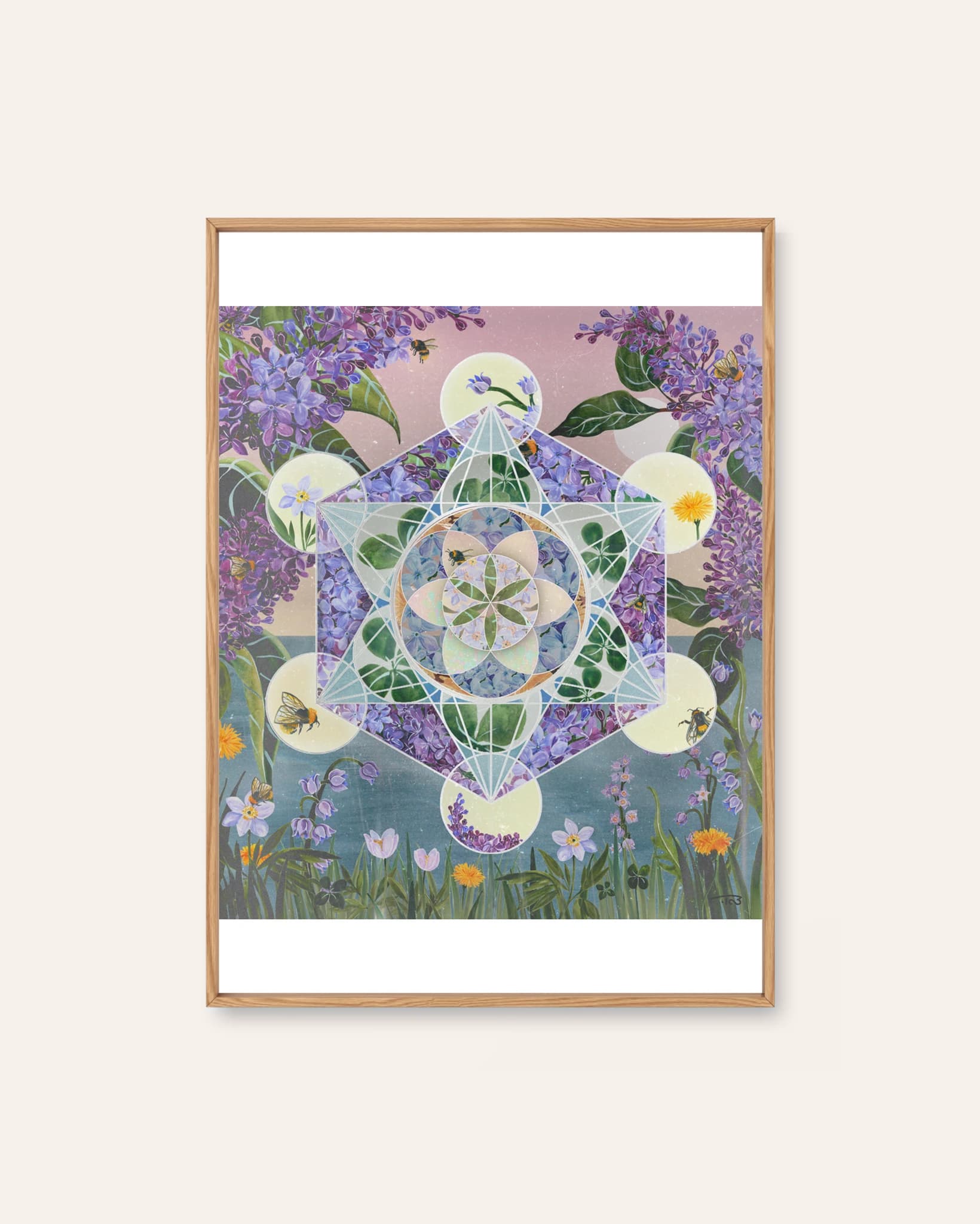
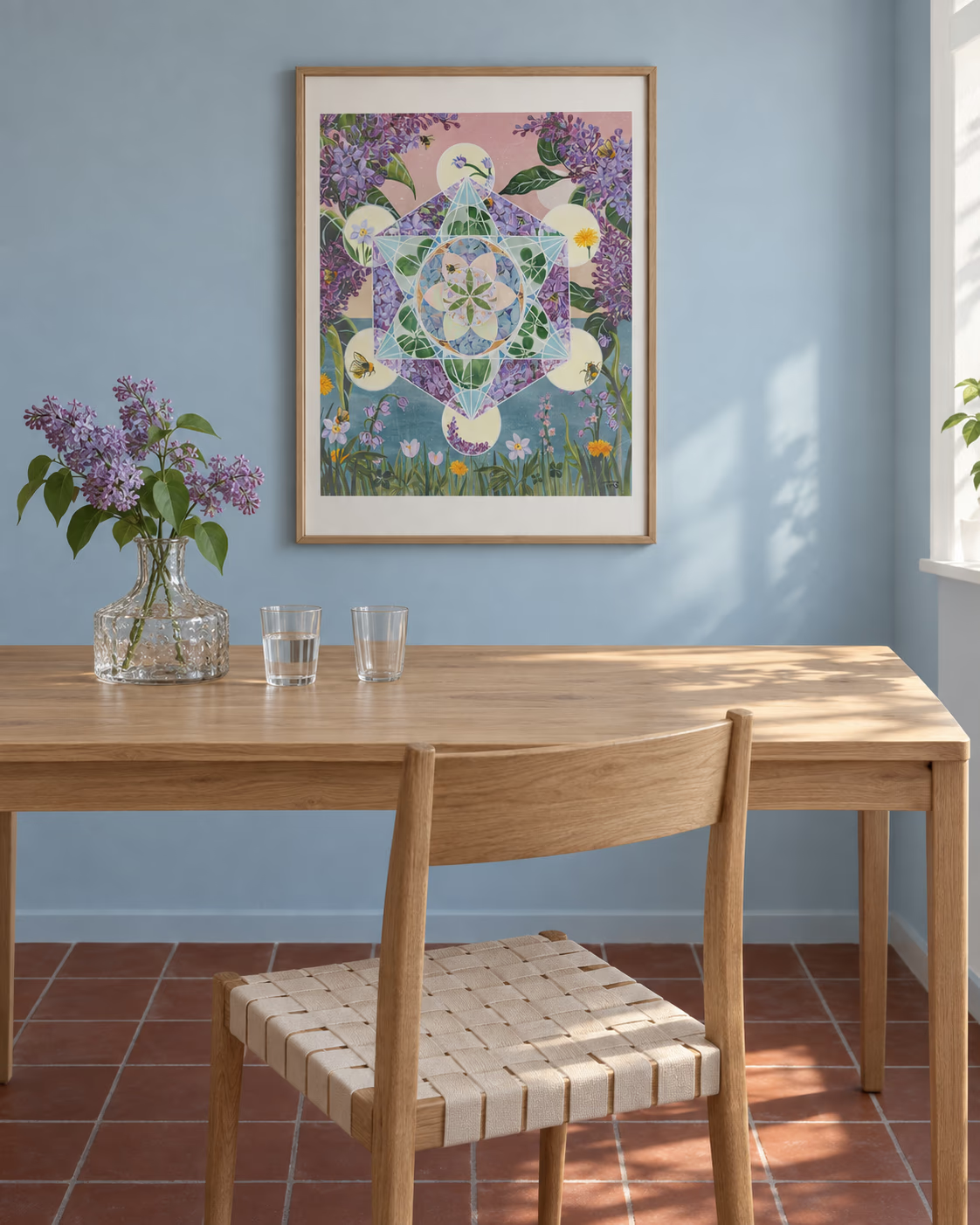
Month of May is the soft one. Lilacs, bees and yellow flowers gather round a fine geometric star, against a pink sky and a muted blue ground. It's busy but gentle, which suits a bedroom or anywhere you want something to look at without the room getting louder.
What about shape?
The four come in three. Desert Circles is a 50 x 50 cm square, good for a narrow wall where a portrait would crowd. Month of May is 50 x 70 cm portrait, Frozen Currents is 45 x 60 cm portrait, and Sun Over the Forest is the same 45 x 60 cm turned on its side, so it's the one for a long, low wall above a sofa, a sideboard or a bed.
Where does it go?
Hang abstract work where you'll see it from some way off. The shapes are simple enough to read from across a room, so a living room wall, a stair landing or the end of a hallway all work. Centre it at around 145 to 150 cm from the floor, and lower it if you mostly look at it from a sofa or a bed.
Can you hang two together?
Yes, and the easiest pairs come from one artist. Desert Circles beside Month of May shares a palette of pinks and a habit of circles, even though one's square and one isn't. Frozen Currents beside Sun Over the Forest does the opposite: the same photographer, the same 45 x 60 cm sheet, and opposite temperatures, ice beside sun. In both cases line up the centres rather than the tops, and leave 5 to 8 cm between the frames so the pair reads as one thing. The gallery wall guide goes further if you want more than two.
What do you hang it with?
Pick the strongest colour in the print first, and let the room answer it. Turquoise and rust look right against pale wood and white. Orange wants something quiet beside it, linen, grey or a dark wood. If a print's colour is already in the room, on a cushion, a rug or a run of book spines, it'll feel as though it belongs.
Every print can be ordered unframed or in a wood, black or white frame, and the product page shows the frame price for the size. Our framing guide has more.
Will you get tired of it?
It's the fair question. Simple pictures wear well when there's something underneath, and each of these has a real place under the shape: a desert, a spring garden, water turning to ice, a low sun behind a forest. That's what keeps abstract work from feeling like wallpaper. If you're still unsure, the abstract prints are all on one page, the Scandinavian wall art page shows them alongside the other categories, and the print sizes guide will help you judge scale.