Hyttefrokost, vinkveld, morgenstrekk: the Norwegian words behind the prints
Half the prints in the gallery are titled in Norwegian, and the titles are not decoration. They tell you what the picture is of, usually in one word, because Norwegian is very good at doing that.
If you have ever wondered what a hyttefrokost is, or why a print is called Vinkveld, here is the short version. It is also a decent way into how Norwegians talk about the parts of a day worth keeping.
Norwegian just sticks words together
English breaks compounds apart, so we get "morning stretch" and "wine evening" as two words each. Norwegian jams them into one: morgenstrekk, vinkveld. The result is a language that can name a very specific pleasure in a single word and then use it as though everyone already agreed it deserved one.
That is exactly what these titles are doing.
The ones about the time of day
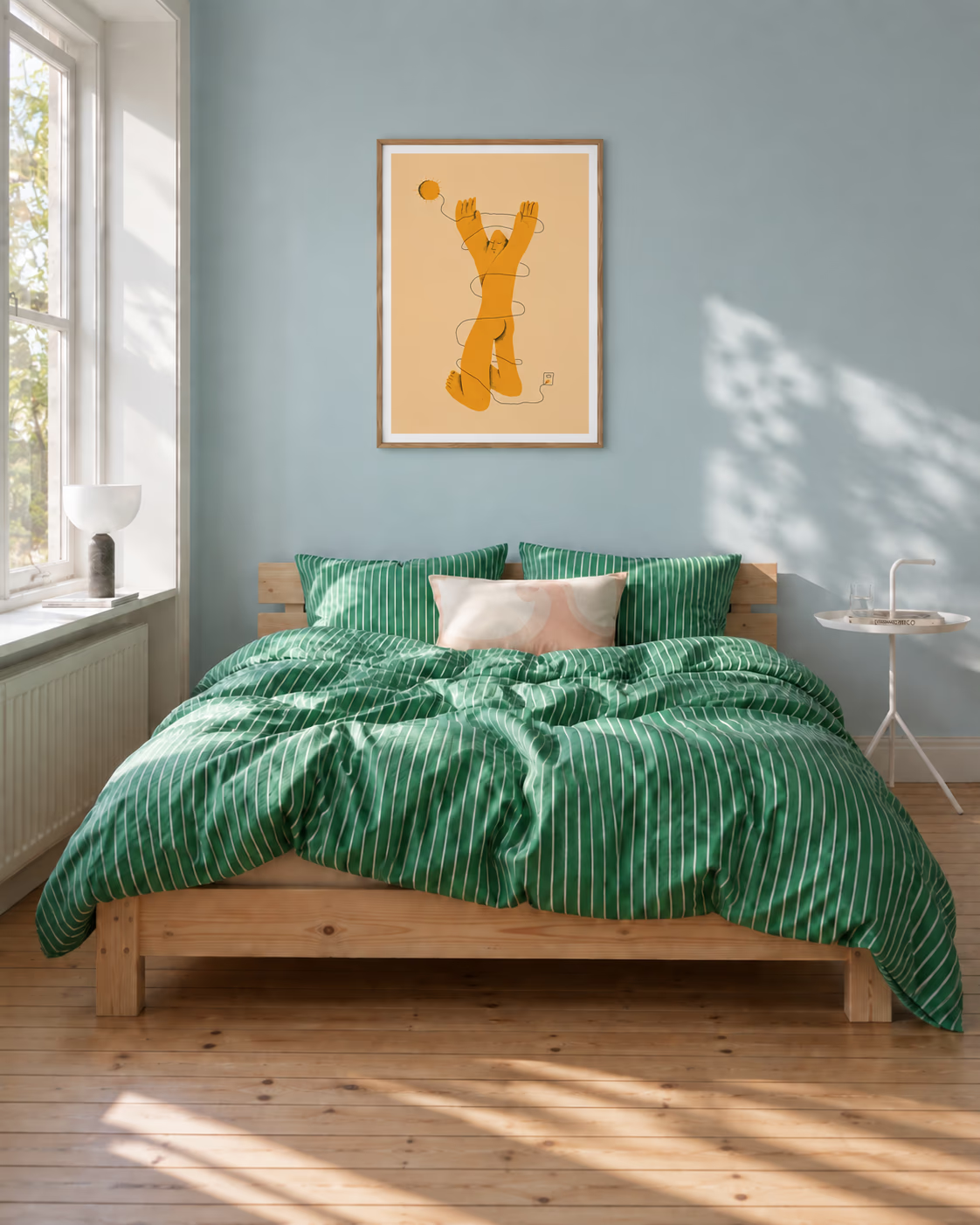
Morgenstrekk. Morgen is morning, strekk is a stretch. The first full-body stretch of the day, the one before your feet touch the floor. Morgenstrekk by Simen Wahlqvist draws it as a figure reaching for a small sun with a charging cable trailing off him to a plug at the skirting board, which is either very funny or slightly too accurate.
Morgenlevering. Morning delivery, from levere, to deliver. Morgenlevering by Sia Siamos paints a breakfast table that looks like it has just arrived, coffee poured, croissants out, carnations in a red vase.
Vinkveld. Vin is wine and kveld is evening, and kveld is the better half of that pairing. It means the evening as a thing in itself, the stretch after the day is done. Vinkveld is that hour painted in thick strokes, olives and grapes and a bottle with the cork already adrift.
The ones about somewhere you go
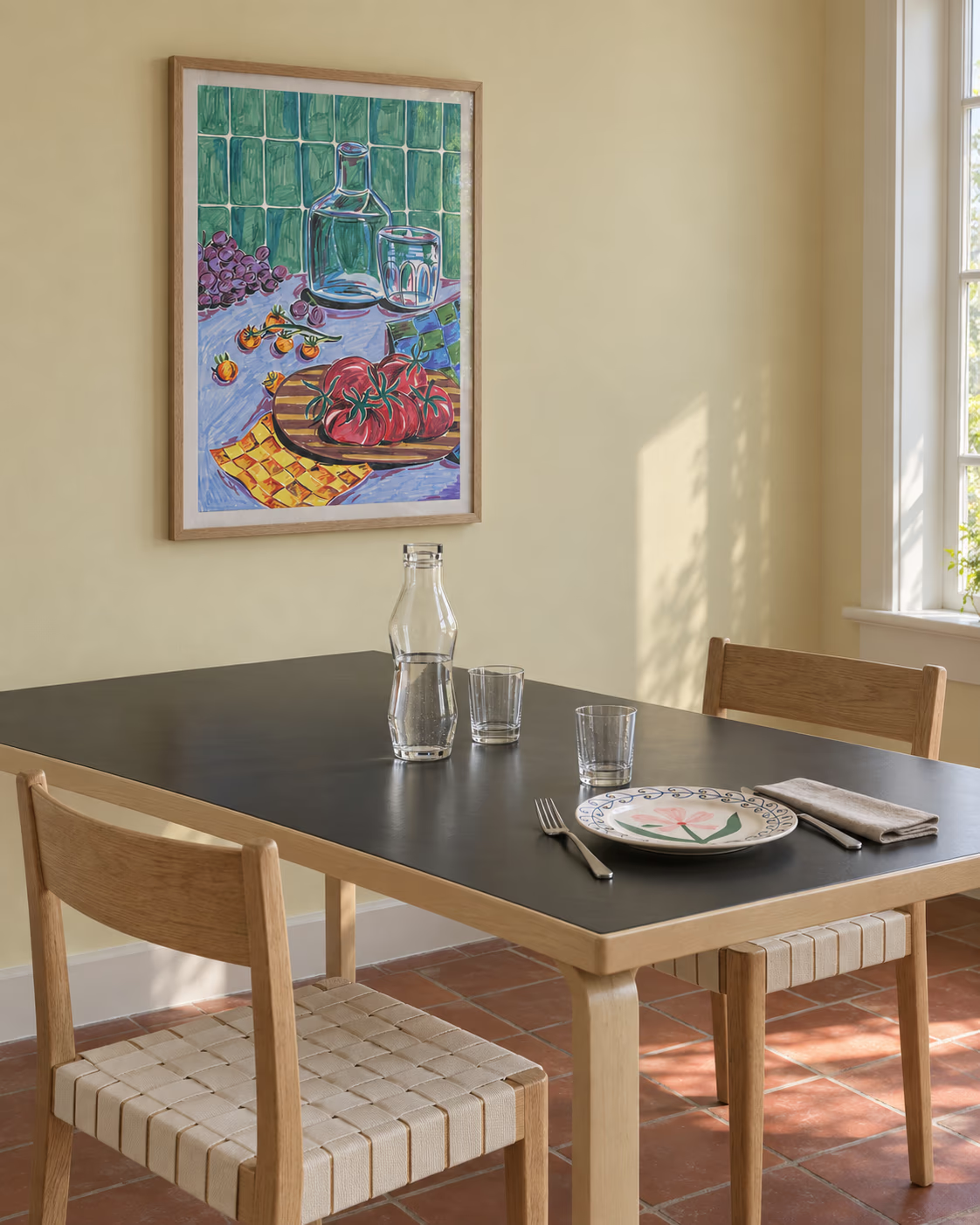
Hyttefrokost. Hytte is a cabin, frokost is breakfast. Norwegians own a remarkable number of hytter, and the cabin breakfast is the slow one, eaten late, with nowhere to be. Hyttefrokost has exactly that pace: tomatoes heaped on a board, a cloth thrown down rather than laid.
Trysilkaffe. Kaffe is coffee, and Trysil is a mountain town in eastern Norway best known for its skiing. Put them together and you have coffee in a specific place, which in a country that drinks as much of it as this one is practically a genre. Trysilkaffe by Ingunn Dybendal fills a green mug with an impossible folk bouquet, drawn petal by petal in coloured pencil.
Eltsjoen. The ending is the giveaway: sjøen is the lake, or the sea, depending on where you are standing. Eltsjoen turns a Nordic lake landscape into pure pattern, clouds stretched into ribbons and forest turned to folk motifs. The proper Norwegian spelling uses ø, written here as oe so the internet can cope with it.
The one that needs no translation
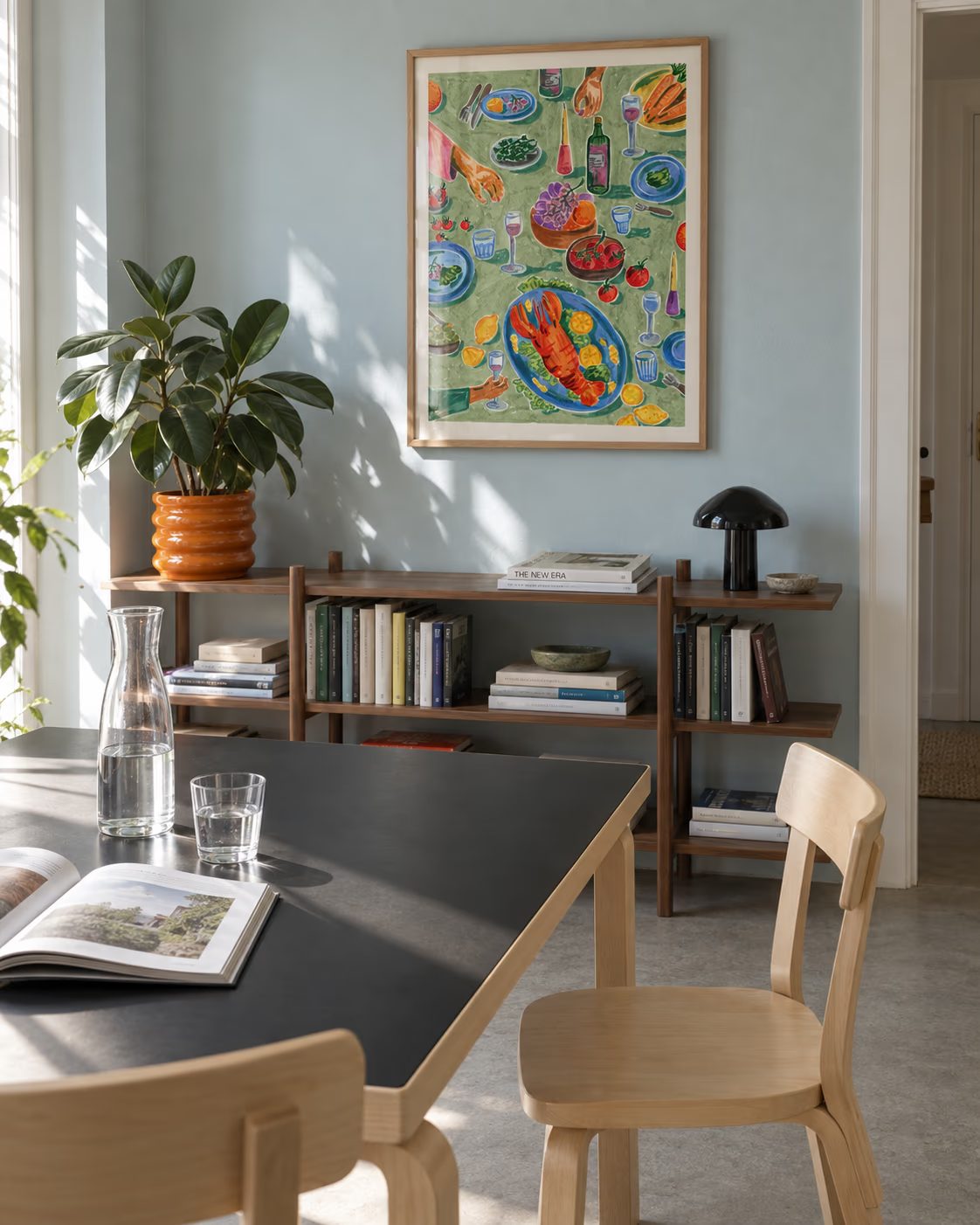
Hummer og Vin. Lobster and wine. Og is and, and that is the entire vocabulary lesson. Hummer og Vin looks straight down on a summer table mid-toast, hands reaching in from the edges, candles leaning at friendly angles.
Koselig, the word that is on none of them
The word hovering behind the lot is koselig. It gets translated as cosy, which undersells it: koselig is closer to a warm, unhurried, good-company sort of nice, and it can describe a room, a meal, a person or an entire evening.
None of these prints is called Koselig. All of them are about it. A cabin breakfast, a wine evening, a morning stretch, a table with hands reaching into the frame. That is the through line running through the artists here, and it is a large part of why the pictures feel like company rather than decoration.
If one of the words has landed, the picture that goes with it is a click away.