Wall Art for Small Spaces: Scale, Sizes and Where to Hang It
A small room is short of distance more than it's short of wall. The longest view you've got might be three steps, and most mistakes with wall art for small spaces come from buying pictures that need ten. Get the distance right and the rest of the advice on wall art for small spaces gets simpler.
What size wall art works in a small space?
Size the print against the clear stretch of wall, not the whole wall. Measure the gap between the door frame and the wardrobe, or the width above the radiator, or the slice of wall between the window and the corner. That's the space the picture actually has to fill, and it's often narrower than you'd guess.
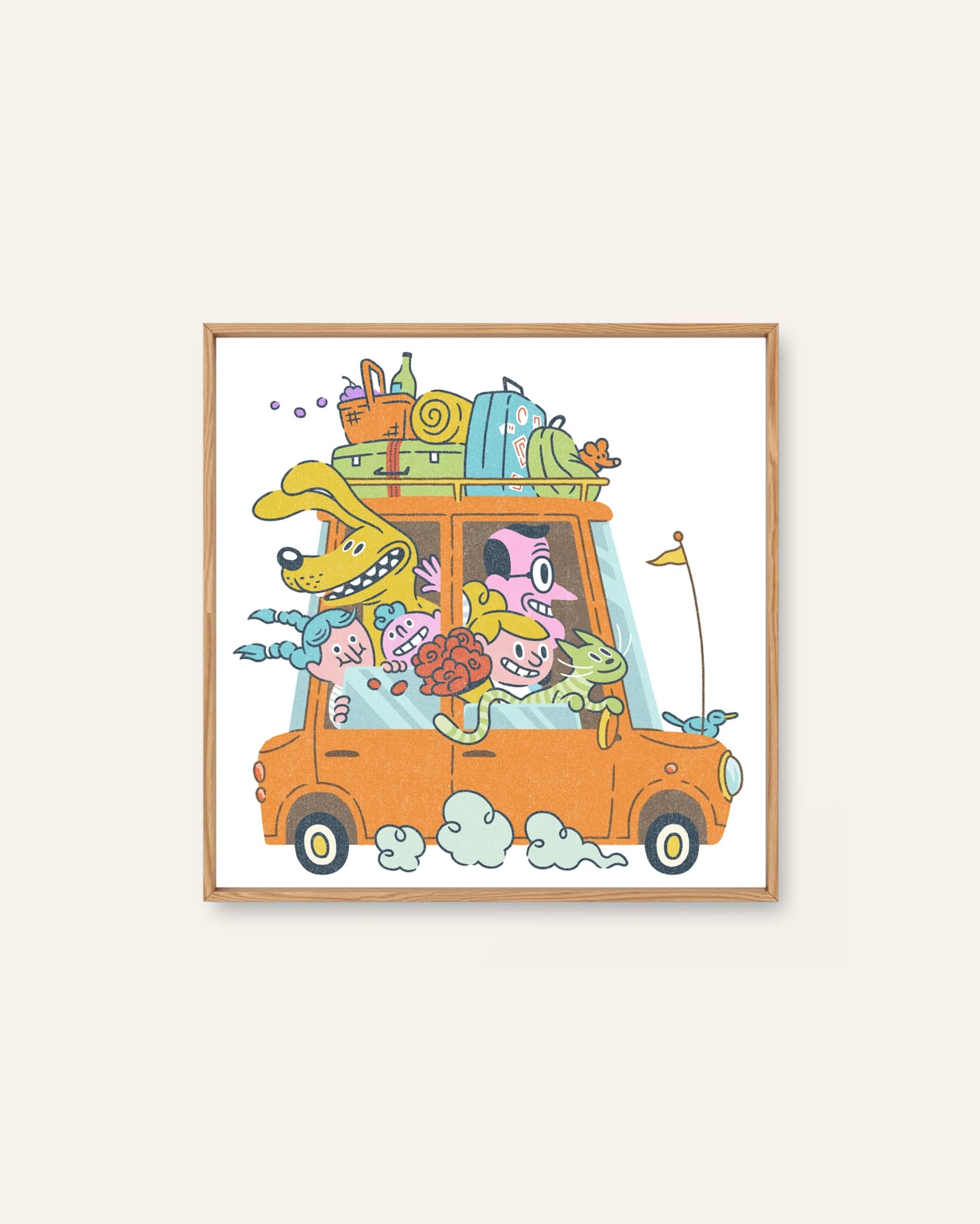
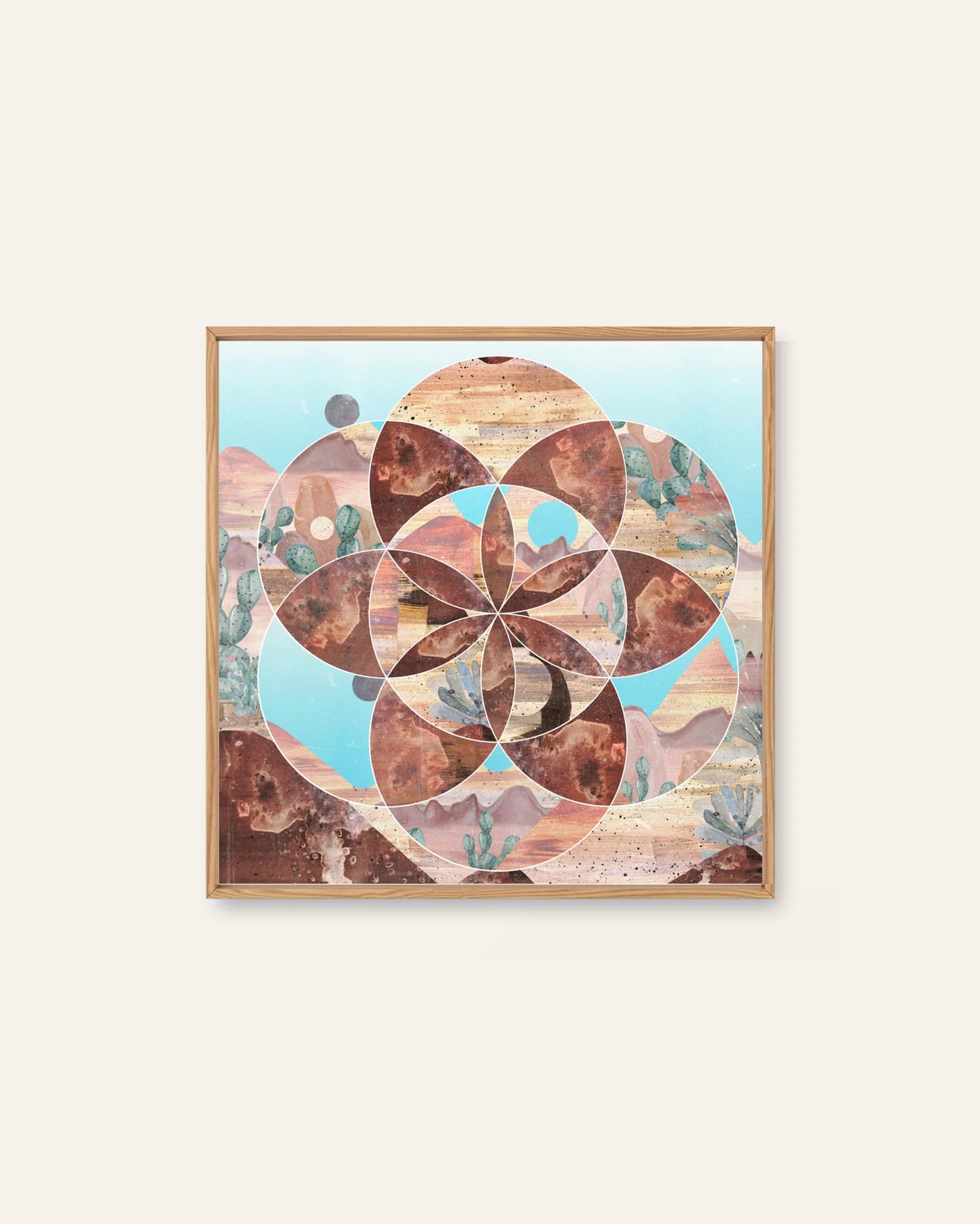
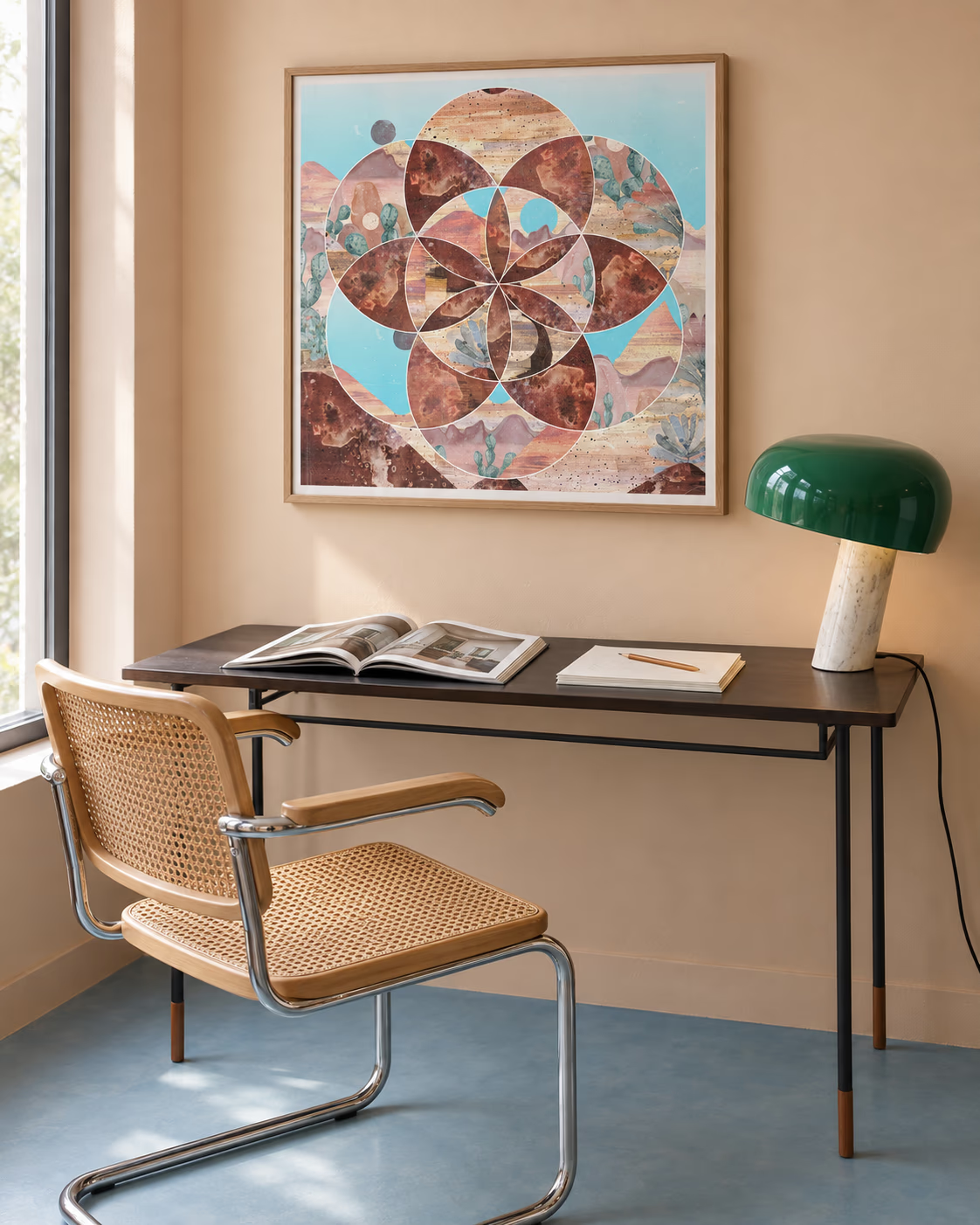
Narrow gaps are where the square earns its keep. Every 50 x 50 cm print in the gallery fits a slim wall that a 50 x 70 cm portrait would crowd, and the squares include Simen Wahlqvist's illustrations, Mikko Saarainen's busy ones, and Ishtar Bäcklund Dakhil's Desert Circles. A few prints come in smaller formats still:
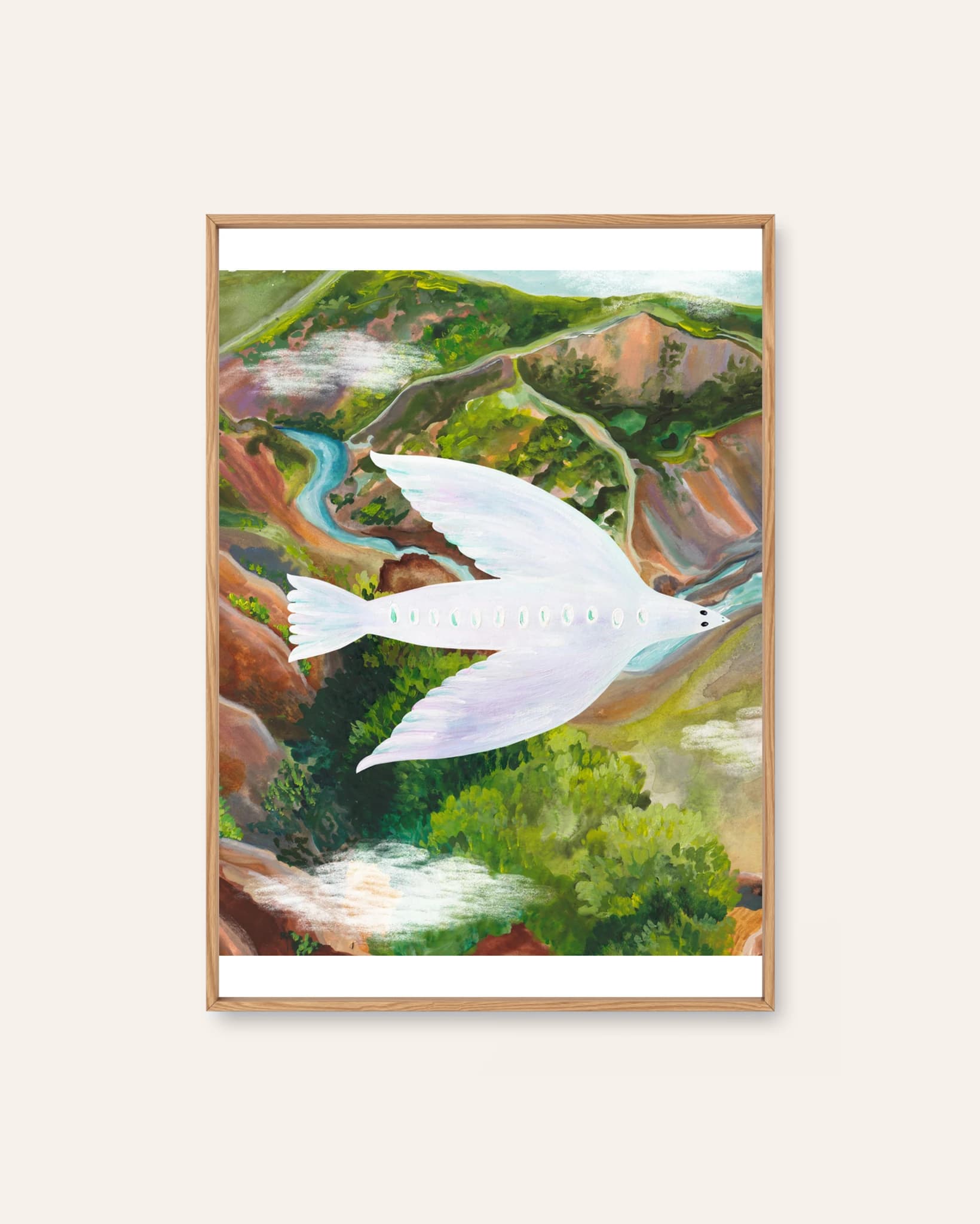
- A3 (29.7 x 42 cm): Ishtar Bäcklund Dakhil's Flight Over the Valley and Surfer with Orange Sun.
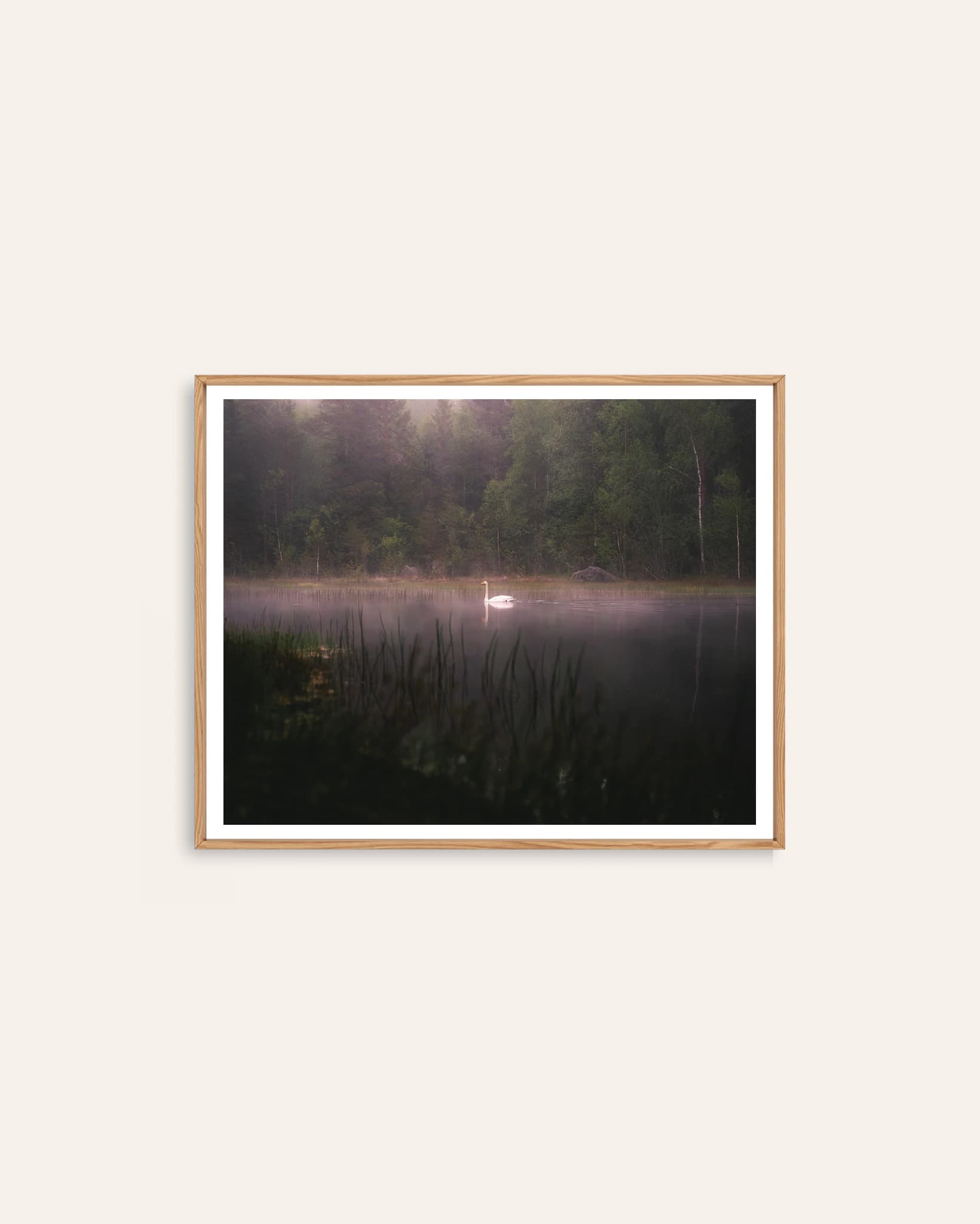
- 40 x 50 cm: three of Markus Naarttijärvi's photographs, Swan on Still Water, Path Through the Trees and Sheep on the Track.
Each print comes in the one size listed on its page, so the format is part of the choice. If you're weighing how those sizes sit against furniture, the print sizes guide has the room-by-room detail, so we won't repeat it here.
The tape test works harder in a small room than anywhere. Cut paper to the print's size, tape it to the wall and live with it for a day. A few centimetres is the difference between a picture and an obstacle.
Should you hang one big piece or several small ones?
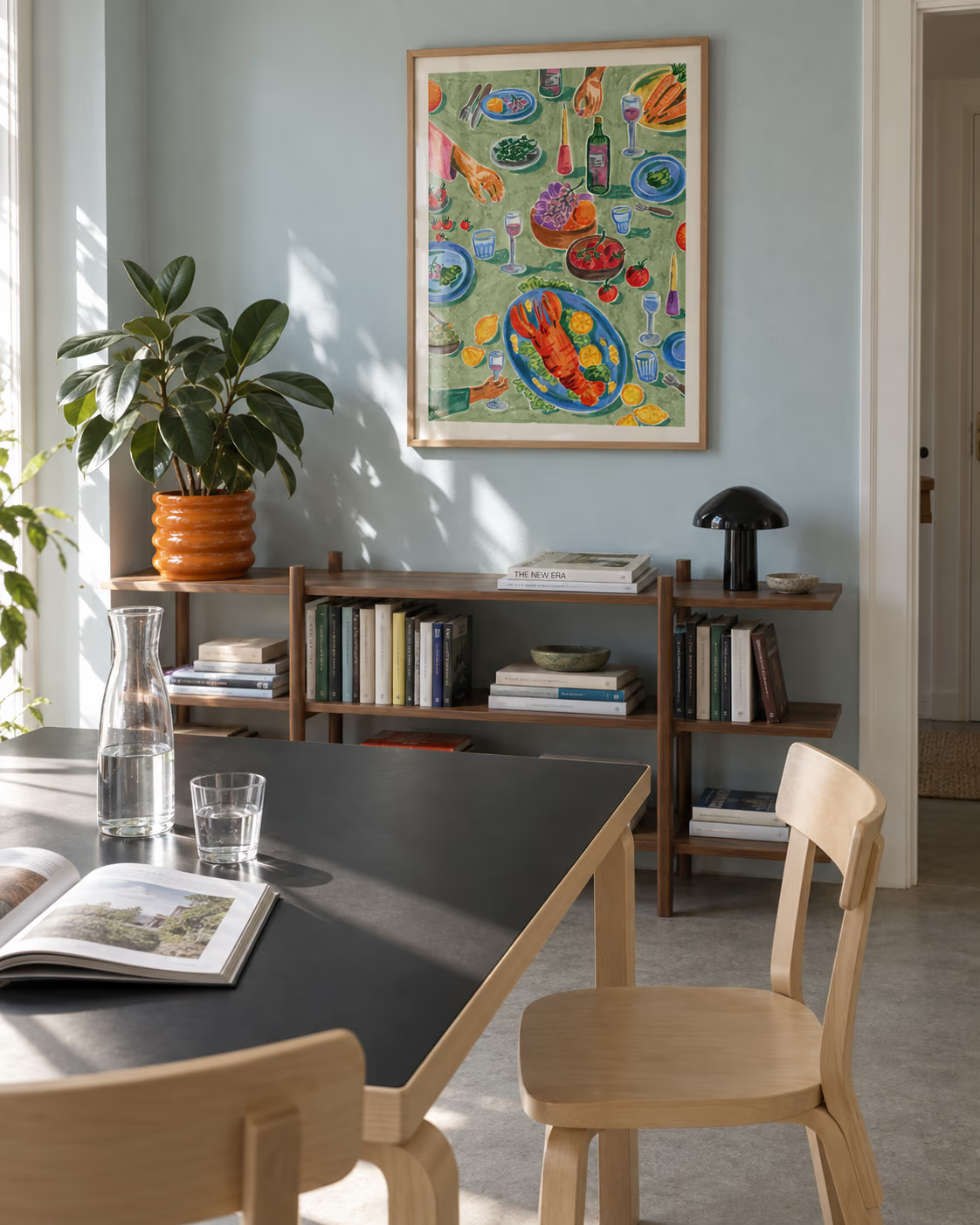
In a small room, one. That's a tendency rather than a law, but a single piece leaves the wall around it clear, and clear wall is what makes a small room feel considered rather than full. Several small frames in a small room tend to add up to visual noise, because each one has an edge, and edges are what the eye counts.
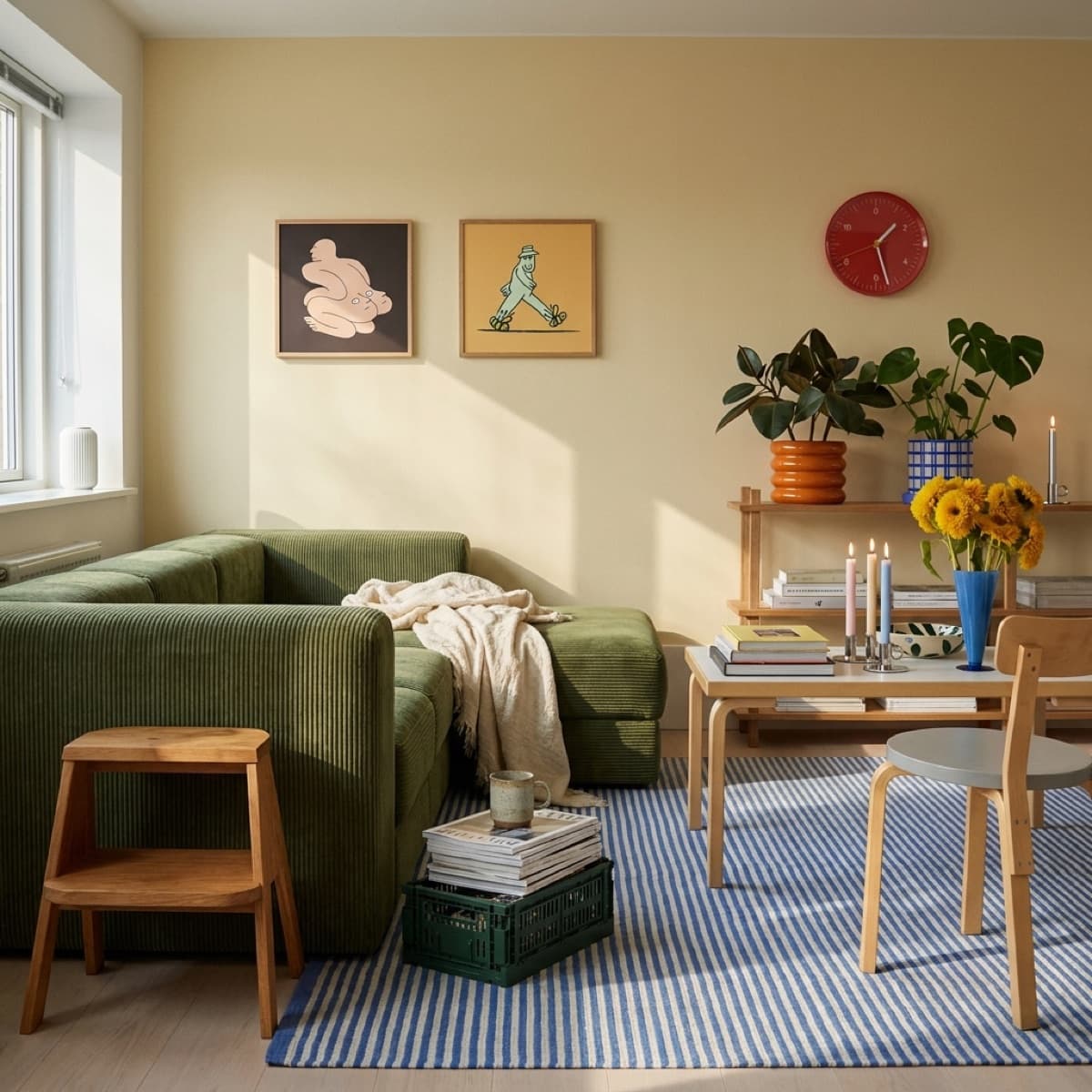
If you do want more than one, keep it to two or three and hold a strict line: the same gap between each, a shared edge. A hand's width, around 5 to 8 cm, is the convention, and the gallery wall guide covers how to arrange a small group without it going wrong.
How high should you hang art in a small room?
The usual convention is to put the centre of the piece, or of the whole group, at about 145 cm from the floor, which is roughly eye level standing. Two small-room adjustments are worth making. If the main view of the wall is from a sofa or bed, sit there, look at the wall and aim lower than you'd think. And if a piece sits above furniture, leave 15 to 25 cm between the top of the furniture and the bottom of the frame, so it looks hung rather than dropped.
Where do small walls turn up?
Most small homes have the same four or five awkward spots, and each takes a slightly different print.
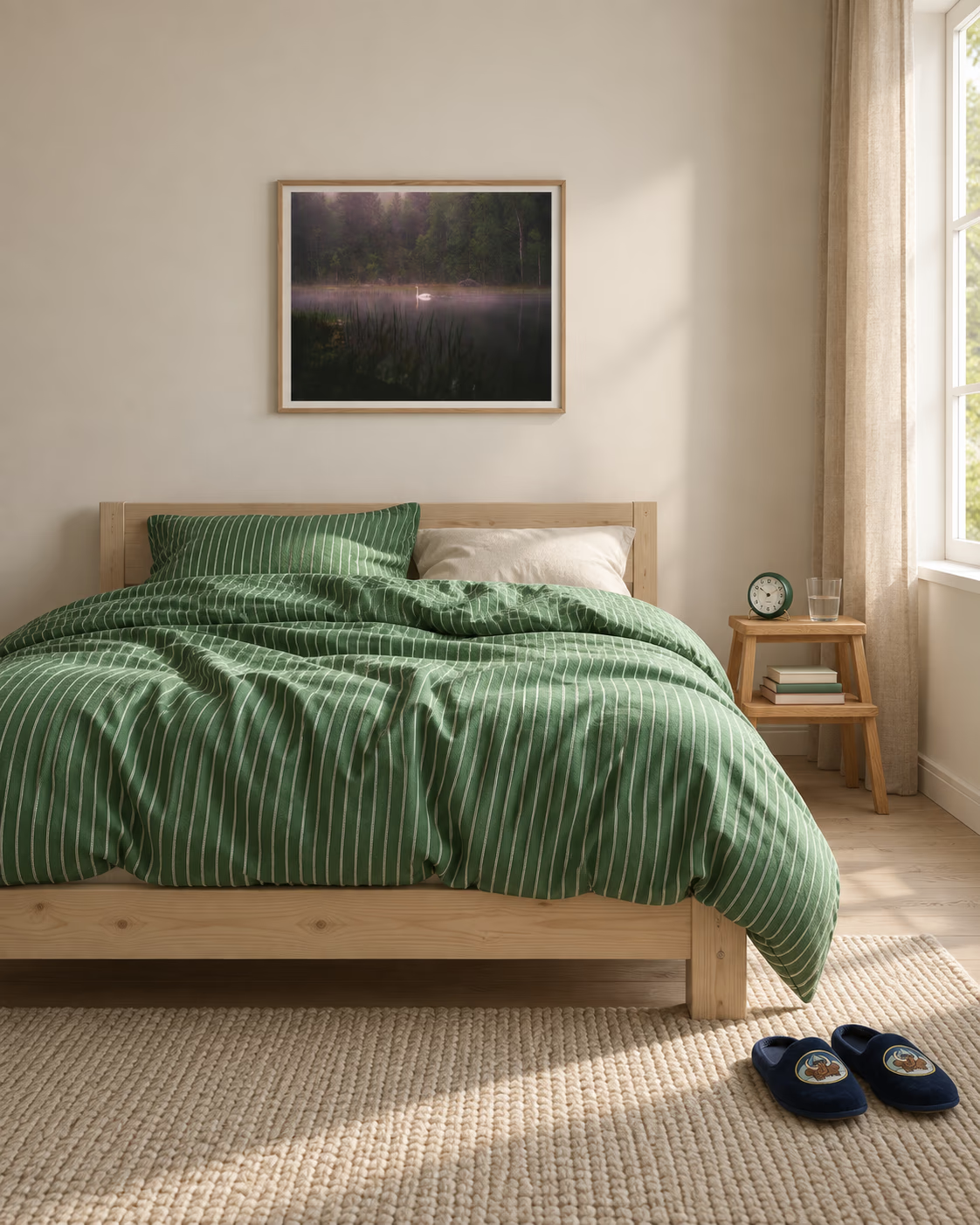
- The wall beside the bed. A bedroom nook or alcove suits a single square or a portrait you can see from the pillow. Calm choices work here, such as Swan on Still Water, a lone swan drifting across a misty lake at first light. There's more on this in the bedroom wall art guide.
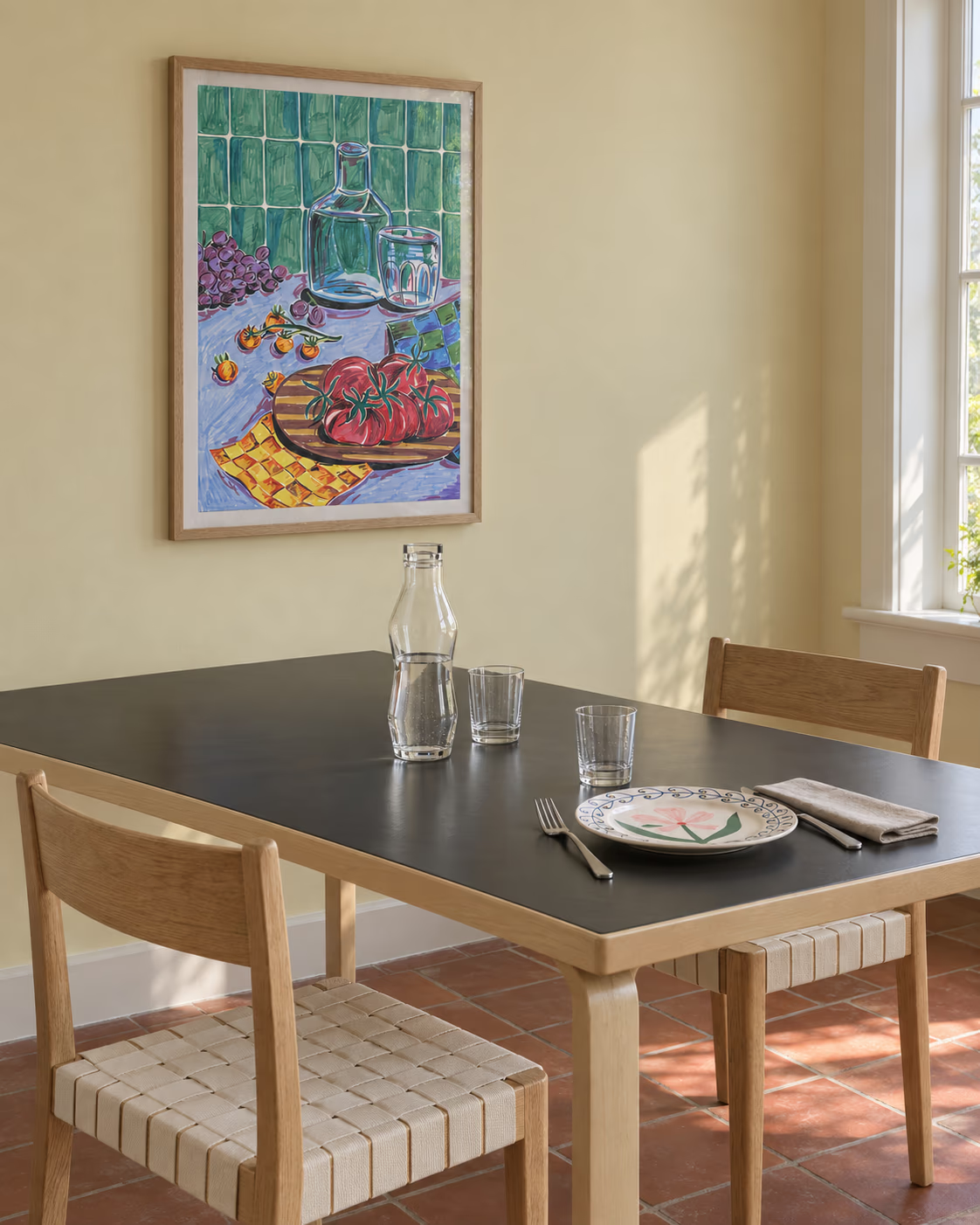
- The kitchen. Look for the leftover slices of wall rather than a feature wall, and keep paper well away from the hob. The kitchen and dining piece goes through where to hang and where not to.
- The stairwell. Tall, narrow and seen at an angle, it's the one place a portrait makes better sense than a square. Check the view from the bottom step and the top before you mark a hole.
- The desk corner. A small print beside the screen gives your eyes somewhere to go. The home office collection is picked for exactly that wall.
What to put on it
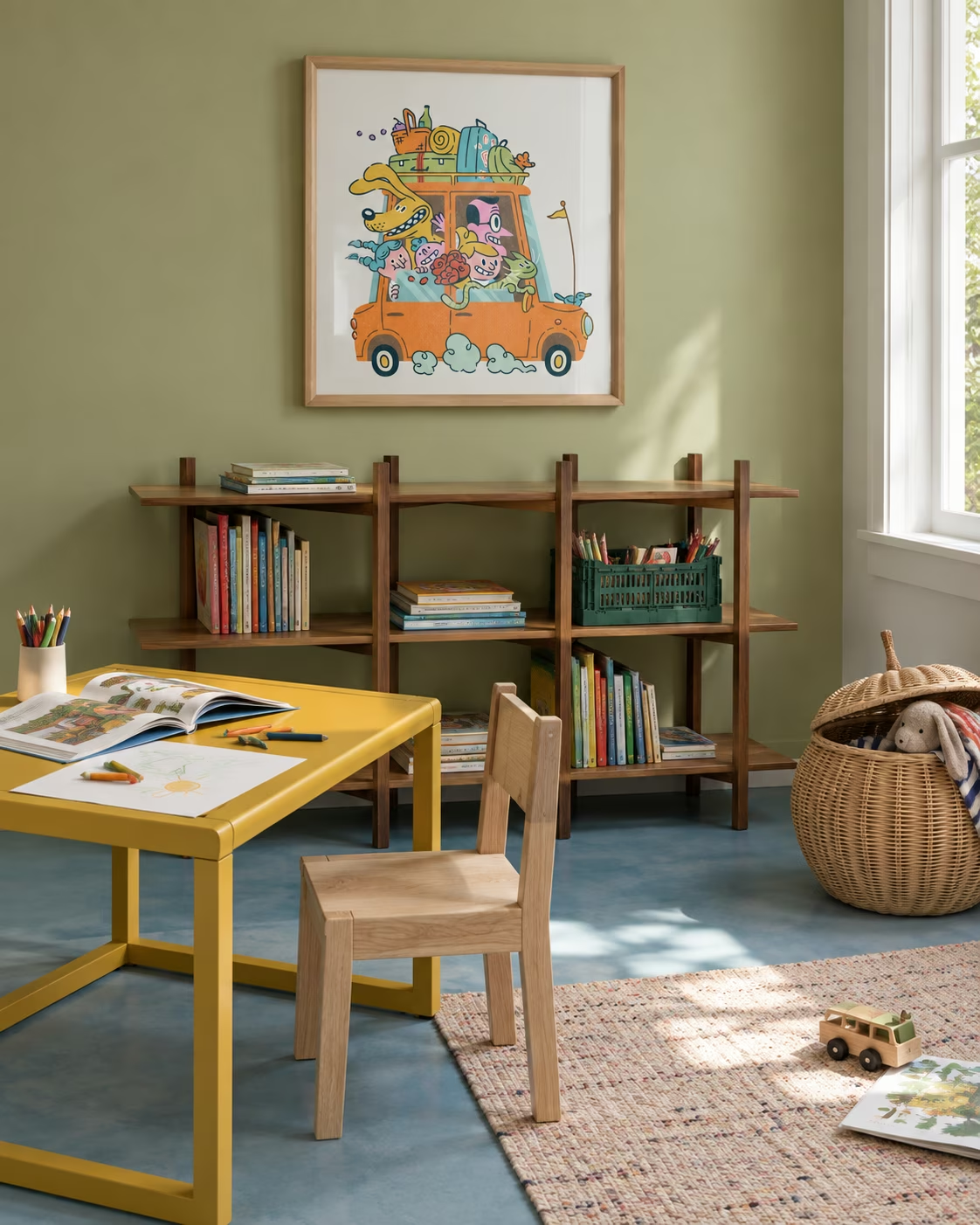
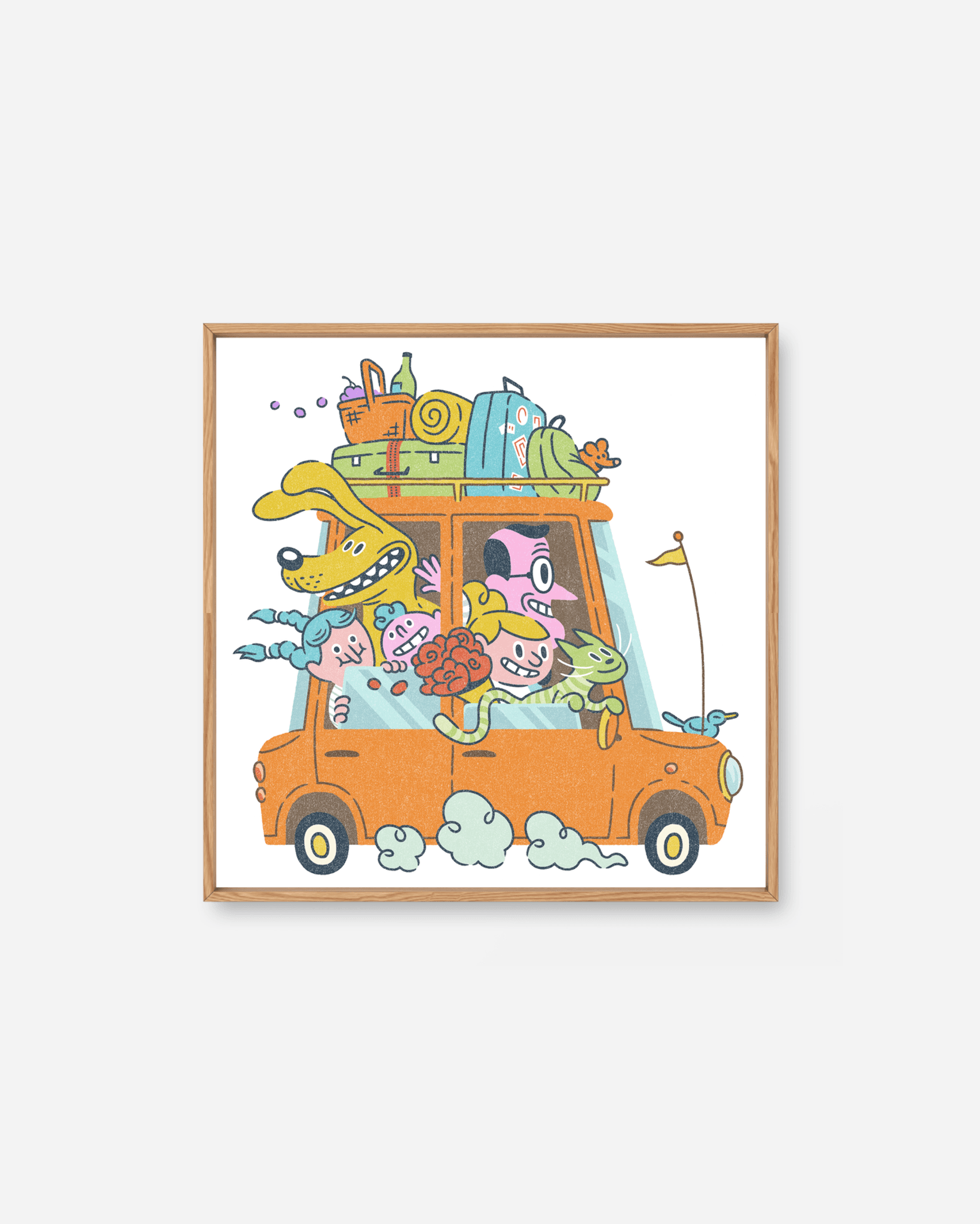
Because small rooms get looked at from close up, the best prints for them reward a second look. Mikko Saarainen's bio describes drawings that get read as much as looked at, and Family Trip is the clearest case: an orange car loaded past the roofline, a yellow dog at one window, a green cat at another, a mouse on the roof rack. It's a 50 x 50 cm square with plenty to find, and at close range it keeps paying out.
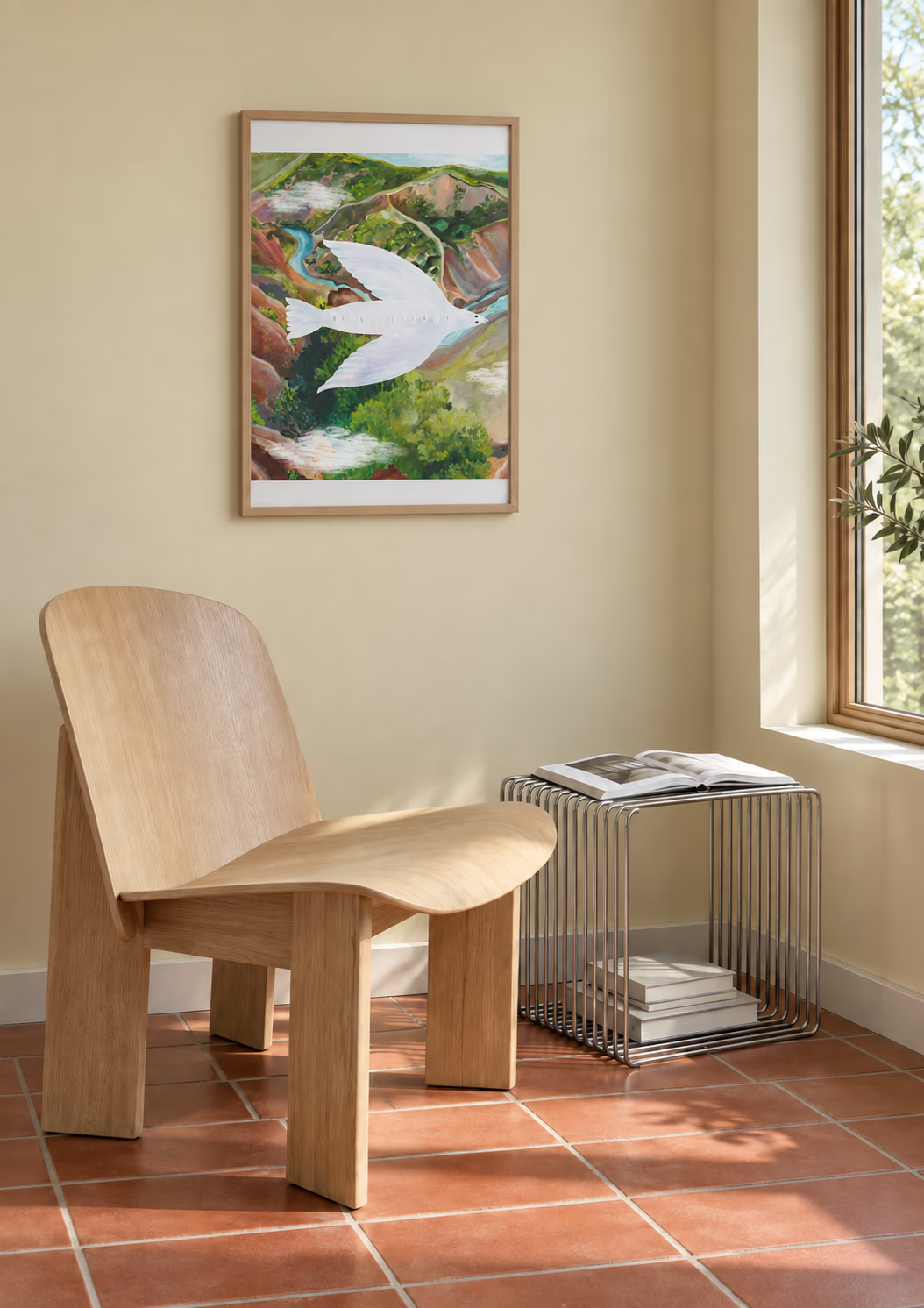
If the room needs less going on, go the other way. Flight Over the Valley, an A3 print, glides a pale aeroplane across a green valley, and the shape can be read as a bird in flight. The white shape stands out against a busy landscape, which is a lot of picture for a small frame.
Can you plan it before you drill?
Yes. The gallery wall planner lets you enter your wall's width, drag the prints into place to scale, and read the hanging measurements off the drawing before you mark anything. It uses the 50 x 70 cm and 50 x 50 cm sizes, so for the A3 and 40 x 50 cm prints, cut paper templates instead.
When you're ready, start with the illustrations for the squares or the photography page for the 40 x 50 cm prints.