Winter in Nordic photography: Markus Naarttijärvi's snow, ice and night
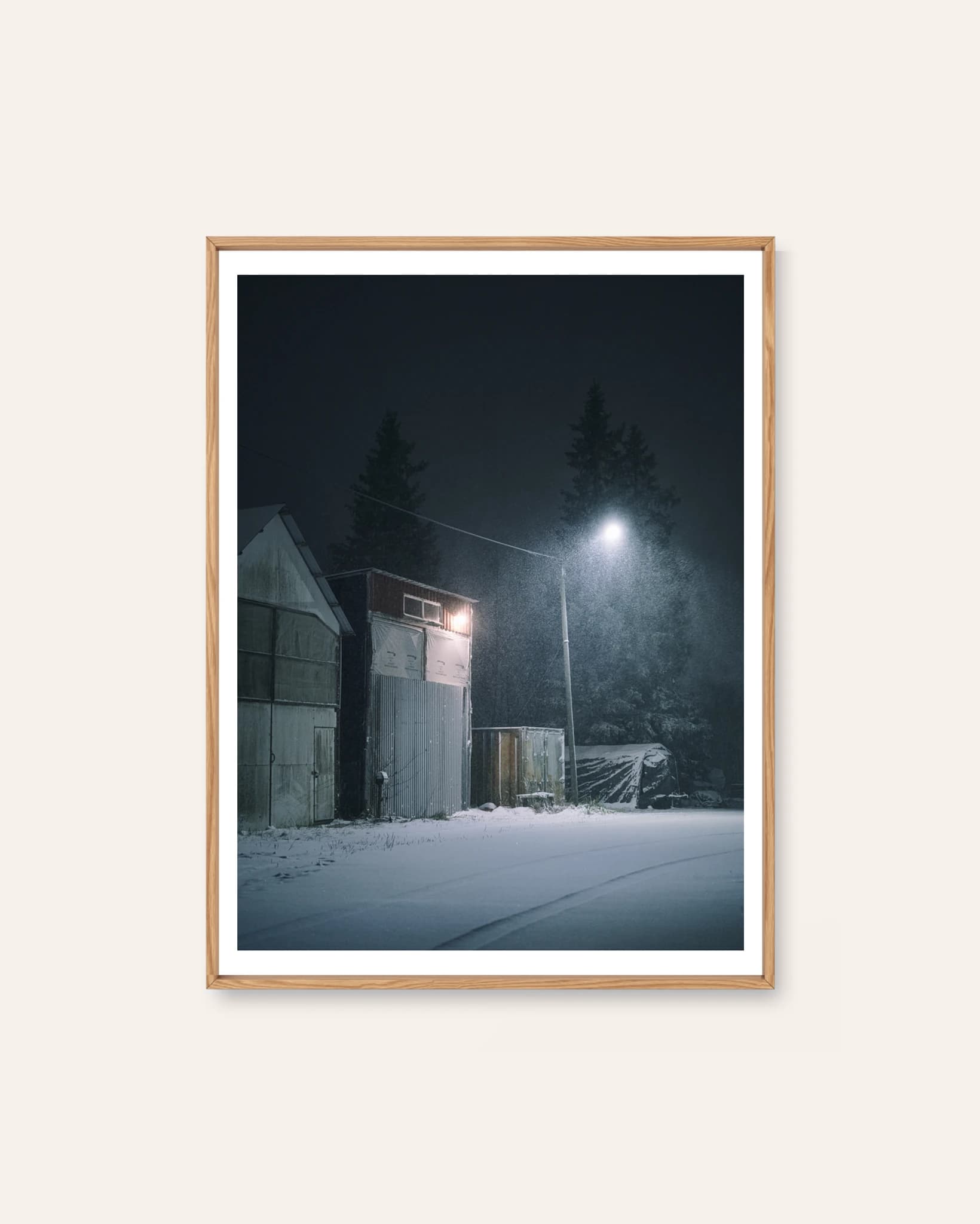
Boathouses in winter has one lit window and one streetlamp. Snow is falling through the lamp's light, and everything else in the picture is dark. It's a small amount of light doing all the work, and the photograph is better for the restraint.
It's one of three winter pictures by the Swedish photographer Markus Naarttijärvi, and the clearest way into his work.
Who is Markus Naarttijärvi?
Markus is a documentary photographer based in Umeå, in northern Sweden. His long-term projects follow industry, nature and culture in the north of the country, and the themes he returns to are solitude, perseverance and the passage of time. His own site adds that he grew up in Kiruna and that his first monograph, A Surrender, was published by Good Fight in 2025 (you can read more on his website).
Ten of his photographs are in the gallery, in two sizes: 45 x 60 cm for most, 40 x 50 cm for three. You can see them all on his artist page or in the photography category.
Which of his photographs are winter pictures?
Three, and they're quite different from each other.
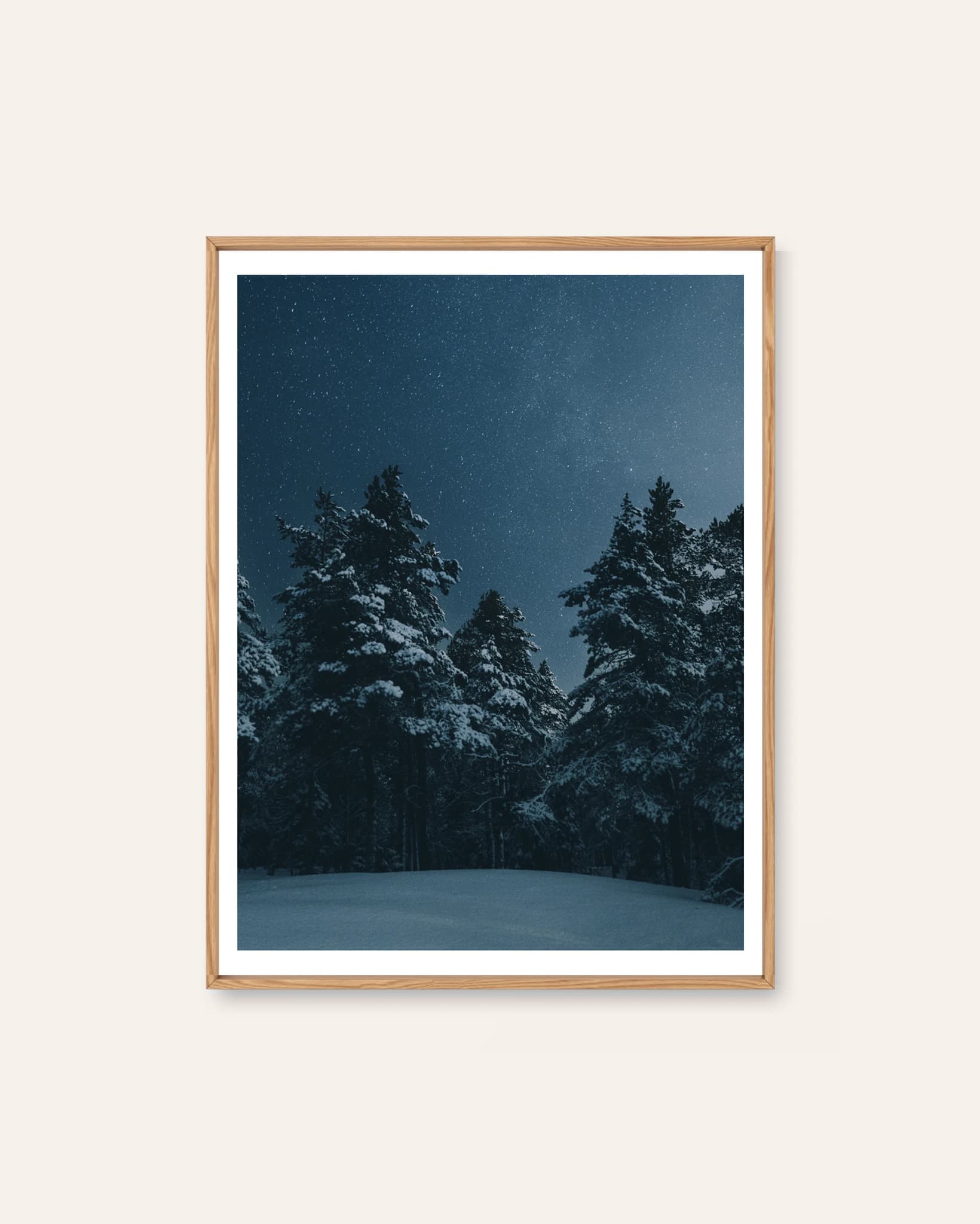
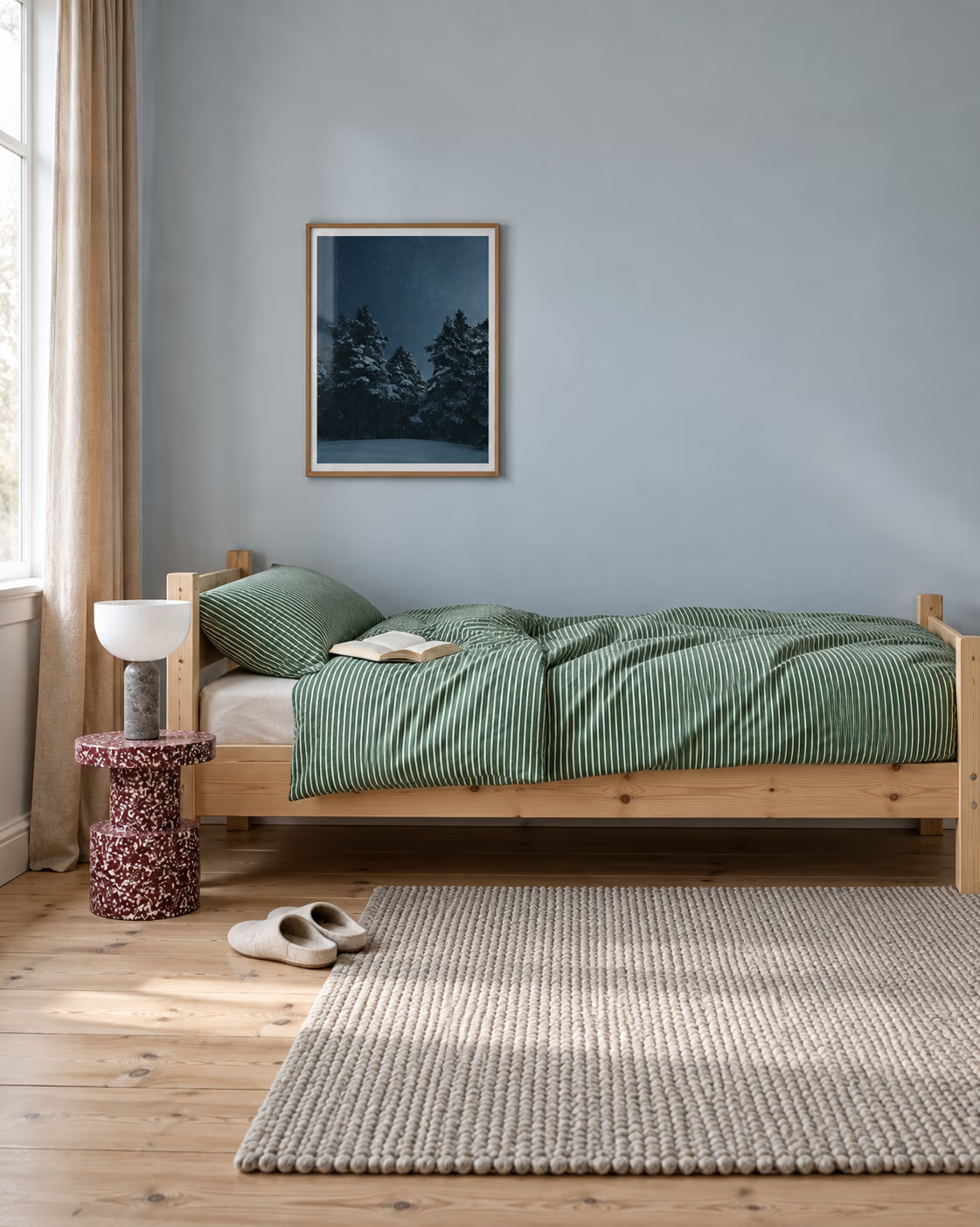
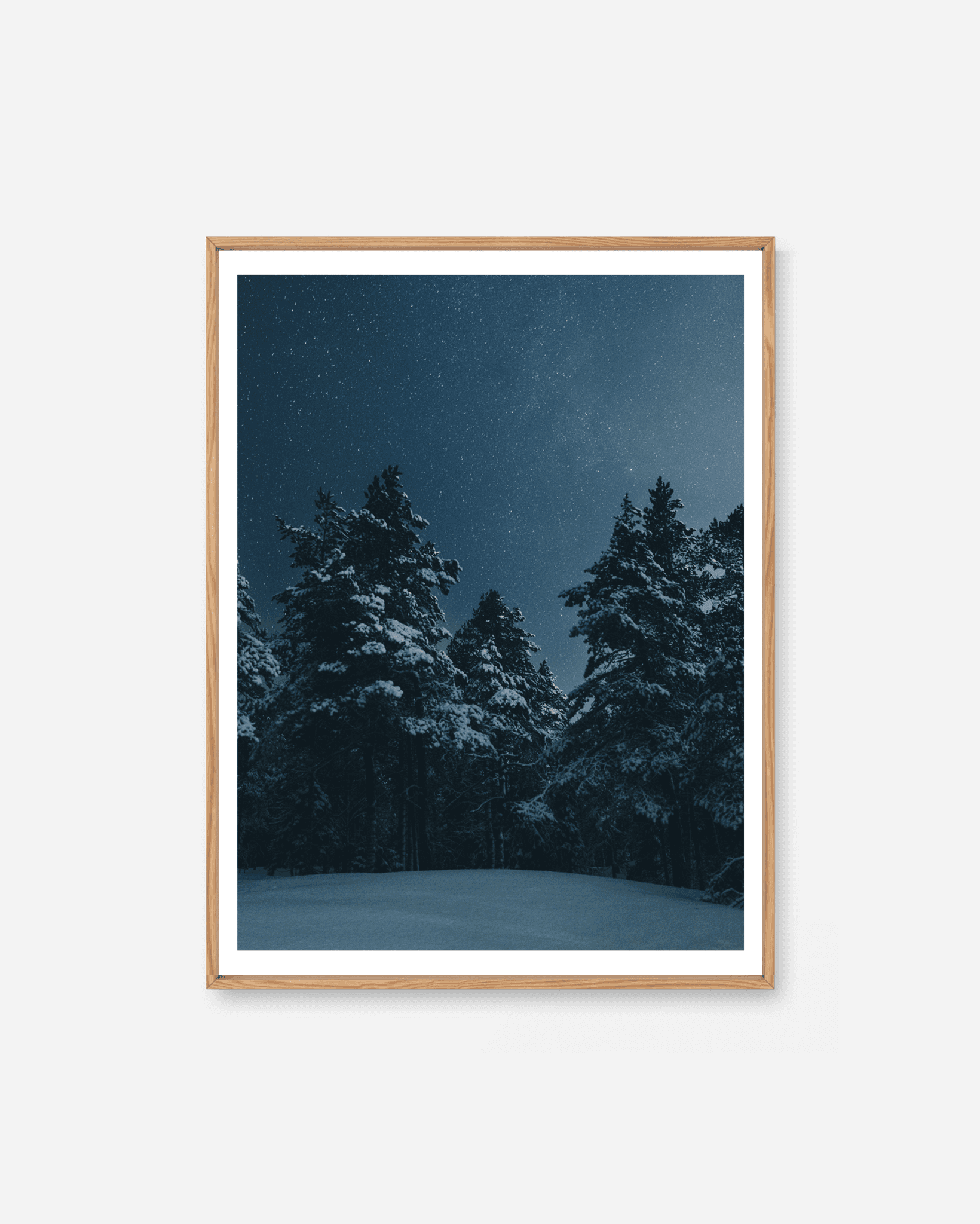
Pines Under Starlight is the stillest. Snow-laden pines stand against a clear, star-scattered sky, and the whole picture sits in deep blue, with a pale floor of snow at the bottom. The catalogue calls it a hushed, cold-clear winter night, which is exactly how it looks.
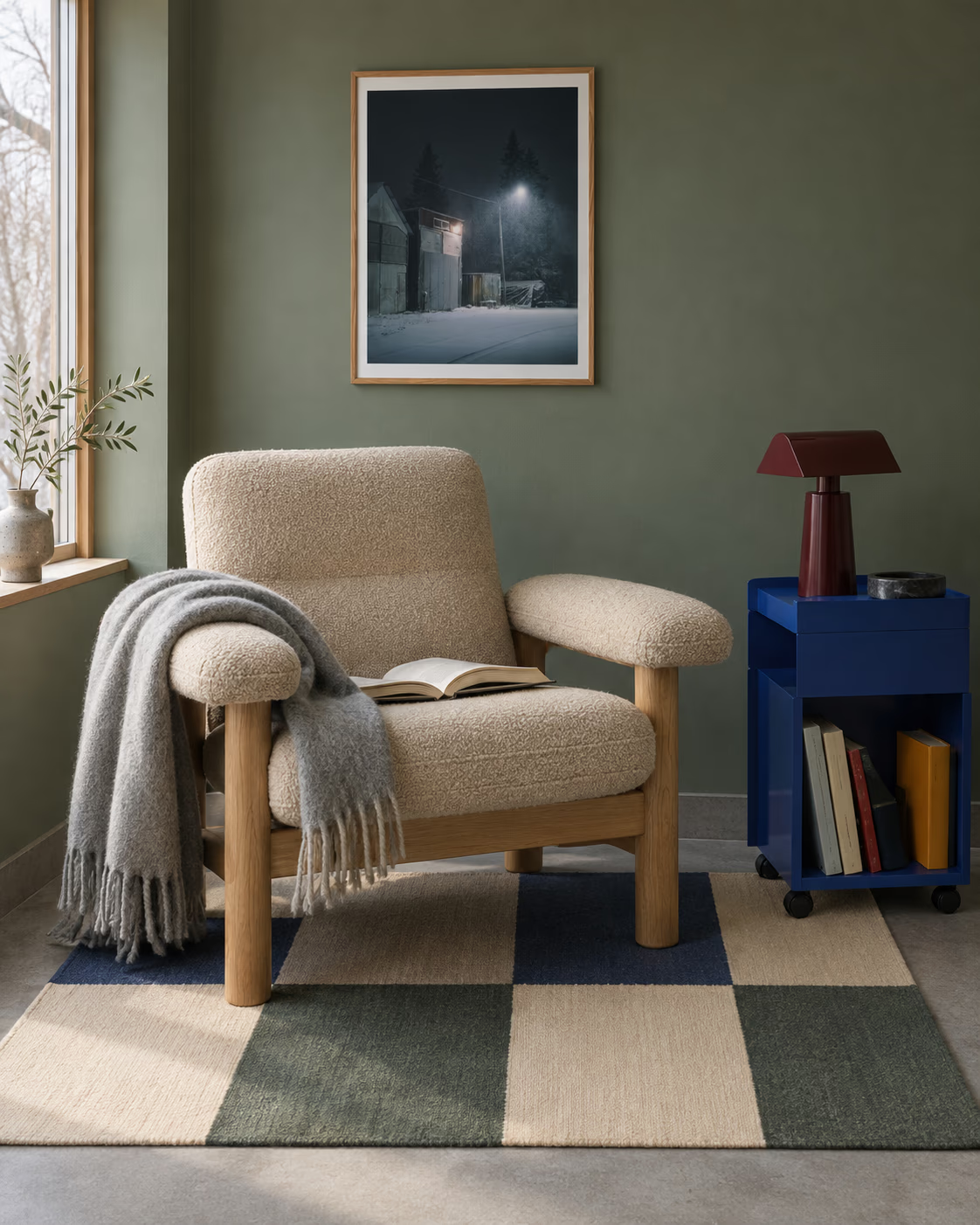
Boathouses in winter is the one with a story in it. Sheds and dark conifers, a snow-covered yard, and that lit window. Look at the falling snow where the lamp catches it. That's the detail you only find when you're standing close.
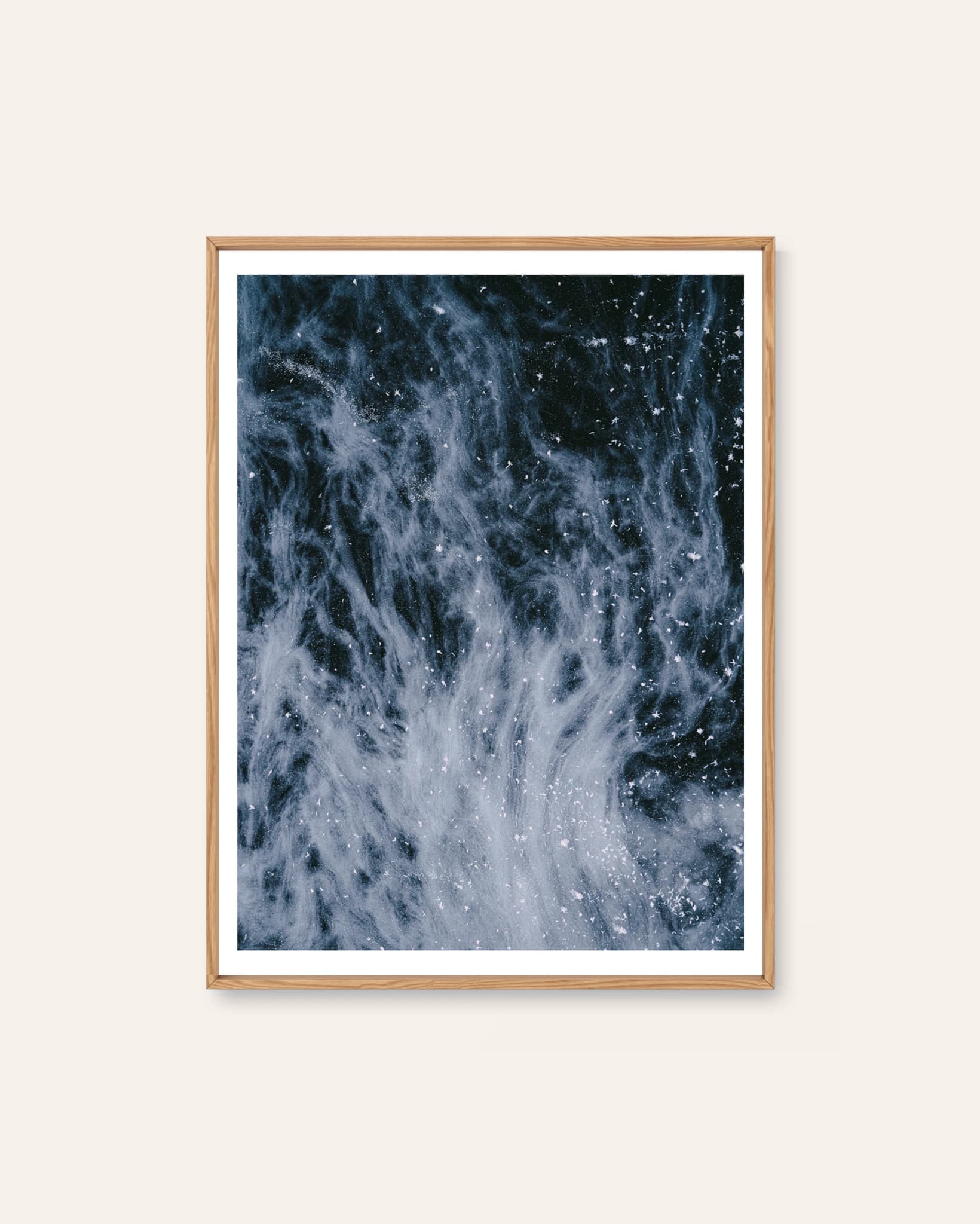
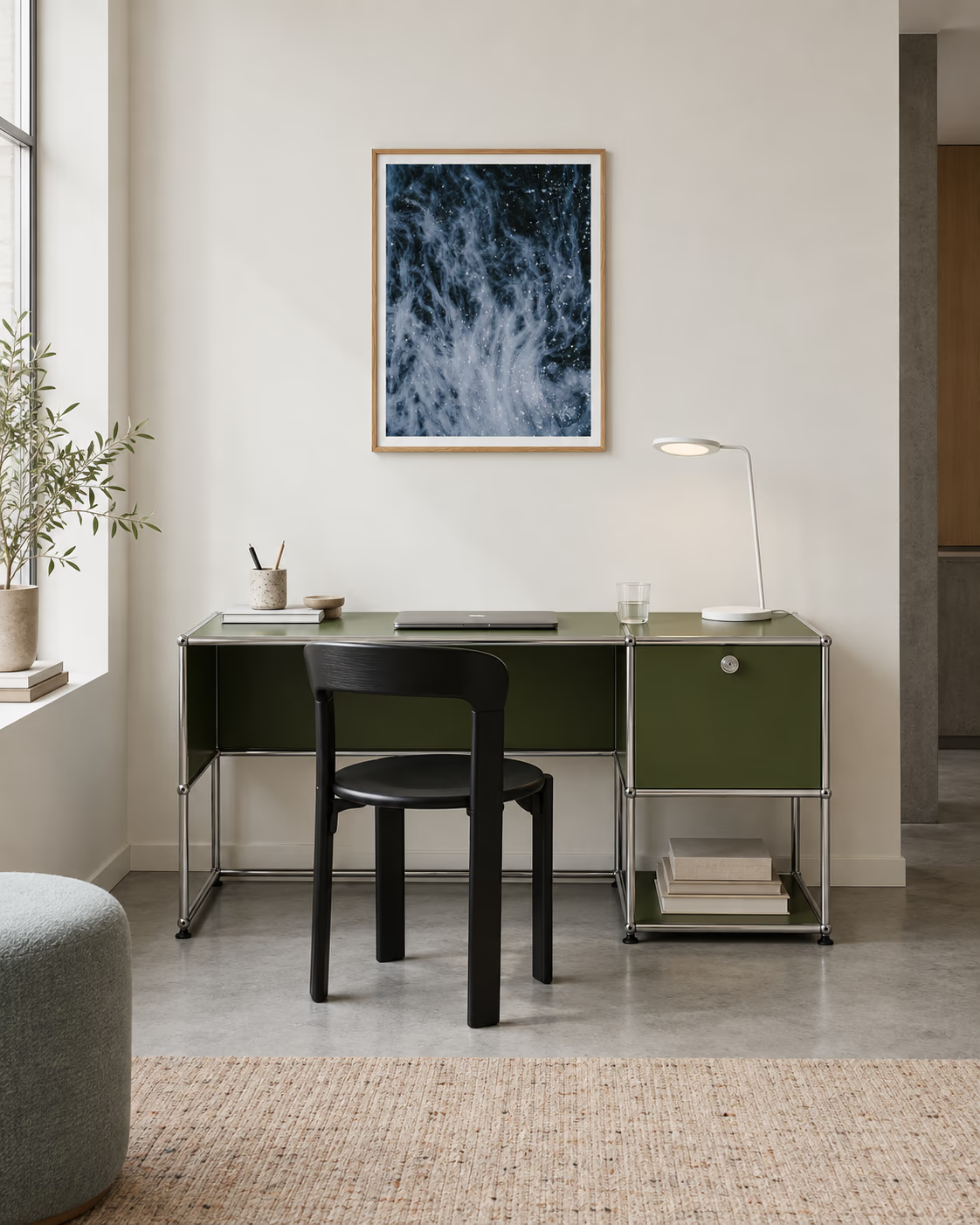
Frozen currents is the odd one out. Pale ridges of ice swirl across dark water, dusted with fresh snow. It's closer to a painting than a photograph, with no horizon and nothing to tell you the scale. If you like abstract work but want a photograph, this is the bridge.
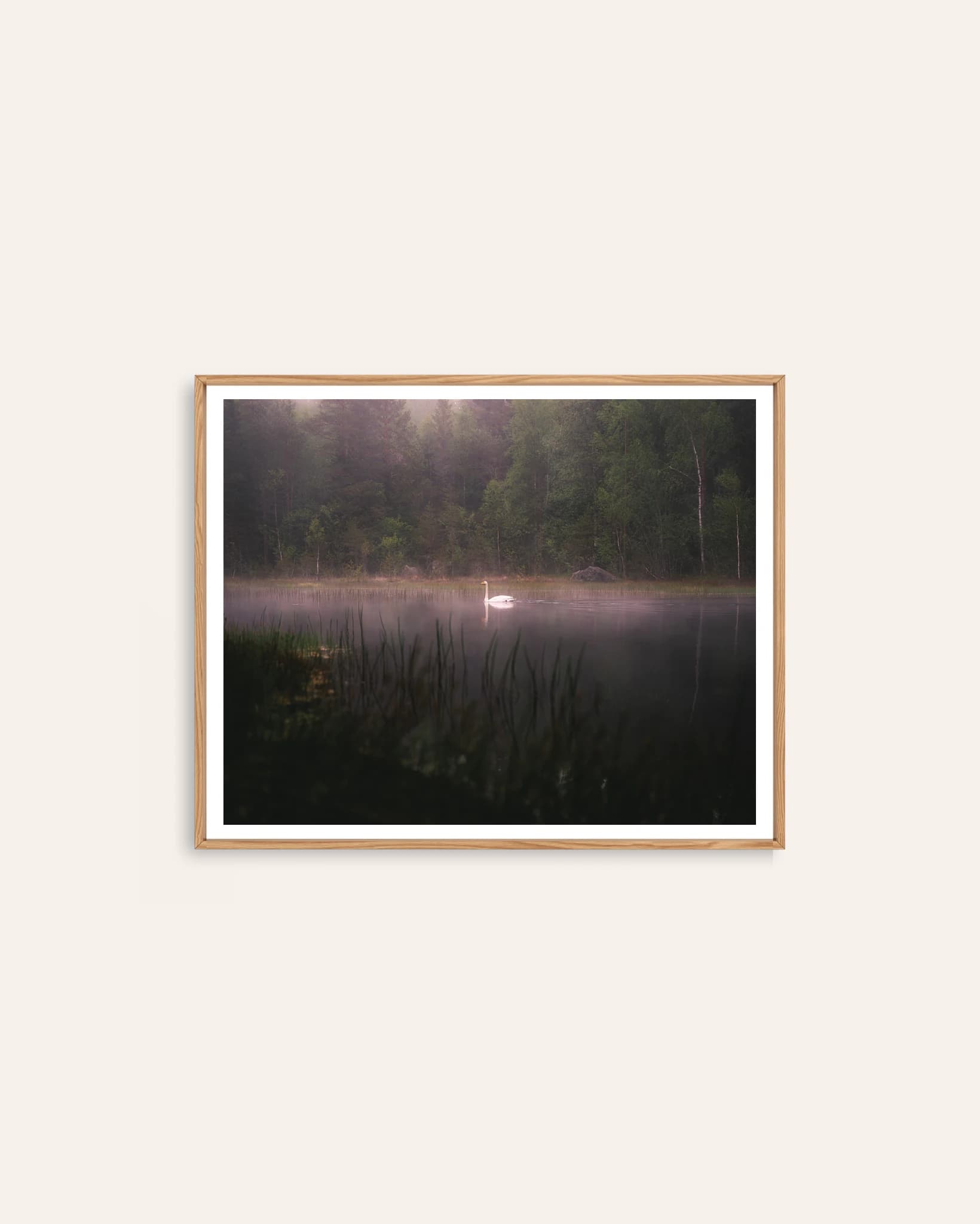
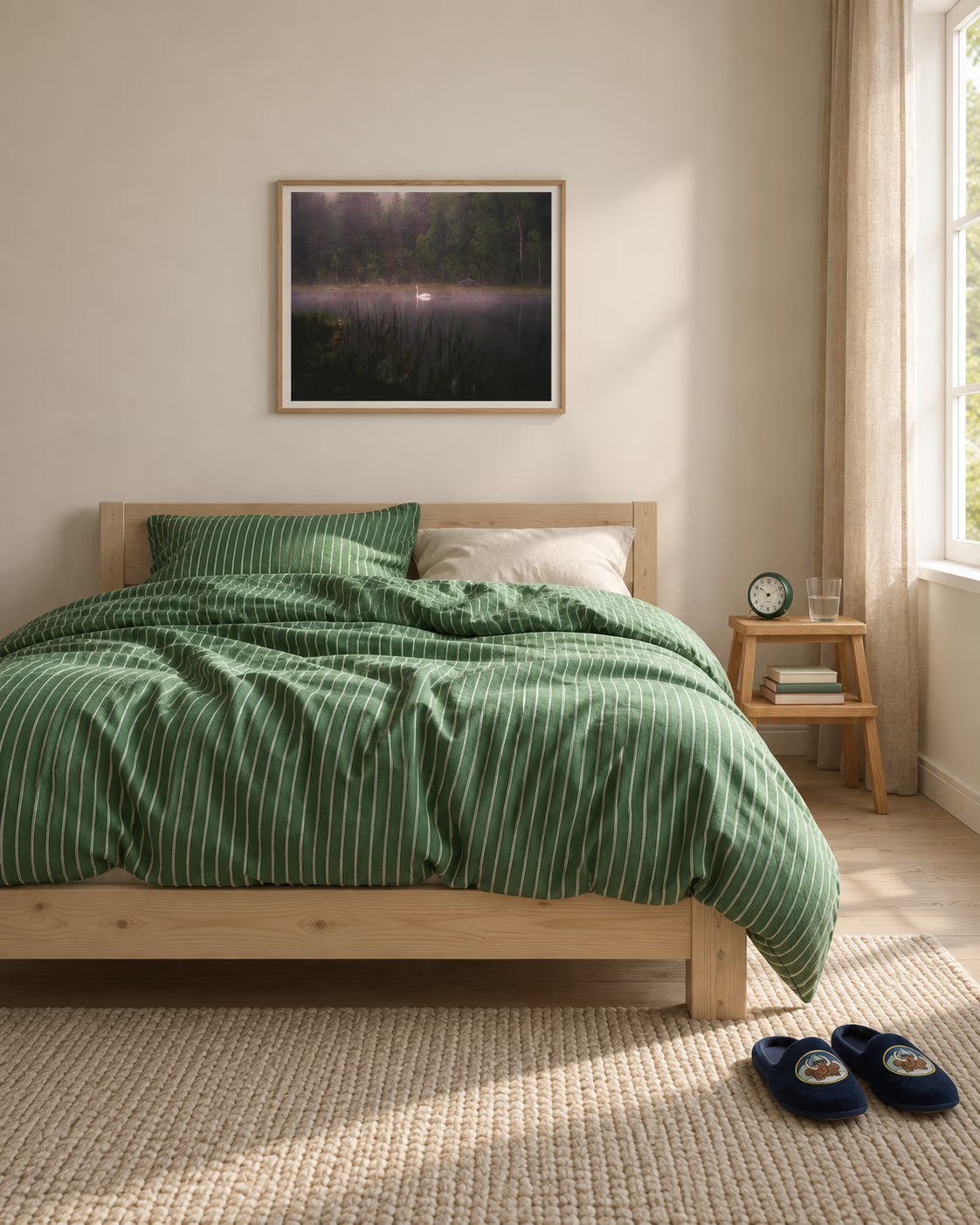
All three are 45 x 60 cm. A fourth, Swan on Still Water, isn't a winter picture at all: it's a misty lake at first light, dark green forest and reeds. We've included it because it shares their stillness, and it's 40 x 50 cm, so it won't line up with the others if you plan to hang them together.
How does a photograph hang differently from an illustration?
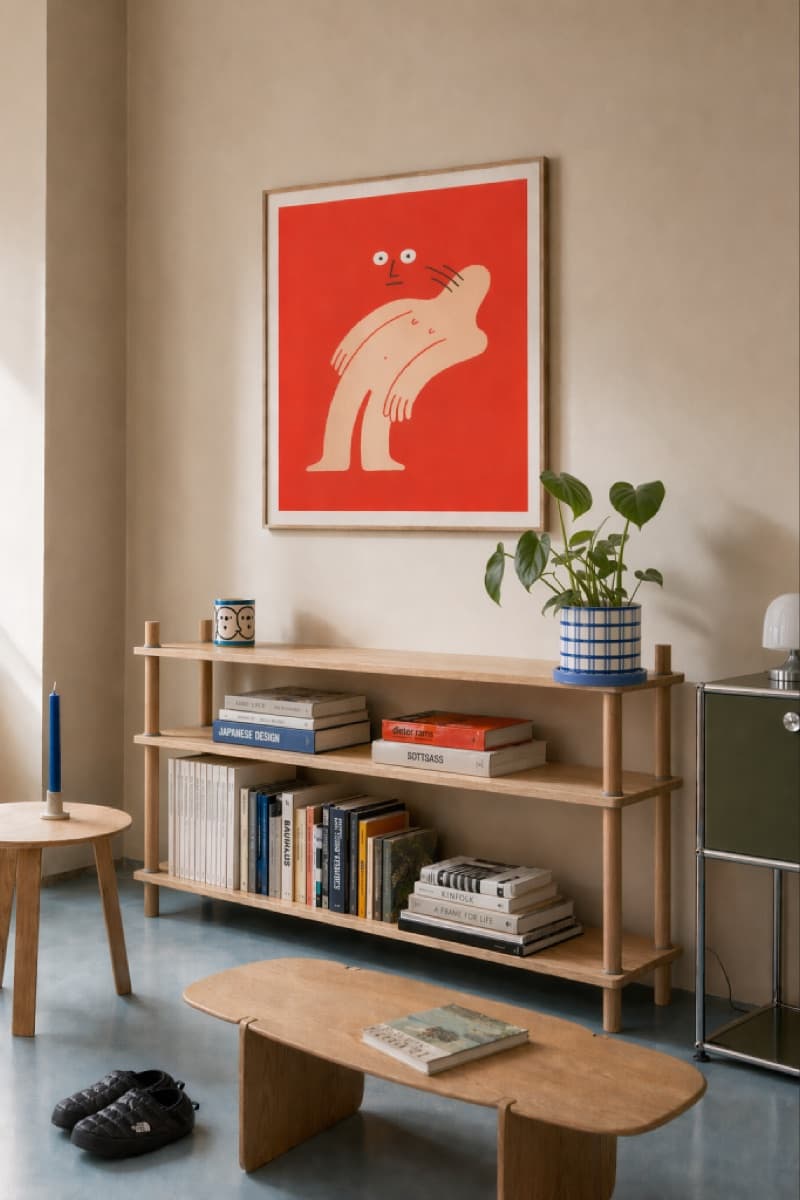
An illustration usually works in flat colour and outline. That's why a print like Slingshot, white on a bright tomato red ground, reads clearly from right across a room. A photograph is built from tone instead. Most of what's good about these three is in the dark areas and the fine detail: stars, falling snow, the texture of ice.
That changes how you place them:
- Give them a viewing spot. They pay off close up. A wall you pass slowly, or sit near, suits them better than one you only see from the far side of a room.
- Watch for reflections. Dark pictures show glare more than light ones. Stand where you'd hang it, at the time of day you're usually in the room, and see what the wall throws back. If you're framing, that decides your glazing before the frame colour does.
- Let the border help. The product pictures show each photograph with a white border around the image, which gives a dark picture a clean edge on the wall.
How should you hang them?
Frames are optional. Each print page lets you choose no frame, or a wood, black or white one, priced by size, so check the page for the size you're after. On a night picture, wood or white keeps the edge of the photograph visible. A black frame can melt into the darkest part of the image, so look at it before you commit. If you'd like more on the choice, the framing guide covers it.
For height, centre the picture at roughly 145 to 150 cm from the floor, which is average standing eye level, and lower it a little over a sofa or a desk where you're mostly sitting.
If you want more than one, Pines Under Starlight and Frozen currents make the easiest pair. Both are 45 x 60 cm, both portrait, both cold blue. Leave 5 to 8 cm between them so they read as one object. Add Boathouses in winter and the trio comes to about 1.5 m of picture, so measure the wall first (the gallery wall guide covers spacing, and the print sizes guide helps with scale).
Why do northern light and quiet suit winter rooms?
In midwinter the windows go dark early, and a room is lit mostly by lamps. A photograph of a lit window in a dark yard is the same hour, seen from outside. It doesn't compete with the room. It agrees with it.
The quiet matters too. Nothing in these pictures is shouting. They don't have a punchline, a pattern or a bright colour to hold your attention, so they work as somewhere for the eye to rest at the end of a day. Put one in a bedroom, a reading corner or a hallway you cross at night, and the cold blue sits well beside wood, wool and a warm lamp.
If you'd like to see where this kind of picture comes from, our Nordic photography books piece looks at the photographers who've made the North their subject. And if one of these three suits your wall, the photography prints are the place to start.