Photography as Scandinavian art: why the camera belongs on a Nordic wall
The pictures of the first footprints on the Moon came from a camera company in Gothenburg. On 20 July 1969, Neil Armstrong and Buzz Aldrin recorded the Apollo 11 landing with two Hasselblad cameras. The company that made them was Swedish, and the man behind it, Victor Hasselblad, was born in the same city.
It's an odd fact to open an art piece with. It's also a useful reminder that photography has never been a minor thing in the North, even though ask someone for Scandinavian art and they'll name paintings, chairs or ceramics before they get to a single photograph.
Is photography really Scandinavian art?
It has the institutions, for a start. The Hasselblad Foundation says the company's first civilian camera was presented in New York in 1948, a medium-format reflex with interchangeable lenses, and that Victor Hasselblad's route into camera-making began when the Swedish Air Force commissioned him in 1940 to replicate or improve on a German reconnaissance camera. Norway has Preus museum, in Horten, its national museum of photography, with a collection of over 325,000 photographs.
And it has the habits. The painters we've written about before went to the same places for the same reasons: the long low sun, the white winters, the stillness. Photographers just arrived with a different tool. Our piece on Nordic photography books is a good tour of the people who've made the North their subject.
Who is Markus Naarttijärvi?
Markus is a documentary photographer based in Umeå, in northern Sweden, and he grew up in Kiruna. His own site describes long-term projects on industry, nature and culture in the north of Sweden, and the themes he returns to are solitude, perseverance and the passage of time. His first monograph, A Surrender, was published by Good Fight in 2025. You can read more on his website or on his artist page.
Documentary work is mostly attention and patience, and these pictures have the look of both.
What's in the ten photographs?
Ten of his photographs are in the gallery, and they sort into three kinds of picture.
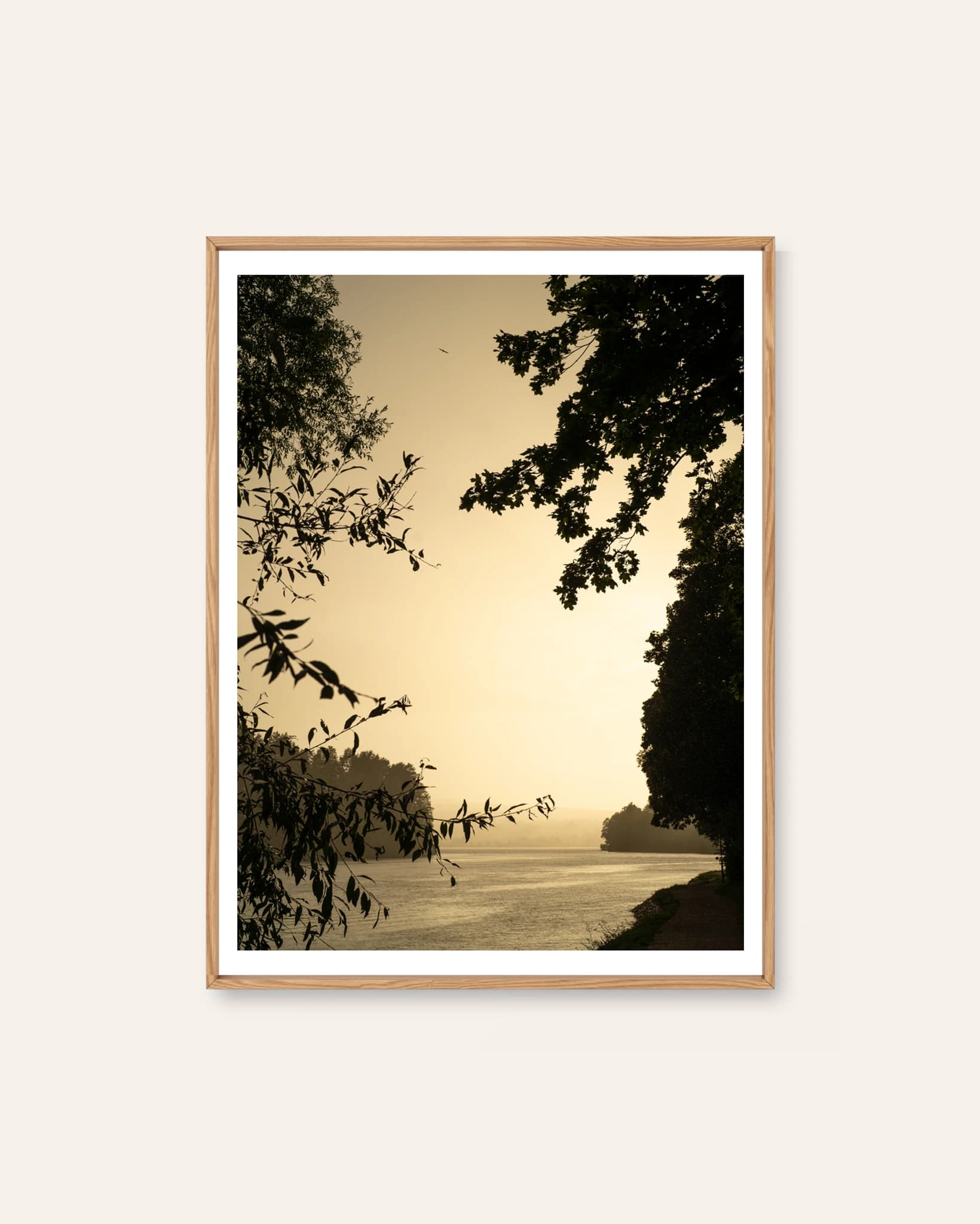
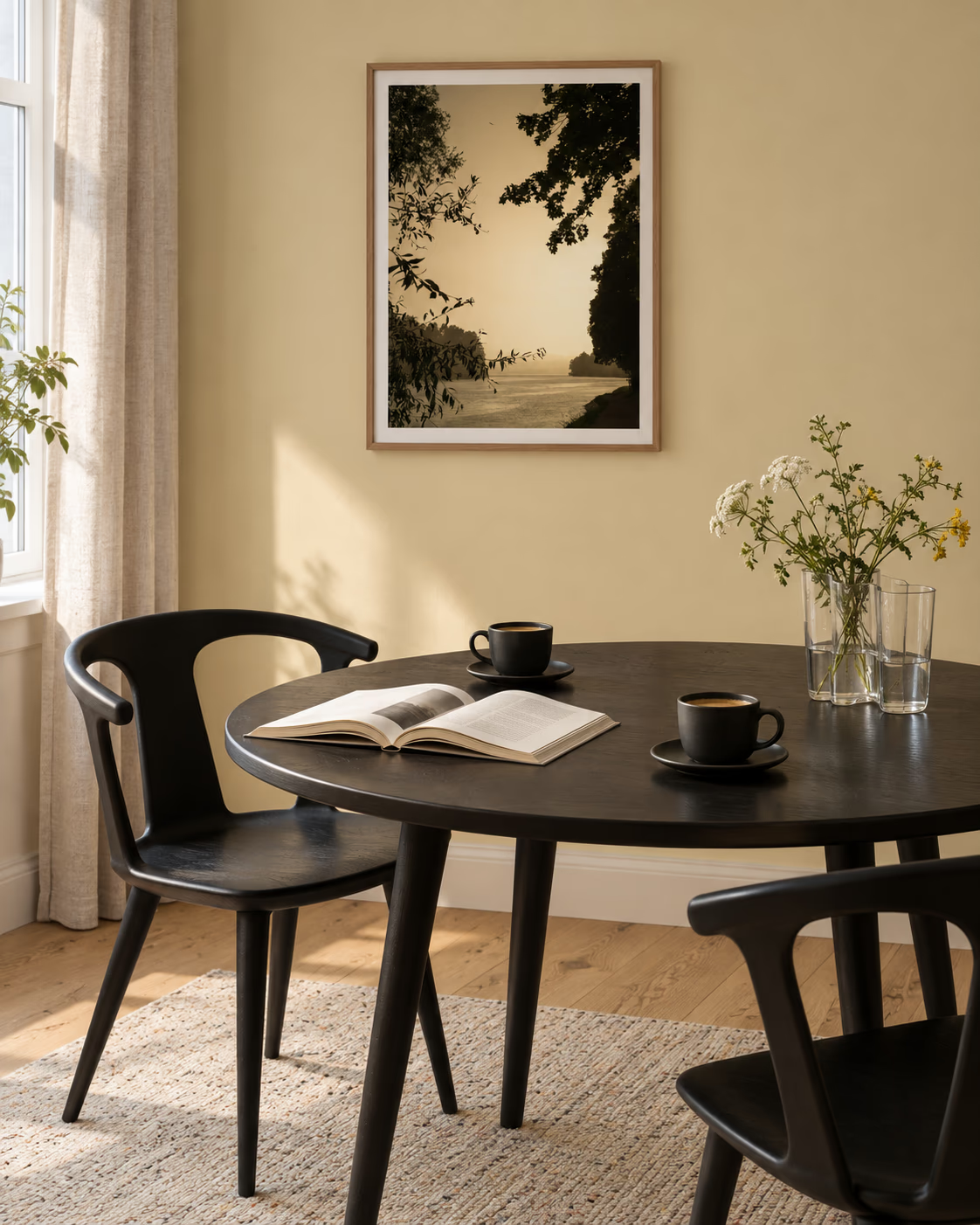
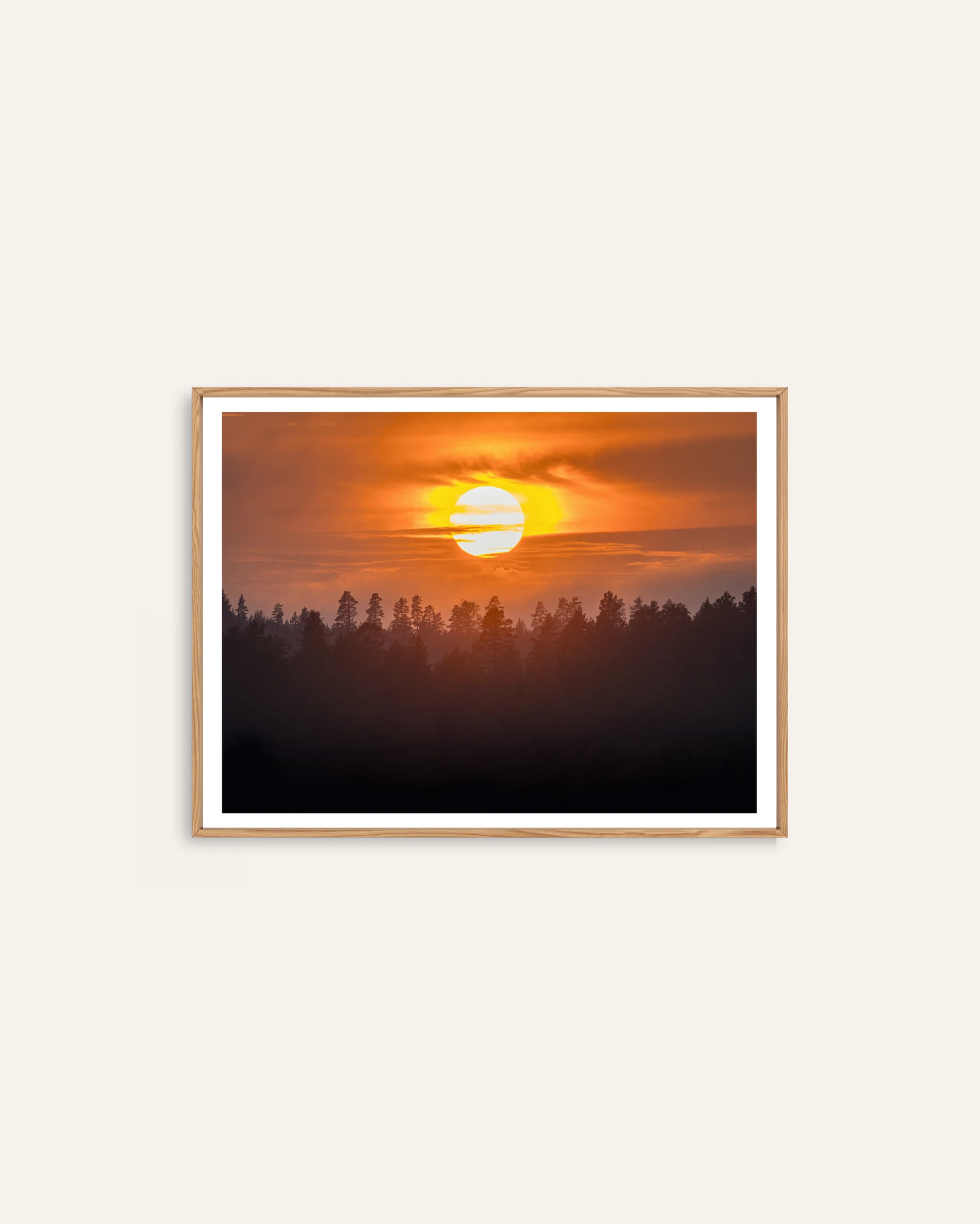
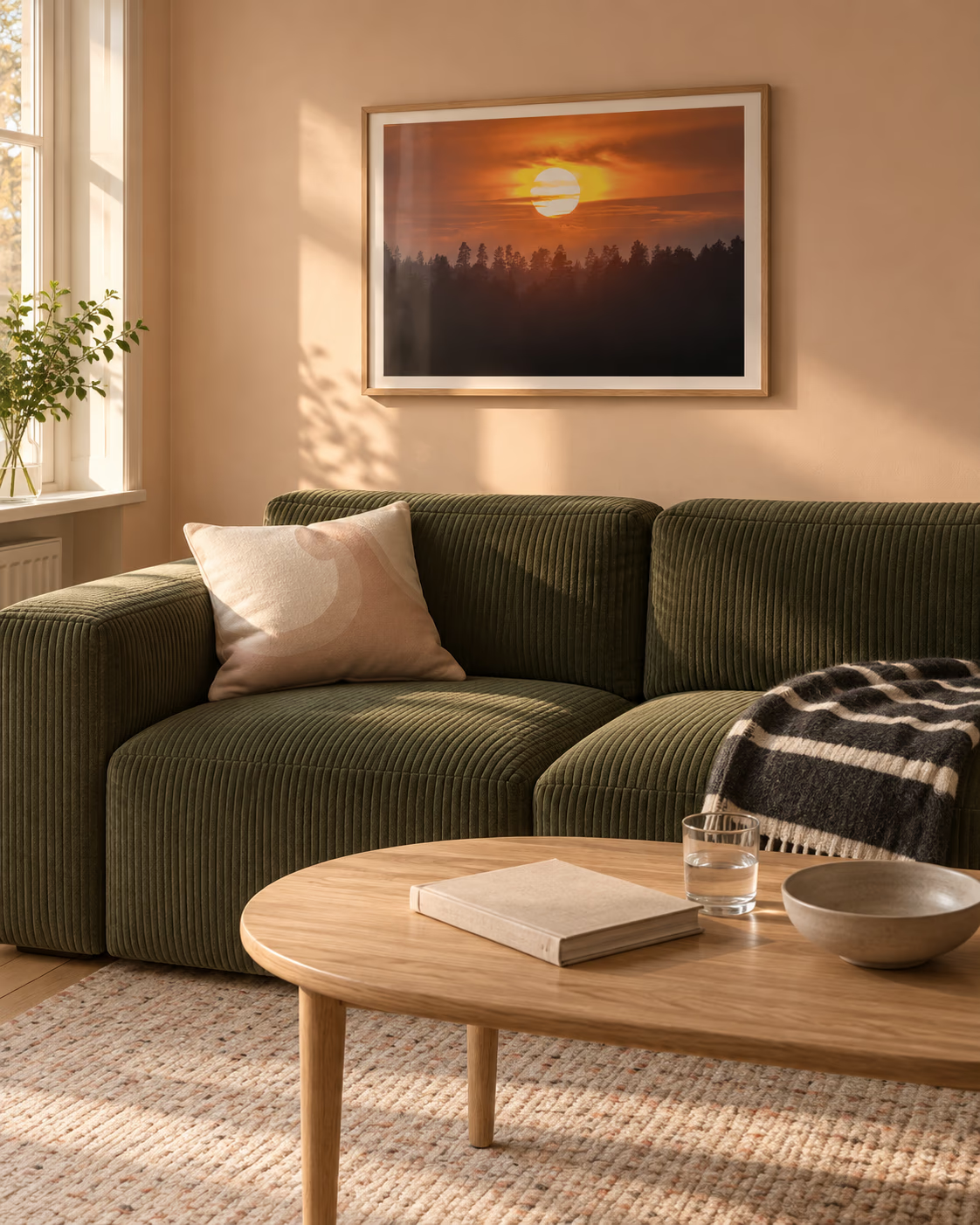
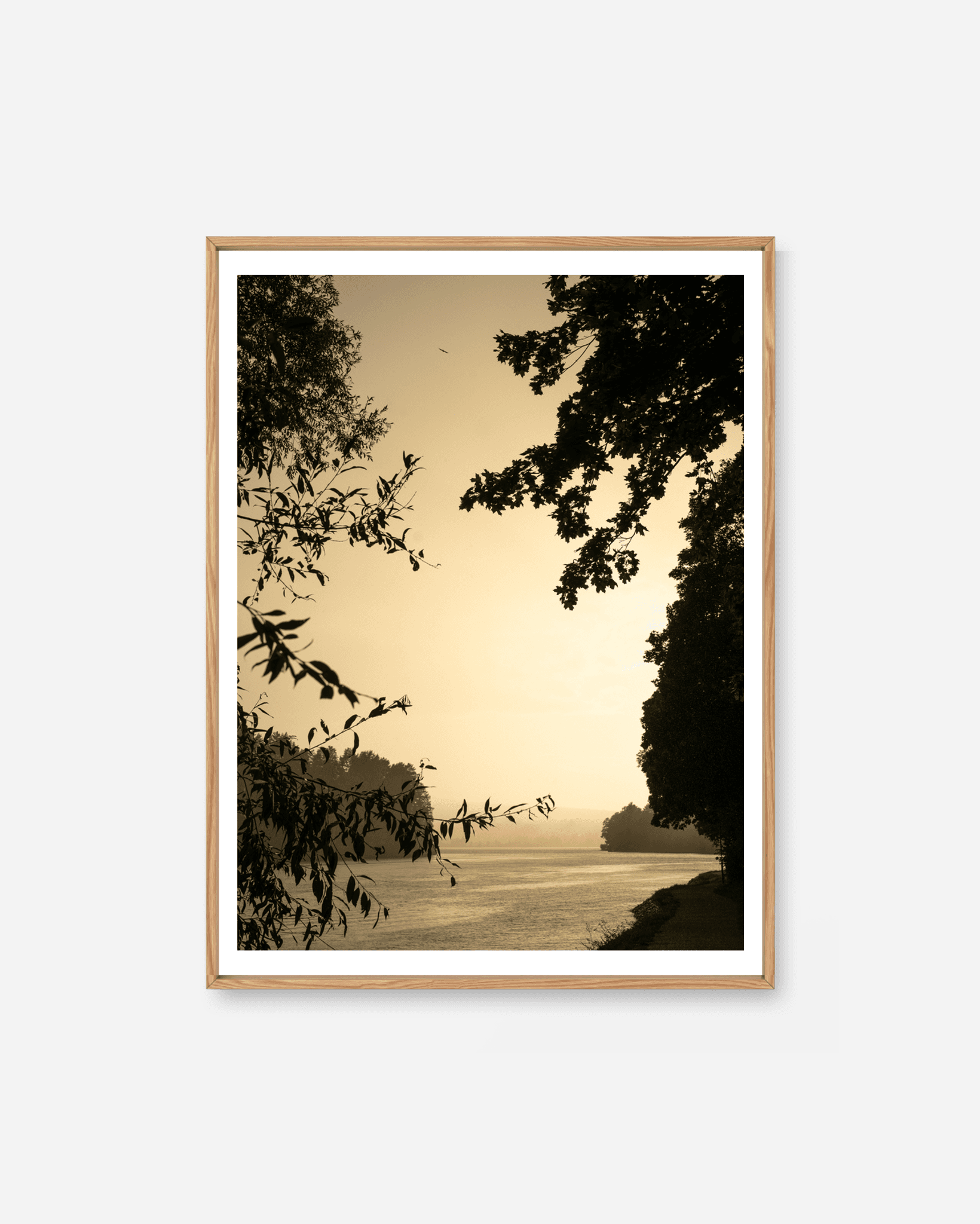
Light. Through the Willows is a river glowing gold beneath willow and oak leaves, with a single bird crossing the haze. Sun Over the Forest is a huge hazy sun low over a dark line of trees, the sky burning orange around it. The Road at Sunset follows a small group of cyclists around a curving road into the evening sun.
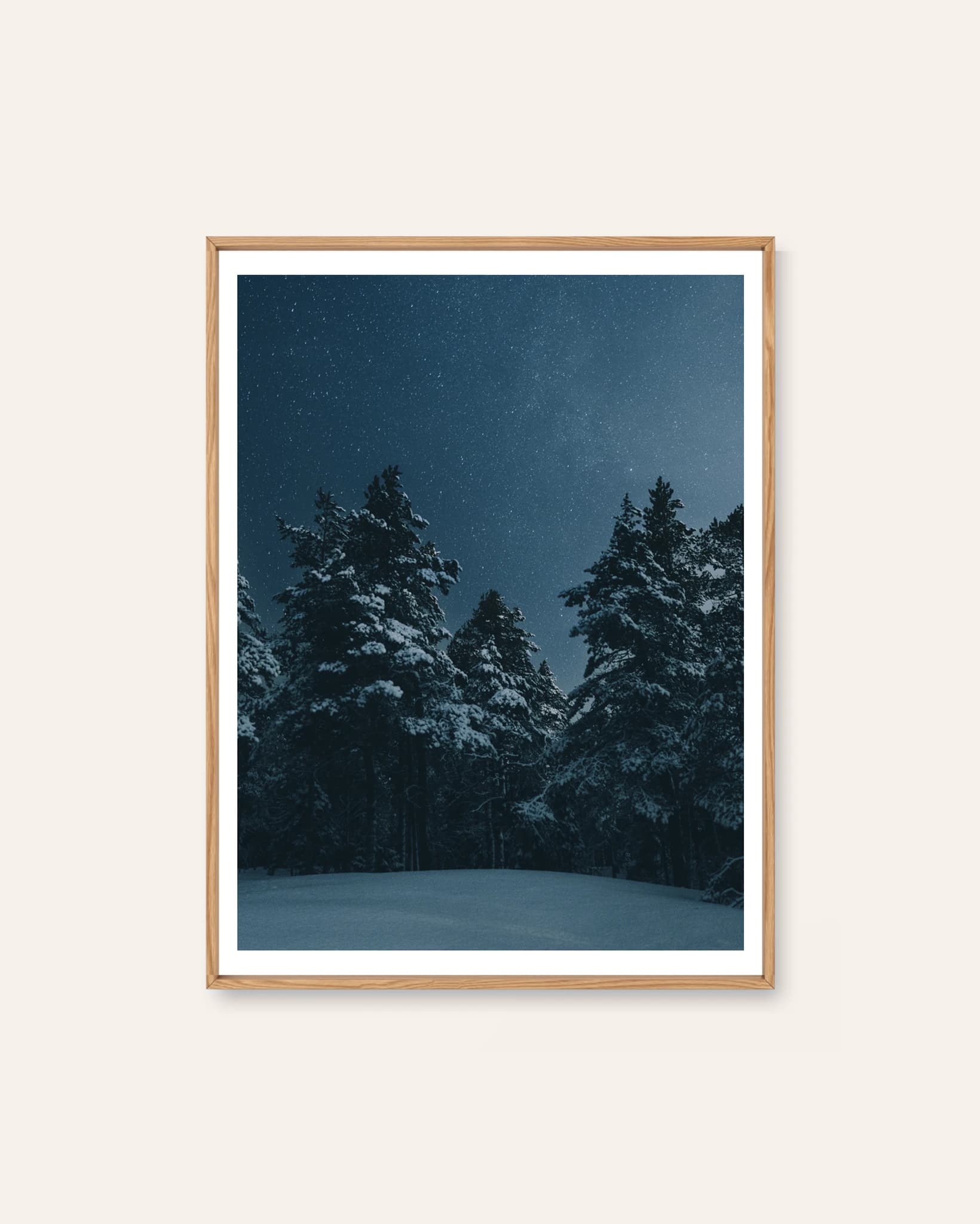
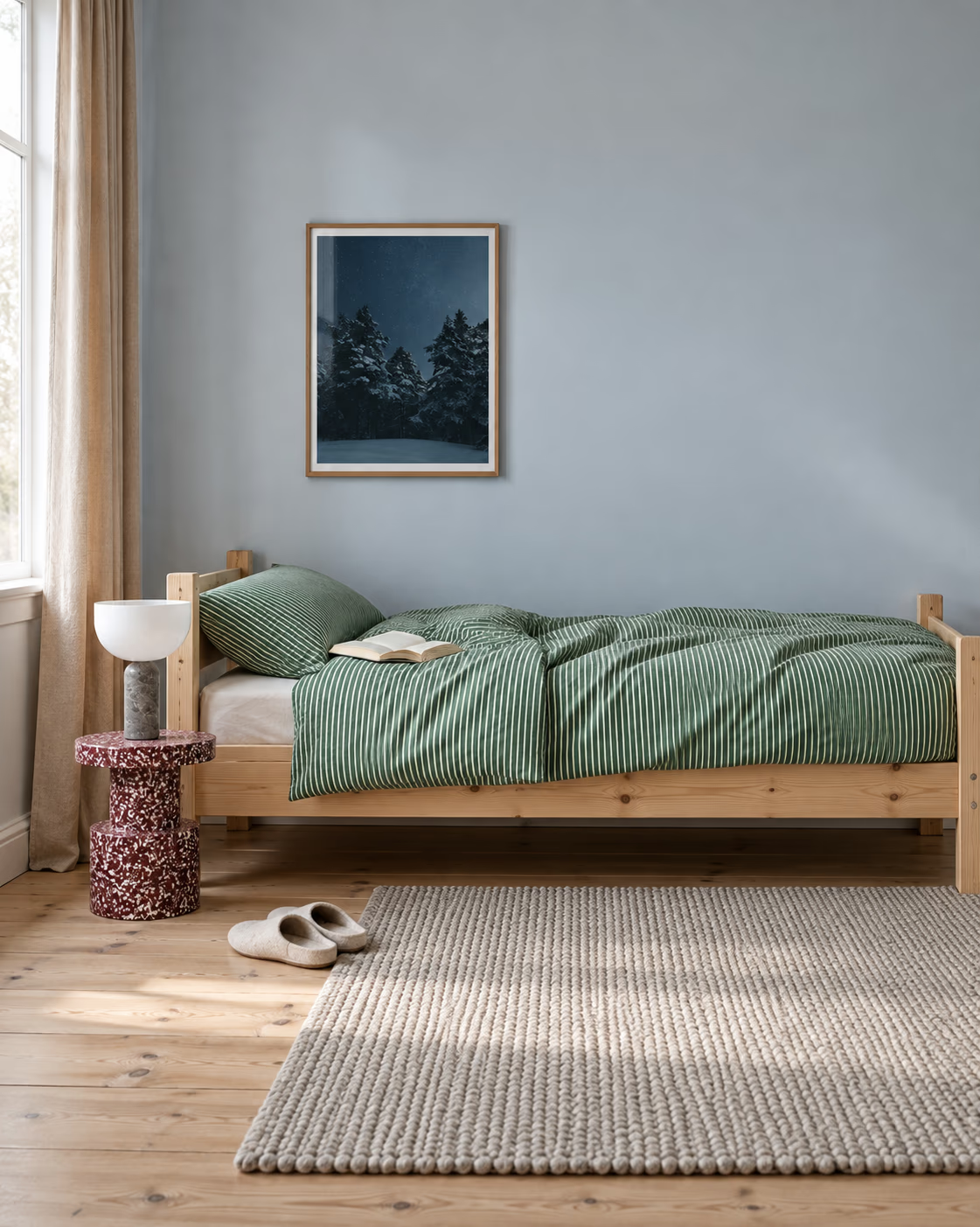
Night and cold. Pines Under Starlight, Boathouses in winter and Frozen currents are the winter set: snow-laden pines under stars, a lit window and a lone streetlamp in falling snow, and pale ridges of ice swirling across dark water.
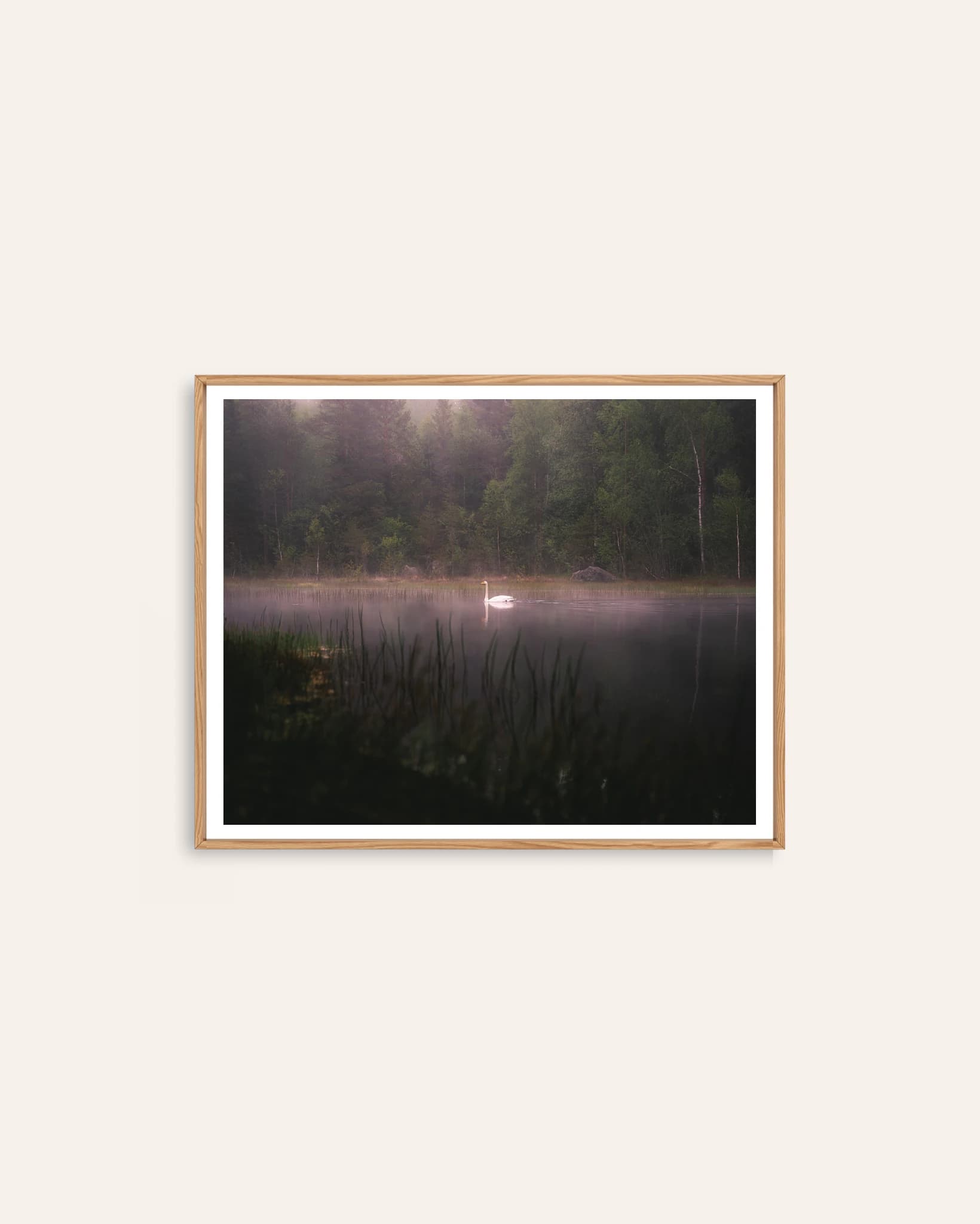
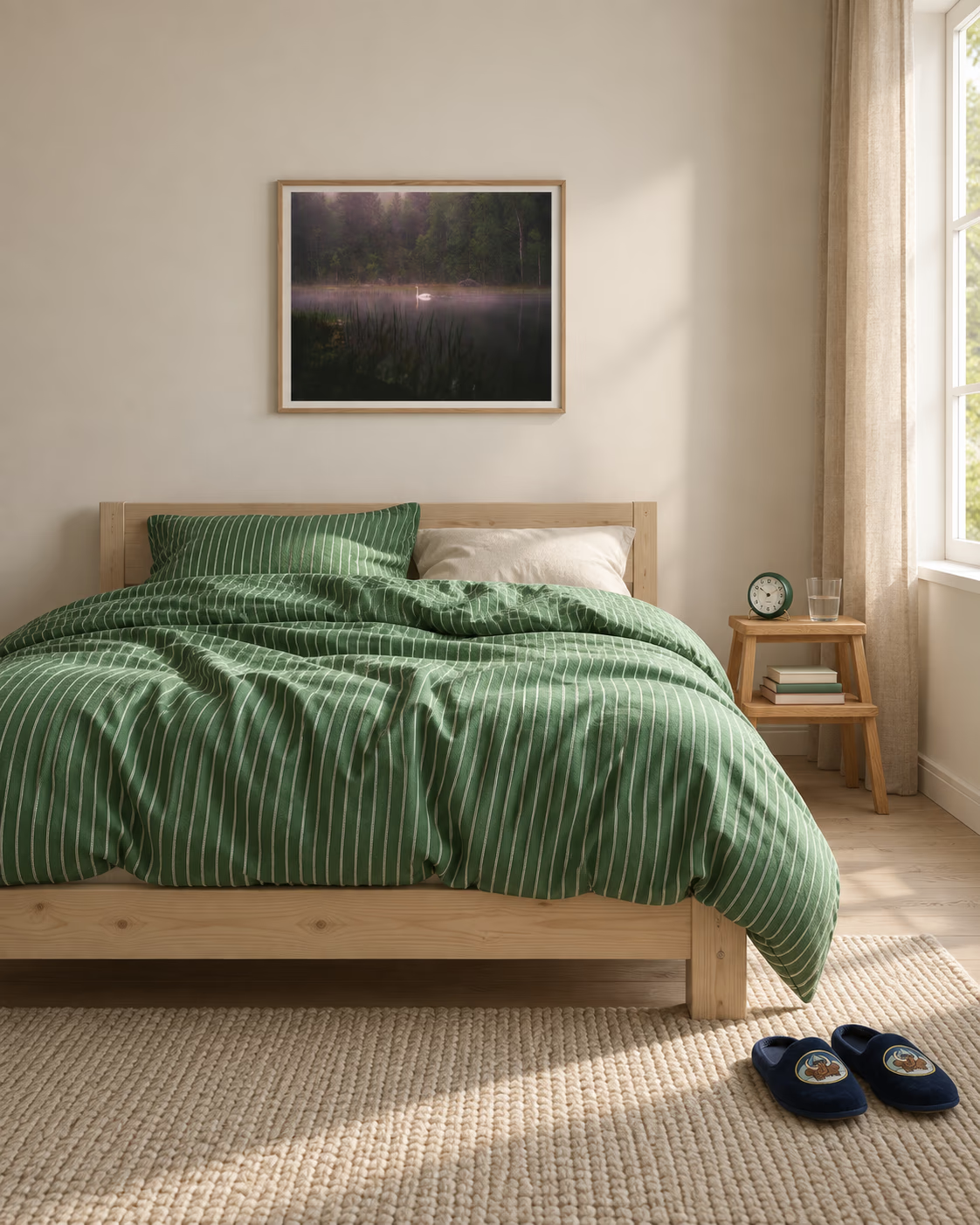
Quiet places. Swan on Still Water, Path Through the Trees, Sheep on the Track and Morning, Cabin Room are the nearest to documentary: a lake at first light, a boardwalk through a dark forest, a flock of dark sheep on a muddy track, light through lace curtains in a wooden cabin.
Most are 45 x 60 cm. Swan on Still Water, Path Through the Trees and Sheep on the Track are 40 x 50 cm.
What does a photograph do that an illustration doesn't?
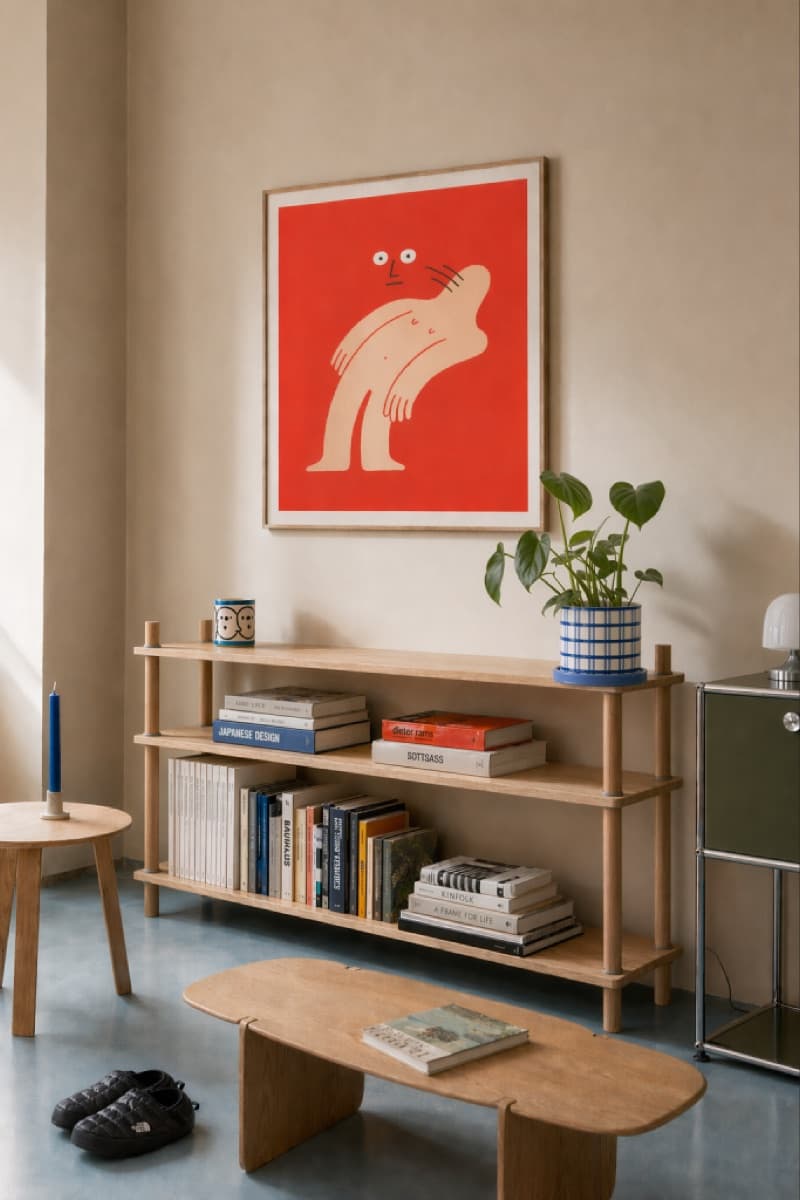
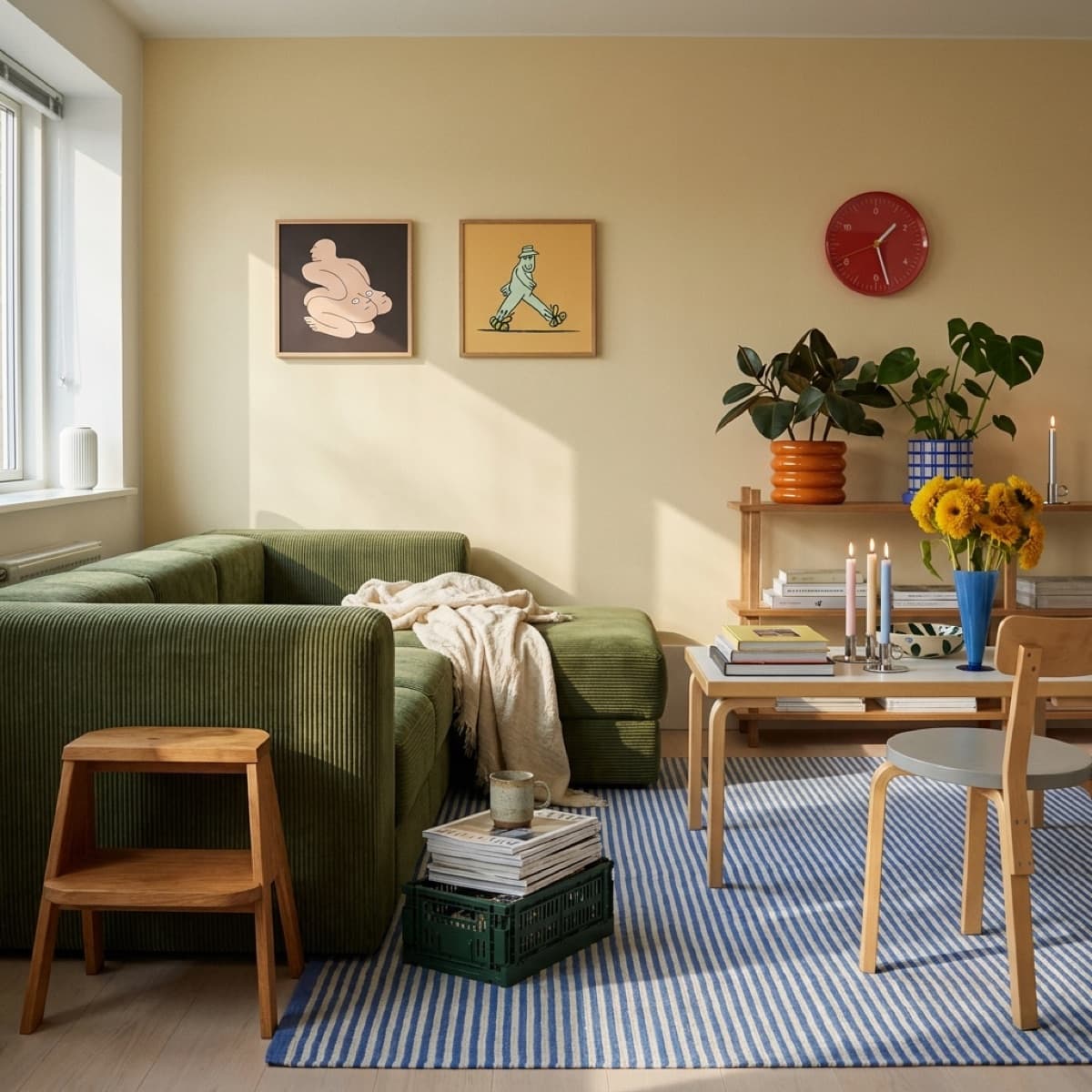
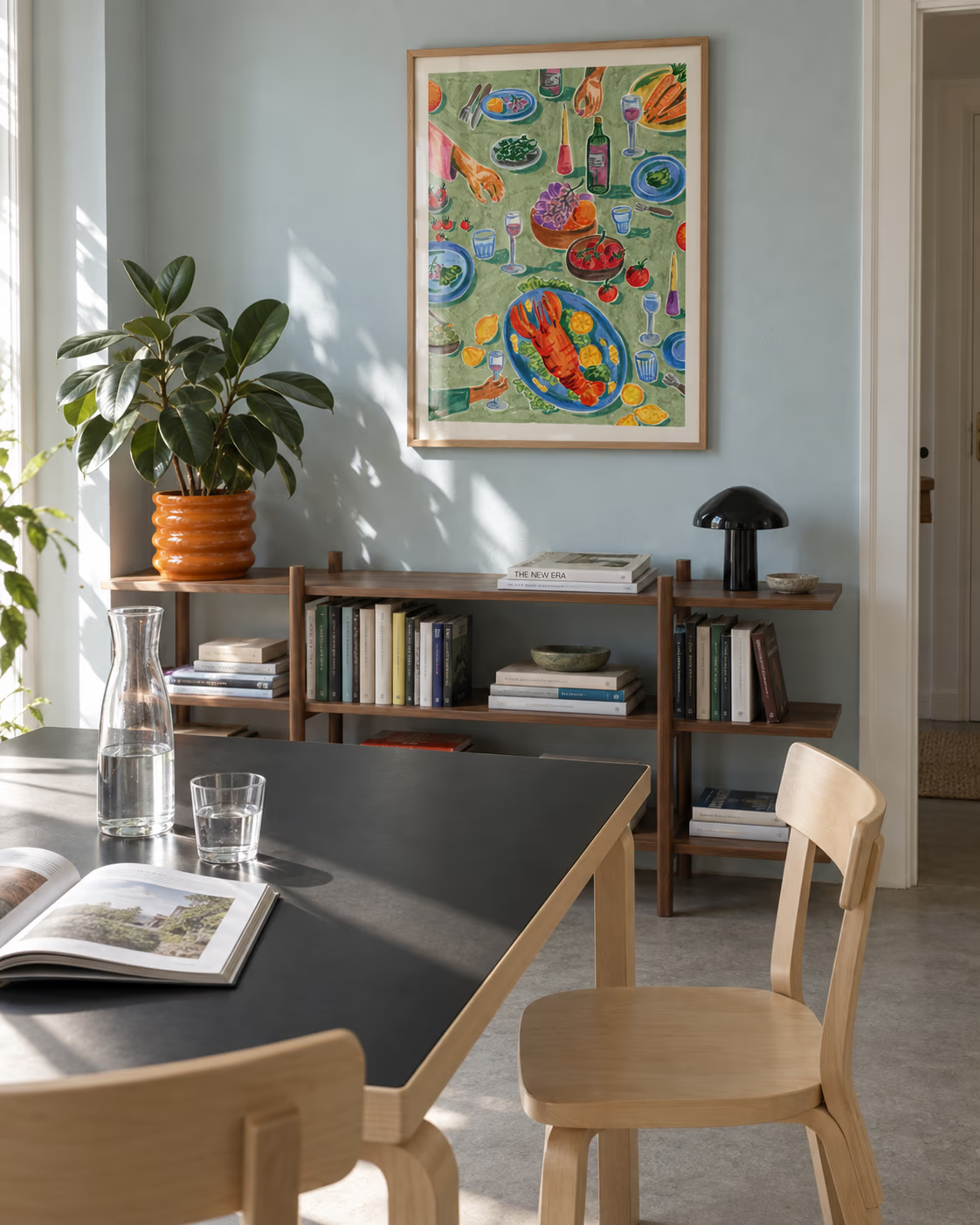
Most of the gallery is drawn or painted, and that's a different kind of wall. An illustration usually works in flat colour and outline, so it reads from across a room. A photograph works in tone and fine detail, so it rewards a closer look. Where the illustrated prints give a room character, a photograph can give it somewhere to rest.
They also live well together. A single photograph on a wall of pale wood and white leaves the colour to the room, and one beside an illustrated piece makes a pair that's quiet and loud at once. The gallery wall guide is the place to check spacing if you try it.
How should you choose one?
Choose the mood before the picture. Warm and open: Through the Willows, Sun Over the Forest. Cold and still: the winter three. Rural and a little wry: Sheep on the Track. Then check the size against the wall, because the two formats don't line up if you plan to hang them together. The print sizes guide covers it.
All ten live together in the photography category, and if you'd like to see how a photograph sits in a frame, the framing guide is worth a few minutes.